
Chimney Sweep: Repair or Replace? How Hampden Homeowners Decide
Most homeowners think the repair-or-replace question is about age. It isn’t. A 40-year-old chimney with one cracked crown can serve another 20 years with the right repair. A 15-year-old chimney whose liner was improperly matched to a high-efficiency insert may already be costing you in creosote buildup and lost heat every season. In Hampden, the real question is whether the failure is isolated or systemic. If you’d rather have a trained eye settle it, call (833) 974-5720.
What does “isolated versus systemic” actually mean?
An isolated failure is contained to one component. The mortar joints in the firebox are crumbling, say, but the crown is sound, the flue is intact, and the masonry above the roofline shows no movement. That’s a repair, and a straightforward one. A systemic failure is when one visible problem is really a symptom: water has been getting in at the crown for years, the liner has deteriorated from the top down, and the mortar in the exterior stack has begun to wash out. Fixing the one thing you noticed won’t last, because the moisture path that caused it is still open.
The distinction matters because it drives two opposite mistakes:
- Under-investing: patching a firebox when the crown has been feeding water into the masonry for a decade. The patch fails within a season or two, and the underlying damage keeps spreading.
- Over-spending: tearing out a sound system because one component failed. An isolated crown crack on an otherwise healthy Hampden chimney is a chimney cap & crown job, not a rebuild.
How you tell the difference comes down to evidence, not guesswork. That’s where a proper inspection earns its keep. We inspect it, we fix it, with no referrals out and no second contractor needed, because the evaluation and the recommendation come from the same place.
Component by component: where each part crosses the line
Every piece of a chimney system has its own repair-to-replace threshold. Treating them as one unit is how homeowners end up with either a short-lived patch or an unnecessary rebuild.
- The flue liner. Small cracks or isolated spalling in a clay tile liner can sometimes be resurfaced rather than replaced. HeatShield restoration is a good fit when the liner is still structurally sound but the interior surface has deteriorated. A liner that’s cracked clear through, shifted, or undersized for the appliance it serves needs relining. A DuraFlex flexible liner is the industry benchmark when the original flue is aging, damaged, or mismatched to a modern insert.
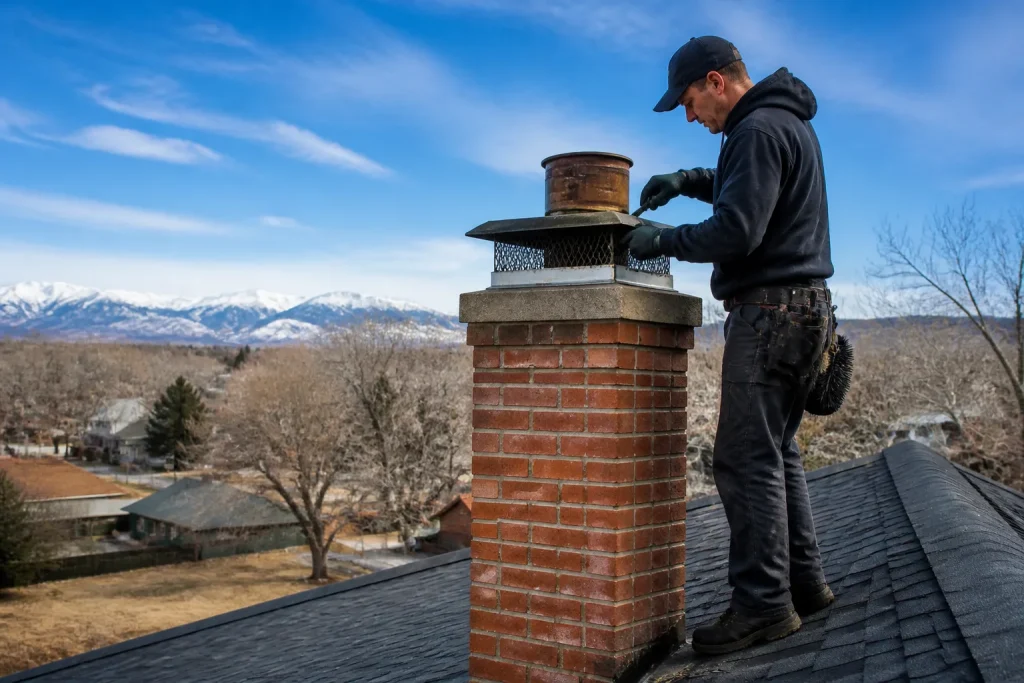
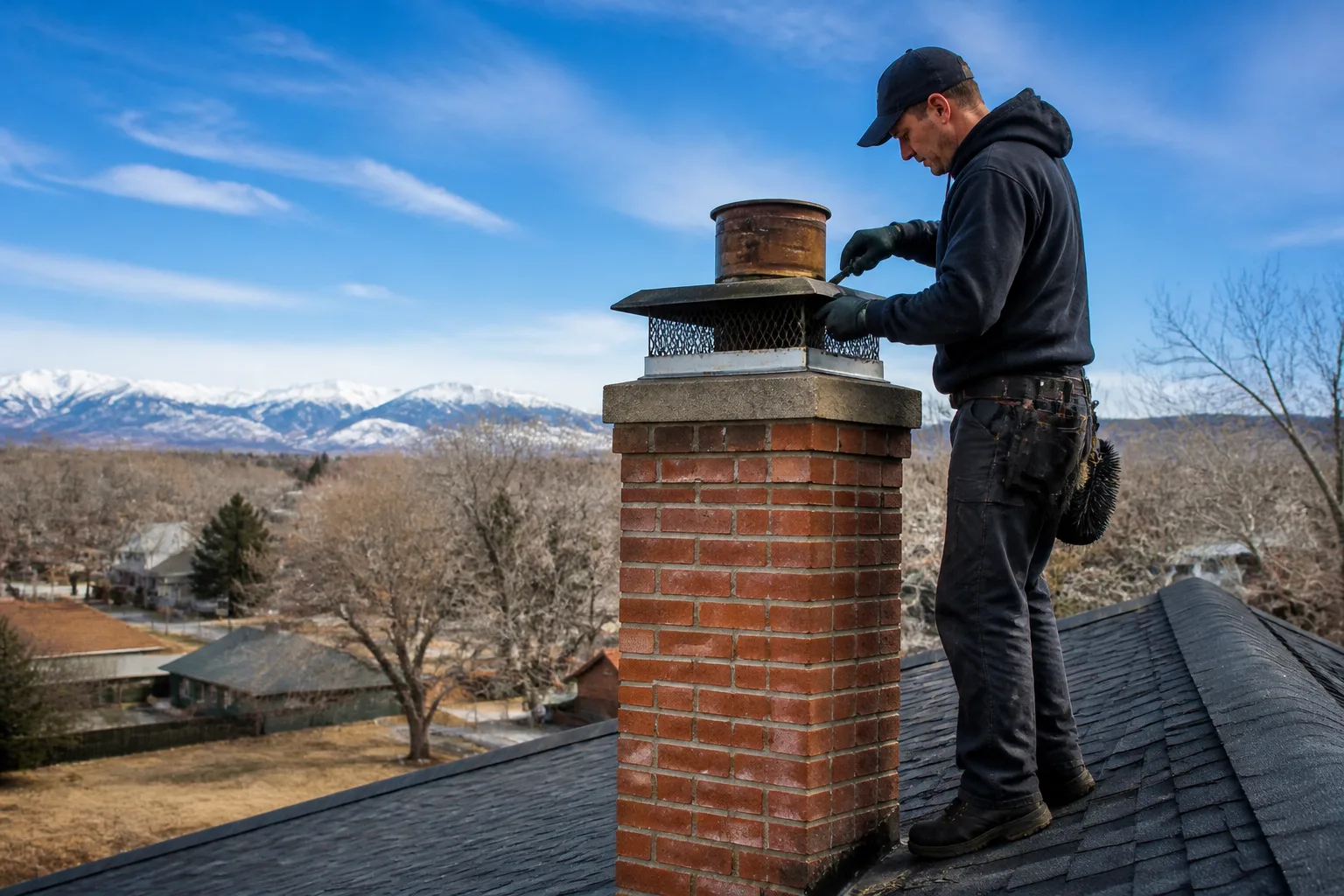
- The crown. Hairline cracks that haven’t reached the flue can often be sealed. A crown that’s separating from the stack, crumbling across the top, or no longer shedding water needs replacing. In Hampden’s freeze-thaw swings, a crown that holds water will crack a little more each winter.
- The cap. A missing or damaged cap is the single most common entry point for water and animals. Caps are almost always a replace item, and they’re inexpensive relative to the damage they prevent.
- The firebox. Isolated mortar joint failure in the firebox is repairable with the right refractory mortar. Widespread cracking through the firebrick, or a firebox that’s pulling away from the surrounding masonry, points to a systemic problem.
- The exterior masonry. Rebuilding a few courses of spalled brick is routine. A stack that’s leaning, or walls that are separating, means the structural footing is in question and the repair scope grows.
Notice the pattern: repair is viable when the failure is one component and the surrounding system is sound. Replacement territory starts when the failure has a cause that reaches beyond the part you can see.
Why a Level 2 inspection is the deciding factor
You cannot make this call from the ground. A Level 2 inspection includes a camera run through the flue interior, and that footage is the only objective way to know whether a repair will hold. From outside, a liner can look perfectly fine while the inside tells a different story: cracked tiles, gaps at the joints, heavy glazed creosote, or an insert flue that was never properly connected.
Here’s what the camera changes:
- You see the failure mode. A hairline crack in one tile is a very different finding from a spiraling crack that runs the length of the flue.
- You see the match. If a high-efficiency insert was dropped into an oversized original flue, the camera shows the mismatch that’s been driving creosote and efficiency losses.
- You get a photo report. The evidence should be yours to keep, not a verbal summary you have to take on faith.
In our experience across Hampden, the camera is what separates a confident recommendation from a hopeful one. Your chimney system, fully evaluated, not just swept: that’s the standard we hold to. If a technician is recommending replacement without liner footage in hand, that’s your cue to ask why.
How to evaluate a contractor’s recommendation
A trustworthy replacement recommendation always comes with documentation of why repair won’t be durable. Not a sales pitch, not a general warning about old chimneys, but a specific explanation tied to what’s actually inside your flue and on your roof. Ask three questions and listen closely to the answers:
- “Can I see the camera footage?” A pro who did the inspection should be able to walk you through it frame by frame.
- “What’s the failure mode, and how far does it reach?” If the answer is vague, or shifts to “these old chimneys always need it,” keep asking.
- “If we repair it, what’s the expected service life?” A good answer is specific: a resurfaced liner that should hold for years, a crown replacement that resets the clock. A bad answer is “it depends.”
Professional-grade materials matter here too. When we specify a system, it’s from brands chimney specialists rely on, like HeatShield for flue restoration or DuraFlex for relining, not whatever’s easiest to source. Built to last, not patched to pass. If you’re not sure what you’re looking at, a second opinion is a reasonable thing to ask for, and any honest contractor will welcome it.
The long-view cost math
The cheapest number today isn’t the cheapest number over ten years. That’s the trap in comparing a repair quote against a replacement quote side by side. The right question is how many years each option buys you, and what happens at the end of that window.
When a repair buys 5 to 7 years, it’s often the right move for a system that’s otherwise healthy and has an isolated flaw. When a repair buys 15-plus years, it’s almost always the better call, because you’ve reset the service life of a component without touching the rest. Replacement earns its cost when a repair would only kick the problem down the road: a liner that’s failing systemically, a stack with water damage that reaches into the masonry. In that case, a patch that buys 5 years is money spent twice.
One more factor worth weighing: fireplace repair and crown and cap work are lower-cost items that protect the larger system. Catching the problem at the crown before it reaches the firebox is the whole game. Water intrusion is the leading cause of long-term chimney damage, and it’s also the cheapest to stop.
When to call a pro
Some of this is checkable yourself: a loose cap, a visible crack in the crown from the ground, water stains on the firebox walls after a storm. But anything involving the flue interior, the firebox’s structural integrity, or the masonry above the roofline needs a trained professional. A camera inspection isn’t a DIY job, and neither is anything that involves working at height or opening up a system that may be venting combustion gases. Carbon monoxide is the reason the liner matters, and it’s not a hazard to guess at. If you’re in Hampden and want a straight answer, we start with a free estimate and a written scope.
Related services in Hampden: Chimney Sweep Hampden covers the full range, including chimney sweep and inspection for the annual maintenance side, so you have one point of contact from diagnostic through repair.
The Bottom Line
Repair versus replace isn’t about how old your chimney is. It’s about whether the failure is isolated to one component or a symptom of something broader. Get the camera evidence, understand the failure mode, and weigh how many years each option buys, not just today’s price. When a repair will hold, we say so. When it won’t, we show you why. If you’re in Hampden and need help deciding, Chimney Sweep Hampden offers free estimates. Call (833) 974-5720. We answer 24/7. Fast dispatch from 7am to 7pm, Sunday through Friday. Our technicians have up to 14 years of experience.
Frequently Asked Questions
A Level 2 inspection with camera footage of the flue interior settles it. If the failure is isolated to one component and the surrounding system is sound, repair is usually the right call. If the damage is a symptom of a cause that reaches beyond the part you can see, such as water intrusion that’s degraded the liner and the masonry, replacement earns its cost. A trustworthy pro documents the reason either way.
Sometimes, yes. If the liner is still structurally sound but the interior surface has deteriorated, HeatShield resurfacing can restore it without a full reline. If the tiles are cracked through, shifted, or undersized for the appliance, relining with a DuraFlex flexible liner is the durable answer. The camera tells you which situation you’re in.
Often it is. An isolated crown crack or a few failed mortar joints on an otherwise healthy stack can add many years of safe service. The question is what the repair buys you: 5 to 7 years points to a targeted fix, while 15-plus years resets the component’s service life. Compare that against replacement cost over the same window.
Sweeping keeps creosote in check, but it doesn’t stop water intrusion or fix a failing liner. Water at the crown is the leading cause of long-term chimney damage, and a compromised liner puts combustion gases where they don’t belong. Sweeping is maintenance; it isn’t a substitute for addressing a structural failure.
Written by the team at Chimney Sweep Hampden.
Need Chimney Cleaning Help?
Call Chimney Sweep Hampden - the local pro we connect you with is licensed and insured, here with fast help in Hampden.
(833) 974-5720