
Last updated November 23, 2026
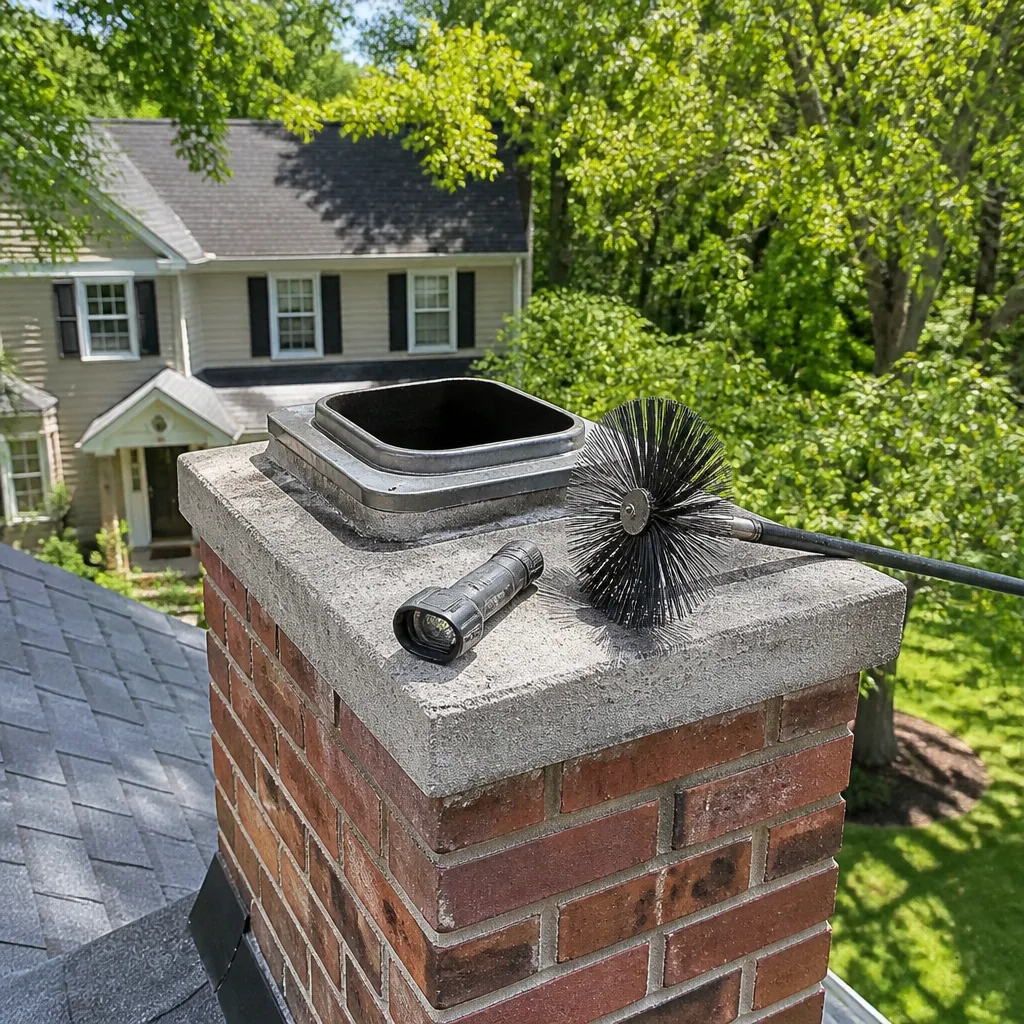 Sweep & inspection
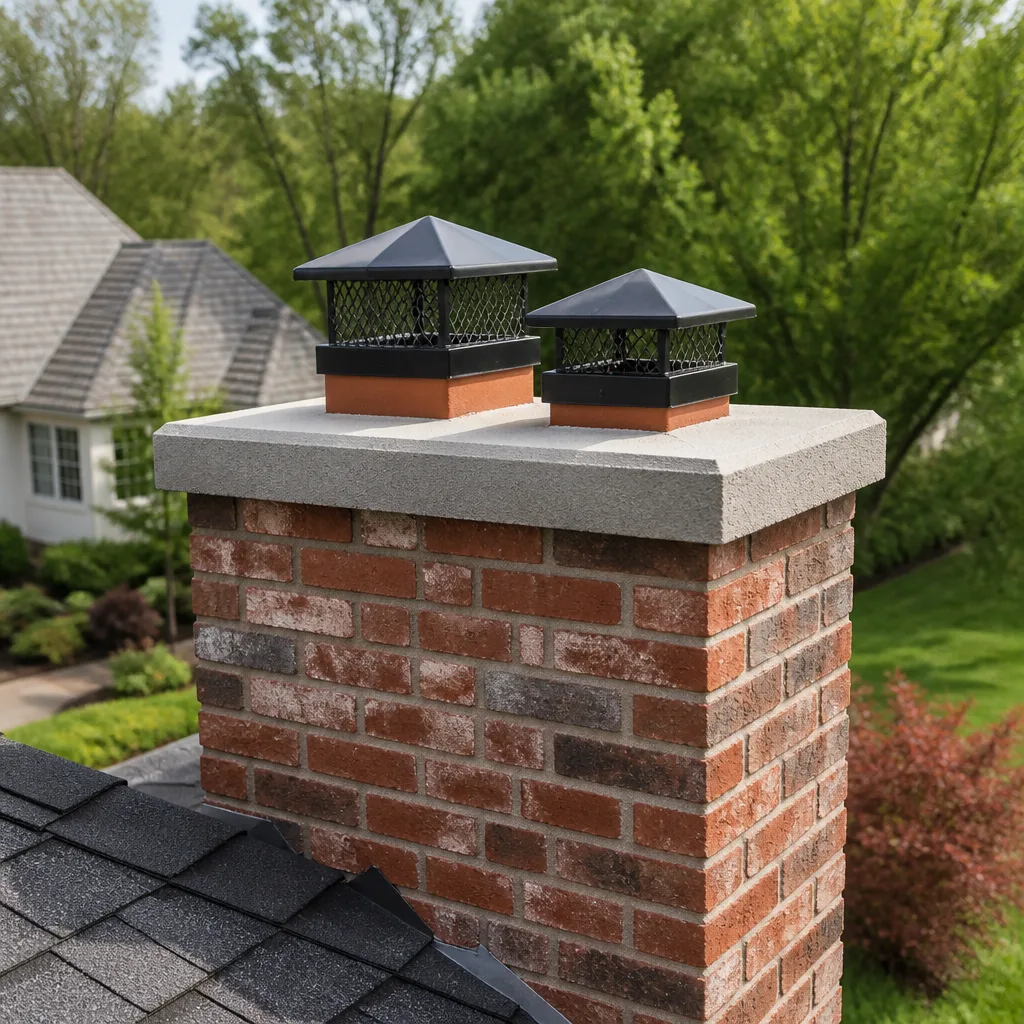 Caps & crowns
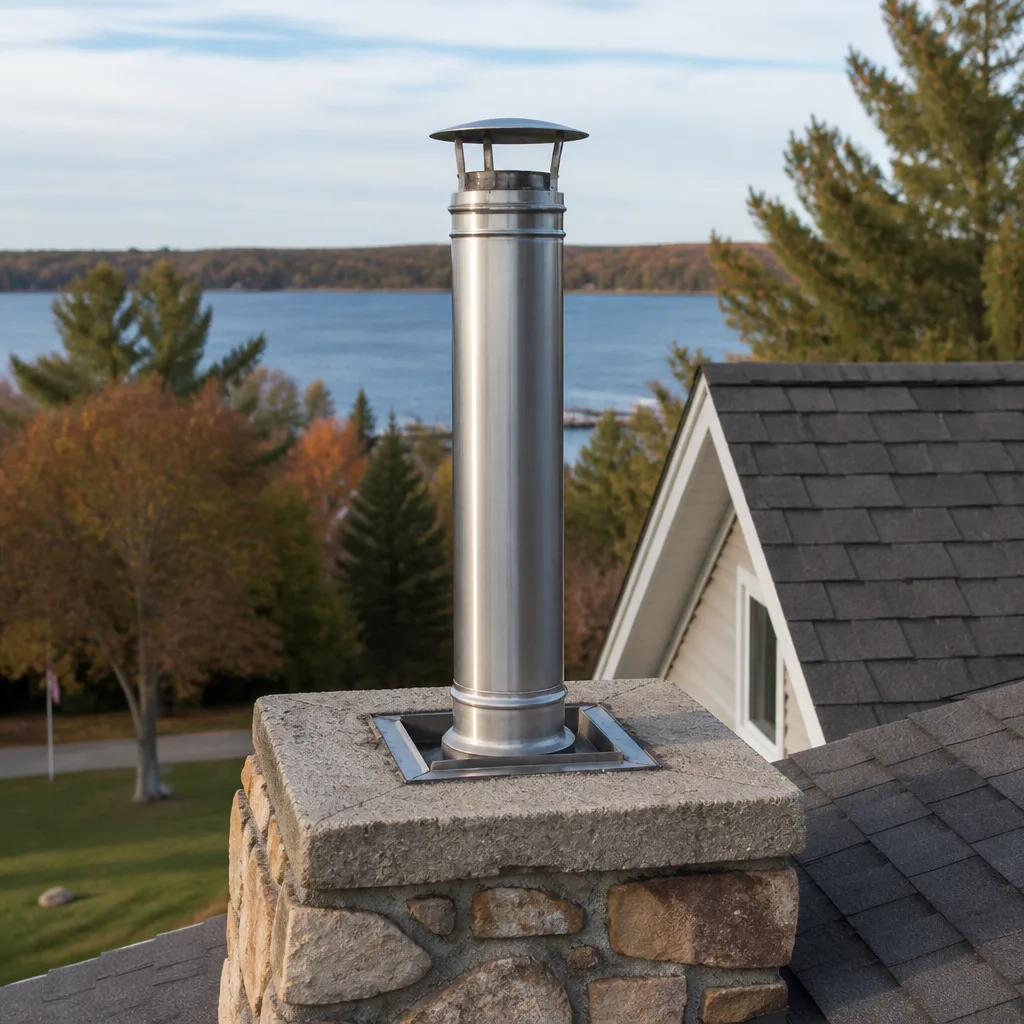 Flue relining
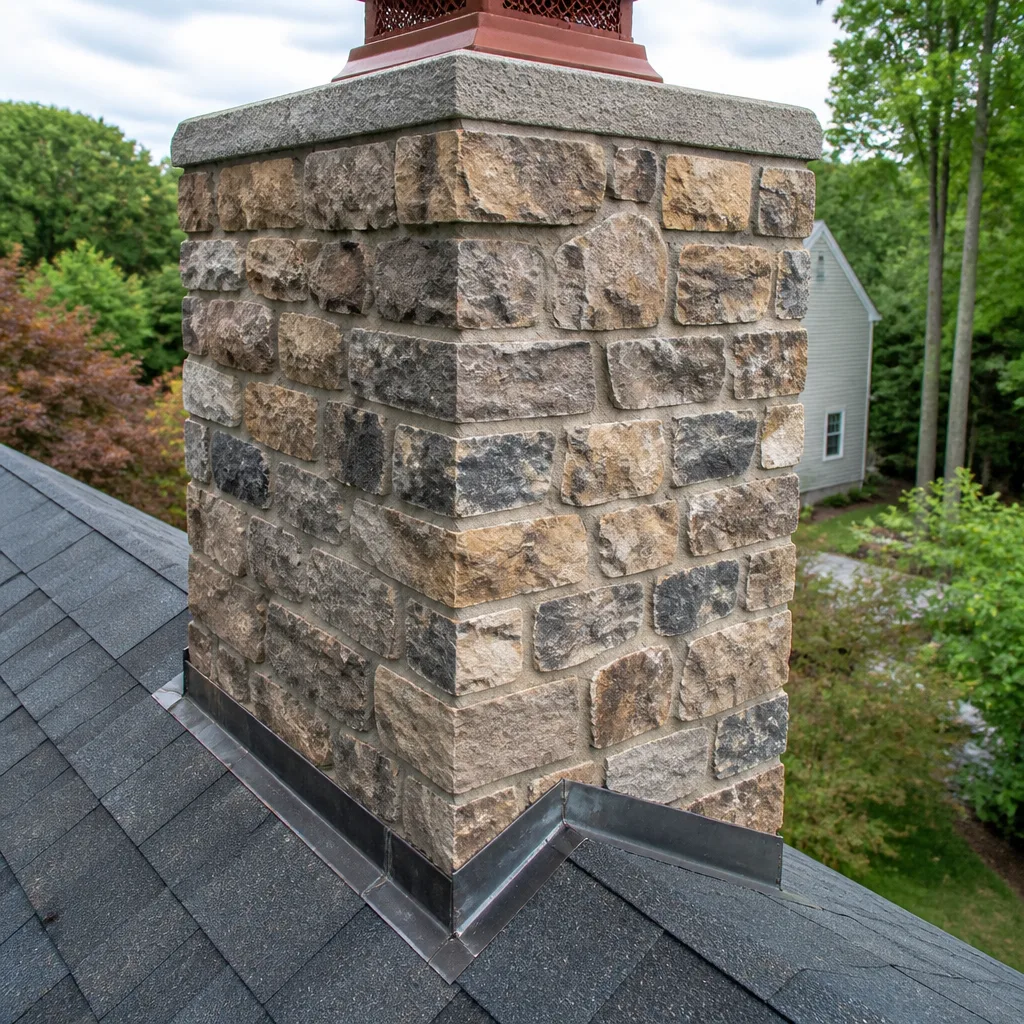 Masonry repair
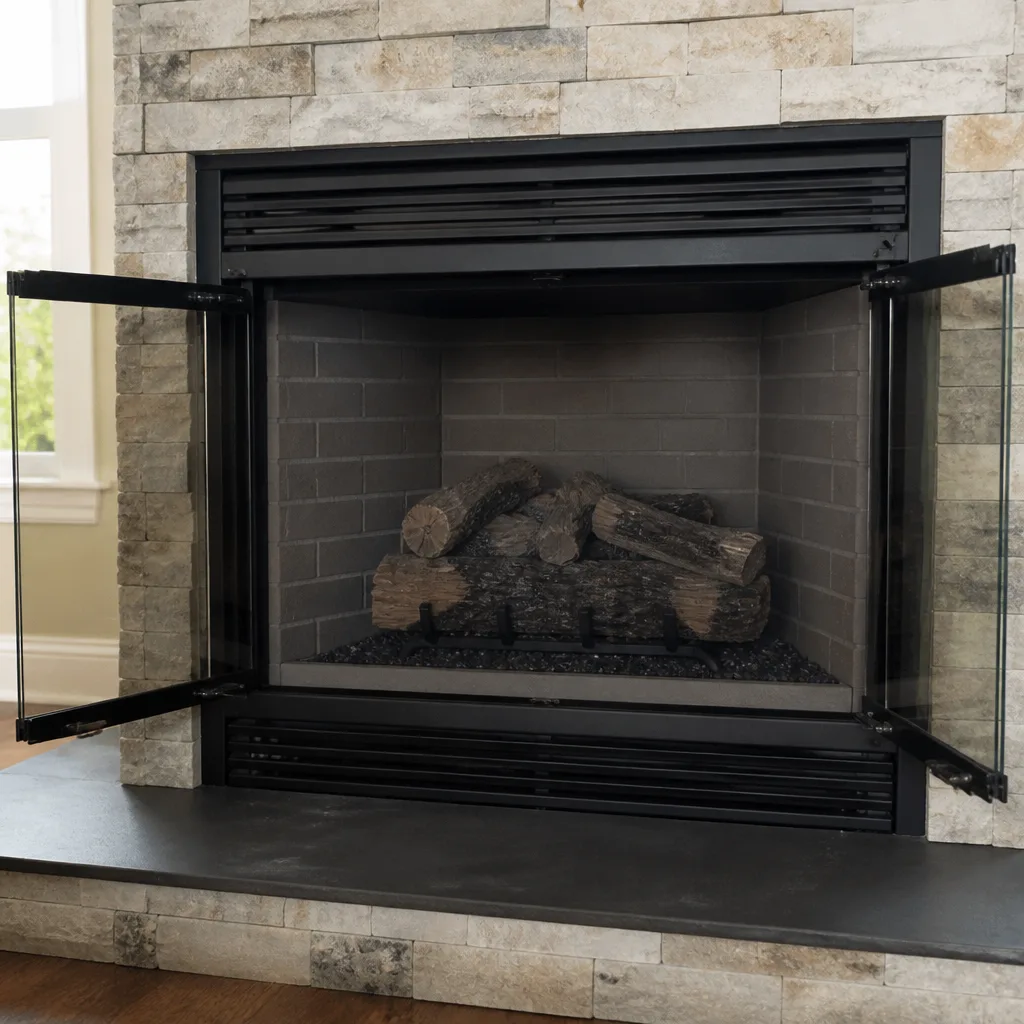 Gas fireplace service
Level 1 sweep and inspection to the NFPA 211 annual standard - flue, crown, cap, and flashing checked and photographed
Chimney sweep logs do not sweep chimneys. They loosen some creosote - which then falls where a brush and vacuum still have to collect it.
How to Hire a Chimney Cleaning Contractor in Hampden: A Step-by-Step Guide
Most homeowners assume the hard part of chimney care is finding someone who shows up. It isn’t. The hard part is telling a real chimney specialist apart from a general handyman who added sweeping to a list of side services, and that difference rarely shows itself until something has already gone wrong inside the flue. A certification badge helps, but it’s a low bar to clear, and the real signal is what a contractor does once the cleanout door is open. This guide gives you a concrete vetting framework: the credentials that actually matter, a phone interview you can run before booking, the quoting behaviors that should end the conversation, and what a proper written report looks like. Everything here is written from Hampden, where long heating seasons and older masonry chimneys make the stakes higher than in milder parts of the state.
Quick Answer
To hire a chimney cleaning contractor in Hampden, verify the credential that matches the specific work (CSIA for sweeping and inspection, NFI for gas and fireplace work, NCSG for guild-level accountability), confirm in writing which inspection level is included and that camera equipment and a written report come standard, and treat any quote given before someone asks about your fireplace type and fuel as a warning sign. The cheapest flat rate is almost always a price for sweeping only, with no inspection attached.
Styles & brands we work with
- Sweep & inspection
- Caps & crowns
- Flue relining
- Masonry repair
- Gas fireplace service
Table of Contents
- Why Hiring Right Matters More in Hampden
- The Credentials That Actually Matter (and Which One Fits the Job)
- The 5-Question Phone Interview to Run Before Booking
- Red-Flag Quoting Behavior
- Why a Handyman’s Sweep Can Void a Warranty or Complicate a Claim
- What a Professional Post-Service Report Should Contain
- Why Full-Service Capability Beats a Sweep-Only Visit
Why Hiring Right Matters More in Hampden
Hampden homes run their fireplaces hard. Heating seasons here are long, the wood burned is often whatever was split and stacked the previous year, and a good share of the housing stock carries masonry chimneys built decades ago with clay tile liners that have had plenty of time to crack, spall, and pull away at the joints. A sweep-only visit cleans the flue and leaves. It doesn’t tell you whether the liner behind that creosote is still intact, and it doesn’t tell you whether the crown at the top of the stack is channeling water down into the masonry every time it rains or the snow melts.
That’s the part generalists miss. In a market like Hampden’s, where the cold lasts and the chimneys are older, the real risk isn’t a dirty flue alone. It’s a dirty flue that hides a cracked liner or a failing crown, discovered later as water staining on a ceiling or a repair bill that runs into the thousands. We’ve seen the pattern often enough to know it isn’t rare.
So the goal when you hire isn’t to find the lowest price for a brushing. It’s to find a specialist who will evaluate the whole system, put the findings in writing, show you the camera evidence, and then be the same person who does the repair if one is needed. That’s the framework this guide walks you through, step by step, in the order you’ll actually need it.
What “Full Evaluation” Looks Like
When we open a chimney in Hampden, “sweeping” is the smallest part of the work. A proper visit covers the firebox and damper, the smoke chamber, the flue from top to bottom, the crown, the cap, and the flashing where the chimney meets the roof. Each of those components fails in its own way, and each is cheaper to address early. Catching the problem at the crown before it reaches the firebox is the whole point of a full-service visit, and it’s the difference between cleaning around a problem and solving it.
The Credentials That Actually Matter (and Which One Fits the Job)
Credentials matter, but not all of them cover the same work, and a homeowner who doesn’t know the difference can end up hiring someone certified for the wrong task. Here’s the plain breakdown of the three you’re most likely to encounter when hiring in Hampden.
- CSIA (Chimney Safety Institute of America): This is the base-level certification for chimney sweeping and inspection. It signals that the technician has been trained and tested on sweeping and inspection fundamentals and follows a code of ethics. It’s a minimum bar, not a guarantee of full-service capability. It does not, by itself, certify someone to reline a flue, rebuild a crown, or repair a firebox.
- NFI (National Fireplace Institute): This one is specific to hearth appliances – gas, wood, and pellet. If your home has a gas insert or a manufactured fireplace, NFI certification tells you the technician understands that appliance’s venting and safety requirements. For gas work, it’s the credential that carries weight.
- NCSG (National Chimney Sweep Guild): This is a professional membership guild rather than an individual certification. It indicates a company that has committed to industry standards and continuing education. Useful as a signal of seriousness, but it doesn’t replace a specific technician certification for the work being done.
Which one matters most depends on the job. For a routine sweep and annual inspection on a wood-burning masonry chimney, CSIA is the relevant credential. For a gas insert or a fireplace repair involving the appliance itself, NFI is what you want to see. For structural work – a reline, crown rebuild, or firebox repair – look for a company that holds the certifications for the sweep and inspection and has the capability to do the repair in-house. That last part is where a lot of Hampden homeowners get handed off to a second contractor mid-project, which is exactly the seam where problems appear.
The Credential Question to Ask
Don’t just ask “are you certified?” Ask which certification, for which work, and who holds it. A company that can answer specifically – CSIA for the sweep, NFI for the gas insert, and in-house capability for the repair – is telling you it knows the boundaries of its own qualifications. A company that says “yes, we’re certified” and moves on is telling you something too.
The 5-Question Phone Interview to Run Before Booking
This is the fastest filter you have. Run these five questions before you commit to a booking, and you’ll know more about a contractor in ten minutes than a website will tell you in an hour. Write the answers down.
- “Which inspection level is included in this price?” The industry recognizes three levels. Level 1 is a visual check with the standard tools during a routine sweep. Level 2 adds a video camera inspection and is the right level when you’ve bought a home, changed fuel type, had a chimney fire, or noticed a problem. Level 3 opens up concealed areas and is reserved for specific suspected hazards. If the answer is “we just sweep,” you know the price covers cleaning only.
- “What camera equipment do you use, and will I see the footage?” A real inspection involves a video scan of the flue interior, not a flashlight pointed up the chimney. Ask whether you’ll be shown the footage. A technician with nothing to hide will show you what the camera saw.
- “What does the written report include?” You want to hear: findings by component, photographs, and a clear recommendation for anything that needs attention, with a note on what can safely wait. A verbal summary at the door is not a report.
- “If you find structural damage, who does the repair?” This is the handoff question. If the answer is “we refer that out,” you’re hiring two contractors, not one. If the answer is “we do it,” ask what materials and methods they use for relining and crown work.
- “What fuel do you burn, and what kind of fireplace is it?” A contractor who doesn’t ask you this before quoting is quoting blind. Wood, gas, and pellet systems have different venting and inspection requirements, and a flat rate that ignores the difference is a guess, not a quote.
If a contractor can answer all five cleanly, you’re probably talking to a specialist. If they stumble on two or more, keep calling. Call Chimney Sweep Hampden and you’ll get straight answers to every one of these – it’s how we book work.
Red-Flag Quoting Behavior
Quoting is where unqualified operators reveal themselves, and it usually happens before anyone sets foot in your home. Watch for these three patterns.
- A flat rate quoted before any questions. A sweep-only price that assumes no inspection is a number for brushing soot off a flue. It tells you nothing about the condition of the liner, crown, or firebox. When that price turns out to be the whole story, the work behind it is usually minimal too.
- A quote given without asking about your fireplace type or the fuel you burn. Wood, gas, and pellet systems are inspected and serviced differently. A contractor who quotes without asking is quoting a generic number, not your chimney.
- No written scope of work. Any legitimate quote should be in writing before the work starts, listing what’s included and what isn’t. If a contractor won’t put the scope in writing, you have no way to verify what you paid for or to hold anyone to it later.
There’s a fourth pattern that’s subtler: the price that’s suspiciously low, followed by an upsell once the technician is inside. The honest version of that conversation is a written scope and a written estimate, agreed before booking, so the number you discussed is the number you pay. That’s how we work, and it’s the standard to hold anyone to.
Why a Handyman’s Sweep Can Void a Warranty or Complicate a Claim
Here’s the part most homeowners never hear until it matters. Many fireplace and insert manufacturers specify that installation, maintenance, and repair be performed by a qualified technician following the manufacturer’s instructions. A general handyman who brushes a flue without inspecting the appliance itself can leave a maintenance record that doesn’t meet those terms – and if a warranty claim later hinges on whether the work was done correctly, that gap becomes the problem.
Insurance is the other side of it. If a chimney fire or a water-damage claim comes up, an adjuster may ask for documentation of the maintenance that was performed. A verbal “we swept it” from a handyman isn’t documentation. A written report from a specialist, with photographs and findings by component, is. The difference isn’t about blame. It’s about having evidence of what was done and when – and that evidence is exactly what a sweep-only, undocumented visit can’t give you.
This is why we keep the whole service under one roof: chimney sweep, inspection, fireplace repair, structural repair, and cap and crown work. It means one contractor, one written record, and no gap where a handyman’s visit would sit.
What a Professional Post-Service Report Should Contain
A report is the deliverable that outlasts the visit. It’s what you keep, what you show an insurer, and what tells the next technician what’s been done. A verbal summary at the door fails on all three counts. Here’s what a proper report includes.
- Findings by component. The firebox, damper, smoke chamber, flue, crown, cap, and flashing should each be listed with a condition note – not a single overall grade.
- Photographs and camera footage of the flue interior. You should be able to see what the technician saw, including any cracked tiles, gaps at joints, or heavy creosote deposits.
- Recommendations with urgency levels. Anything that needs attention should be flagged, and anything that can safely wait should be said plainly. Not everything urgent-sounding is urgent, and a good report distinguishes the two.
- The inspection level performed and the date. This is the record that matters for warranty and insurance purposes.
- The scope of any work recommended, with a written estimate. If a repair is recommended, the estimate should list the materials and method, and it should be a separate decision from the sweep.
If a contractor can’t hand you a report like this, the visit wasn’t really an inspection. It was a cleaning with a conversation attached.
Why Full-Service Capability Beats a Sweep-Only Visit
The single biggest reason to hire a full-service chimney company in Hampden is continuity. A sweep-only visit can clean the flue, but it can’t reline it, rebuild the crown, resurface the flue with HeatShield, or repair the firebox. If any of those come up – and on older masonry chimneys they often do – a sweep-only contractor has to refer you out, and you’re back to vetting a second company, with no one accountable for the whole system.
Full-service capability also means the products are chosen to fit the problem, not whatever was on the truck. We work with professional-grade brands that chimney specialists rely on: DuraFlex flexible liner systems for relining deteriorated or mismatched flues, HeatShield for flue resurfacing without full relining, and Gelco, Olympia Chimney, Famco, and Copperfield for caps, crowns, and system components. That’s trade-level product knowledge most residential competitors don’t carry, and it’s the difference between a repair built to last and a patch that passes for now.
HeatShield is worth understanding because it’s the capability most sweep-only companies can’t offer. When a flue liner is deteriorating but not yet at the point of full replacement, HeatShield resurfacing can restore it. That’s a middle path between leaving a failing liner alone and tearing it out, and it exists only where the contractor is set up to do it. If a homeowner in Hampden calls a sweep-only service with a deteriorating liner, the answer is usually “replace it” or “refer out,” because the middle option isn’t in the toolkit.
One Contact, Start to Finish
When you hire full-service, the person who found the problem is the person who fixes it. There’s no handoff, no second crew, no re-explaining your chimney to someone new. For a system that fails in stages – crown now, liner later, cap when the old one rusts through – that continuity is worth more than a lower sweep price.
Common Mistakes to Avoid
- Hiring on price alone. The lowest flat rate in Hampden is usually a sweeping price with no inspection attached. You’ll pay less up front and learn less about your chimney than a free estimate would tell you.
- Skipping the written report. A verbal summary at the door leaves you with no record for warranty or insurance purposes. Ask for the report in writing and keep it.
- Assuming certification covers all the work. CSIA covers sweeping and inspection, NFI covers hearth appliances, and neither one certifies structural repair. Match the credential to the job.
- Letting a general handyman handle the flue. A handyman can clean a stovepipe, but a masonry chimney with a clay liner is a different system, and the maintenance record matters if a warranty or insurance claim ever comes up.
- Ignoring the crown and cap. Water intrusion is the most common driver of expensive chimney damage, and it starts at the top of the stack. A visit that cleans the flue but doesn’t look at the crown misses the source.
- Booking the first company that answers. Run the five-question phone interview. The answers sort the specialists from the generalists faster than any review page will.
- Treating a recommendation as an emergency. Not everything found in an inspection needs to be fixed this week. A good report tells you what can wait, and a good contractor will say so.
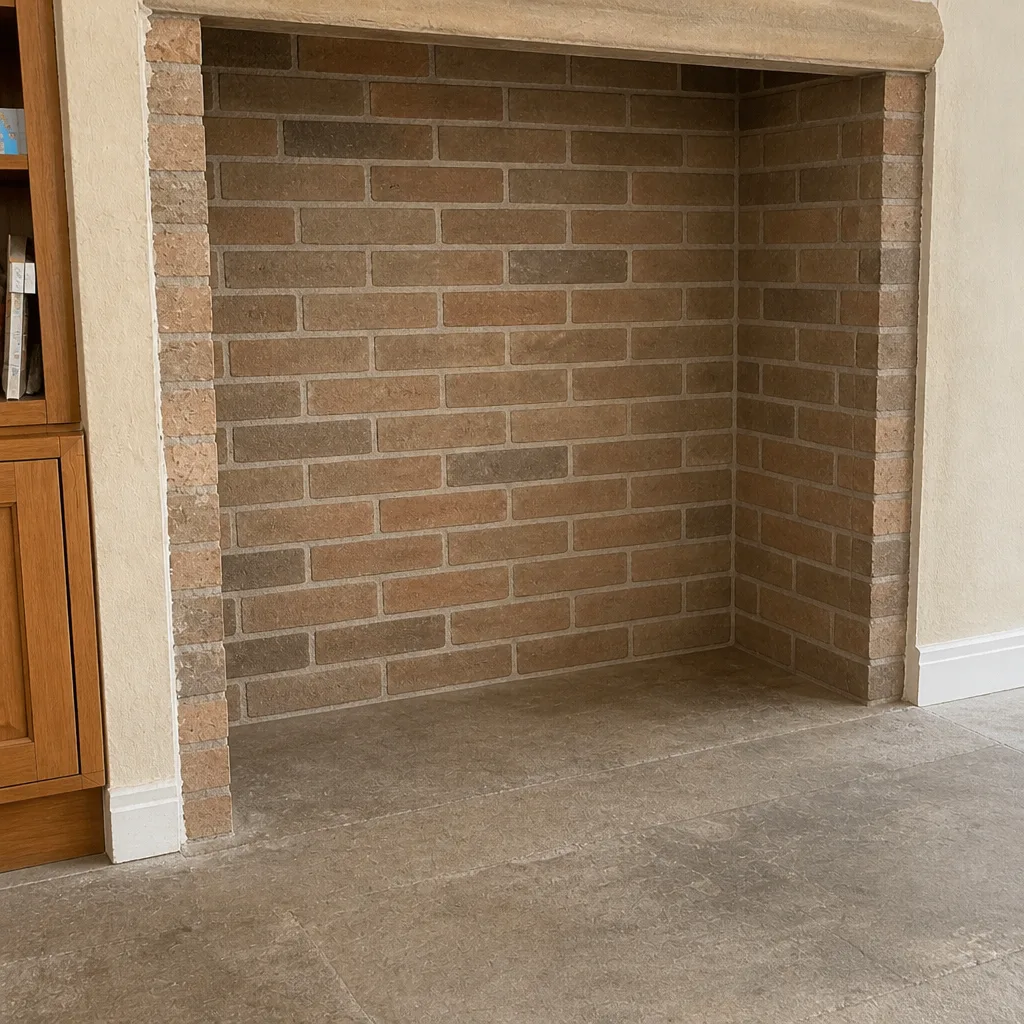
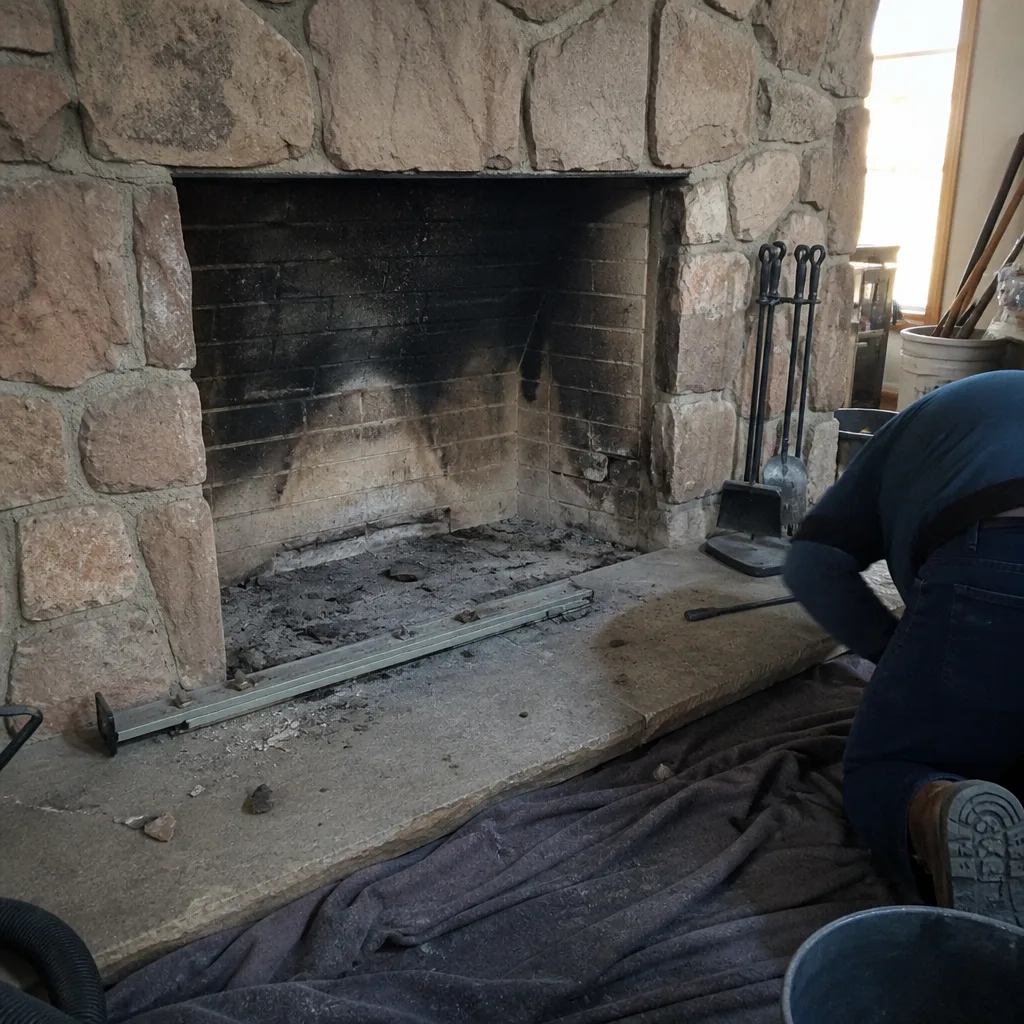
See the difference
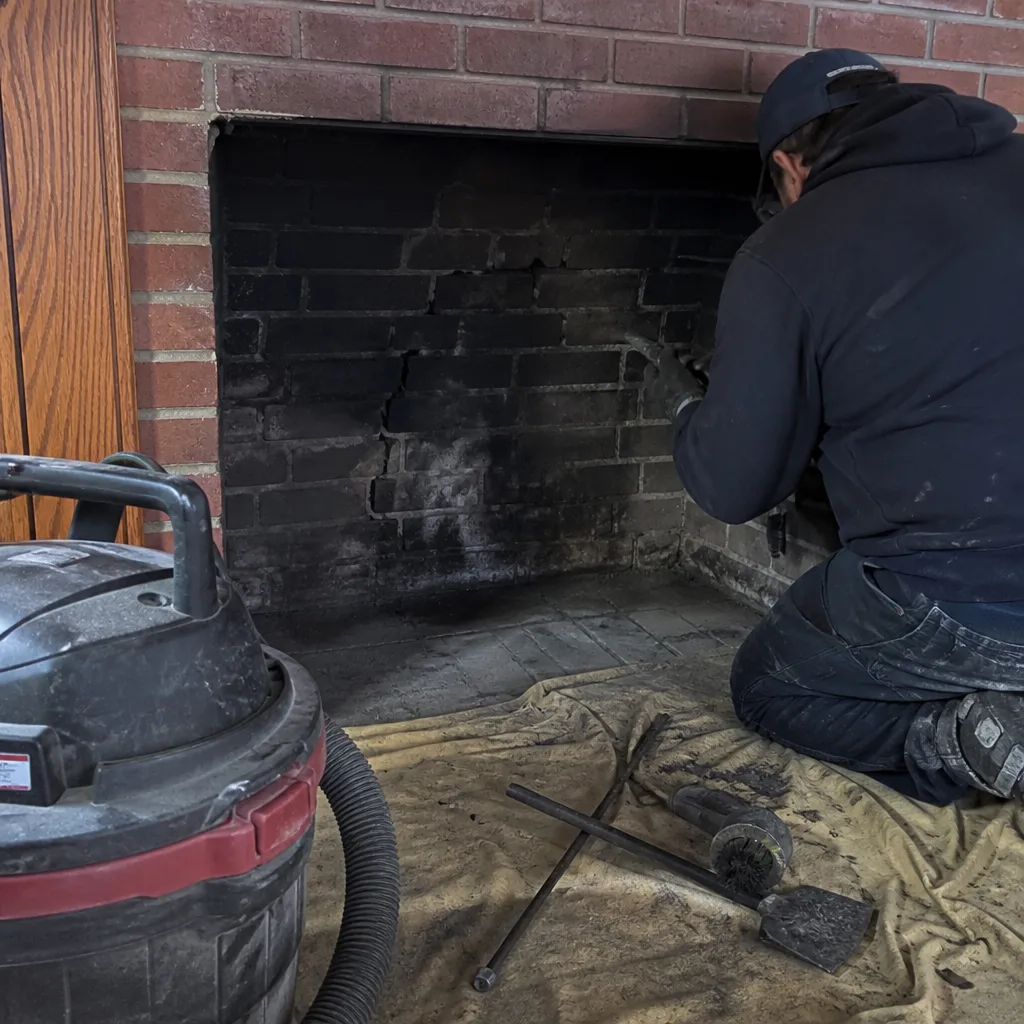 Before
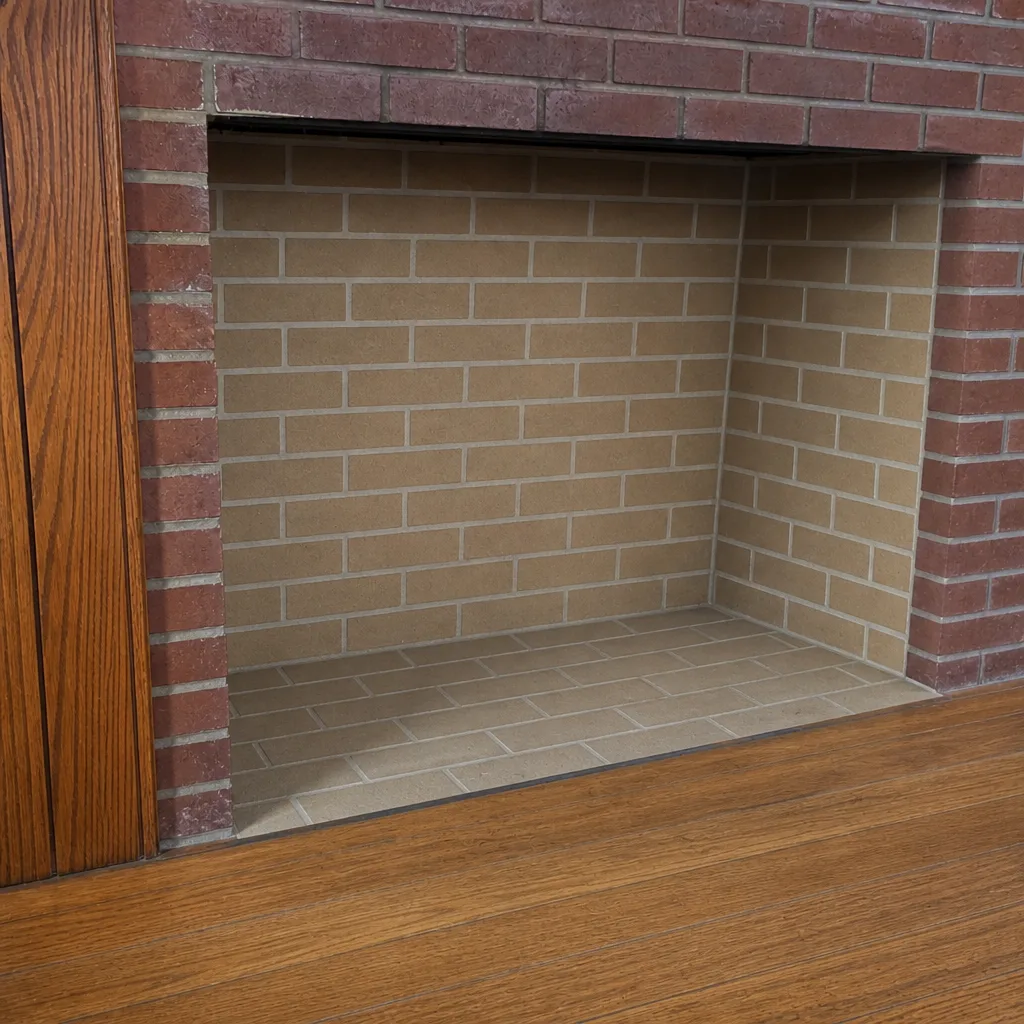 After
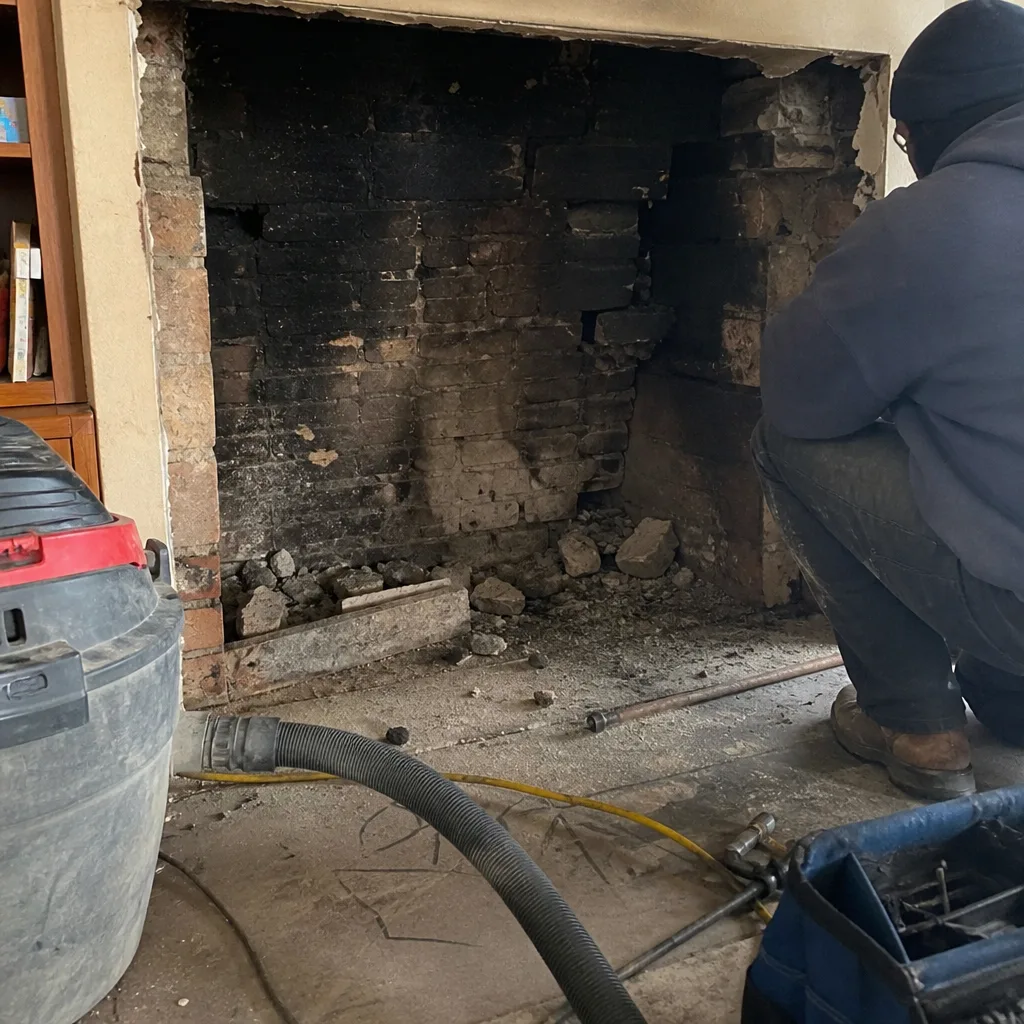 Before
 After
 Before
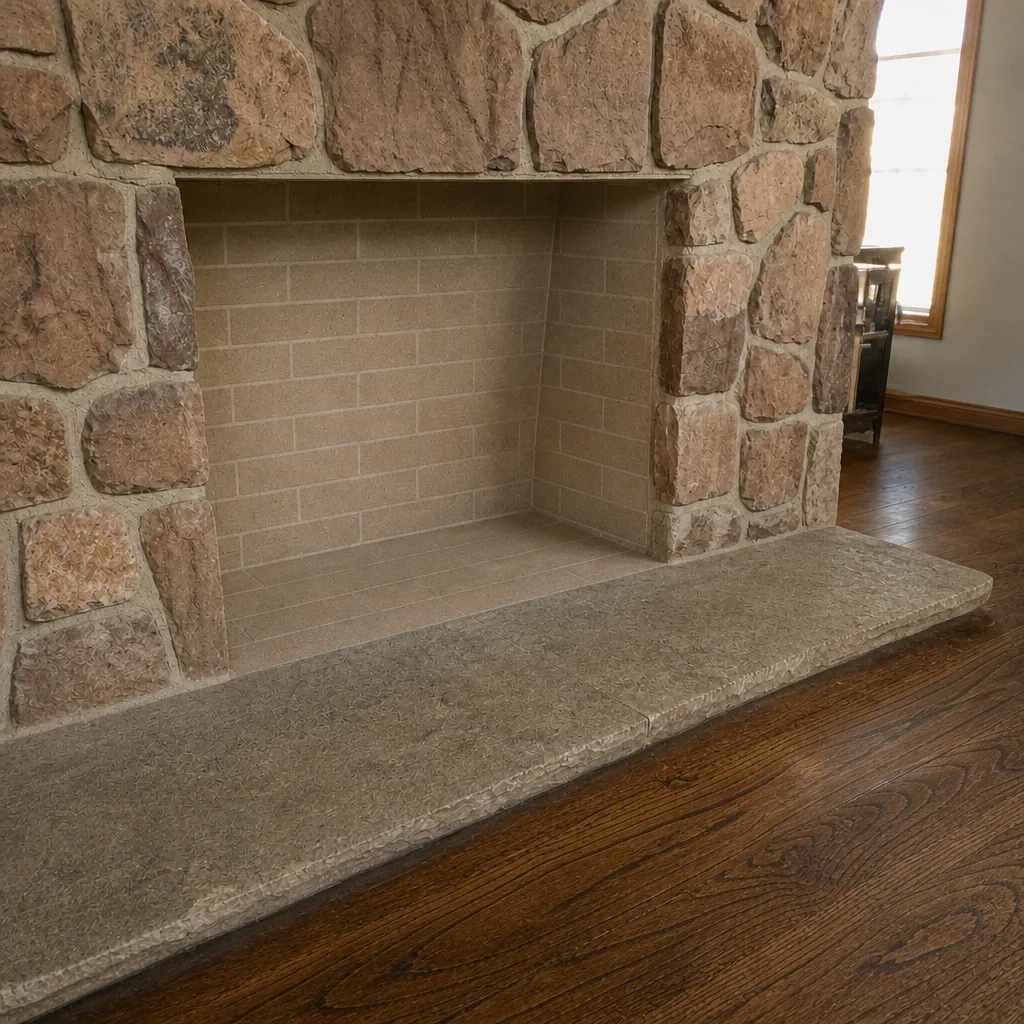 After
When to Call a Professional
Some situations are clear signals to stop postponing the call. If you’ve moved into a Hampden home with an existing fireplace and don’t know its service history, book a Level 2 inspection before the first burn of the season. If you’ve changed fuel type – say, added a gas insert to a masonry chimney – the venting requirements change and the chimney should be evaluated. If you’ve had a chimney fire, even a small one you put out yourself, get a Level 2 inspection before using the fireplace again. If you notice water staining on the ceiling near the chimney, rust on the damper or firebox, or crumbling mortar at the crown, those are signs the problem has moved past the flue. And if it’s simply been more than a year since the last sweep, that’s reason enough on its own.
Chimney Sweep Hampden offers free estimates in Hampden – call (833) 974-5720. We answer 24/7. Fast dispatch from 7am to 7pm, Sunday through Friday, and every visit includes a camera inspection and a written report.
Frequently Asked Questions
A chimney sweep in Hampden is priced per job by a written estimate, and the estimate is free. Because pricing depends on the fireplace type, fuel, and whether the visit includes a Level 1 or Level 2 inspection, the honest answer is that a written scope is what sets the number. Call (833) 974-5720 for an exact quote – estimates are free.
Not always. A liner needs replacement when the camera shows cracks, gaps, or deterioration that resurfacing can’t correct; when it can, HeatShield flue resurfacing is a middle path that avoids full relining. Nothing is recommended without camera evidence you can see for yourself, and we’ll tell you plainly when a liner can safely wait. Call (833) 974-5720 to get the inspection first.
Once a year for most wood-burning fireplaces, and more often if you burn heavily or burn unseasoned wood. The annual visit is also the time to catch crown and cap problems before they reach the firebox. Call (833) 974-5720 to book a sweep and inspection together.
Creosote builds up in the flue, and heavy deposits are what chimney fires feed on; a cracked liner or failing crown can also go unnoticed for years while water works its way into the masonry. Skipping isn’t an immediate danger every time, but the problems it hides get more expensive the longer they sit. Call (833) 974-5720 for a free estimate and a camera inspection.
No. CSIA covers sweeping and inspection, which is the right base credential, but it doesn’t certify structural repair or gas appliance work. Match the credential to the job: CSIA for the sweep, NFI for a gas insert, and in-house capability for the repair. Call (833) 974-5720 and ask which certifications apply to your system.
A handyman may brush a flue, but the visit won’t include a camera inspection, a written report, or the repair capability a masonry chimney may need – and the maintenance record matters if a warranty or insurance claim comes up. Hiring a specialist keeps the whole system documented. Call (833) 974-5720 for a full evaluation.
The Bottom Line
Hiring a chimney contractor in Hampden comes down to a few things you can check before booking. Match the credential to the work – CSIA for sweeping and inspection, NFI for gas and fireplace work, NCSG as a seriousness signal. Run the five-question phone interview and listen for specifics on inspection level, camera equipment, report format, and repair capability. Treat a flat rate quoted before any questions as a warning, and insist on a written scope and a written report. Then hire the specialist who can evaluate the whole system and fix what’s found, not just brush the flue and leave. That’s the standard, and it’s worth holding any contractor in Hampden to it.
When you’re ready, call Chimney Sweep Hampden at (833) 974-5720 for a free estimate. We answer 24/7, dispatch from 7am to 7pm Sunday through Friday, and every visit starts with a diagnostic inspection and ends with a written report you can keep. Our technicians have up to 14 years of experience, and we work with professional-grade brands including DuraFlex, HeatShield, Gelco, Olympia Chimney, Famco, and Copperfield – so the recommendation and the repair come from the same place. Take a look at our chimney cap & crown work and the full range of services on our site, then give us a call.
Written by the team at Chimney Sweep Hampden.