
Last updated November 23, 2026
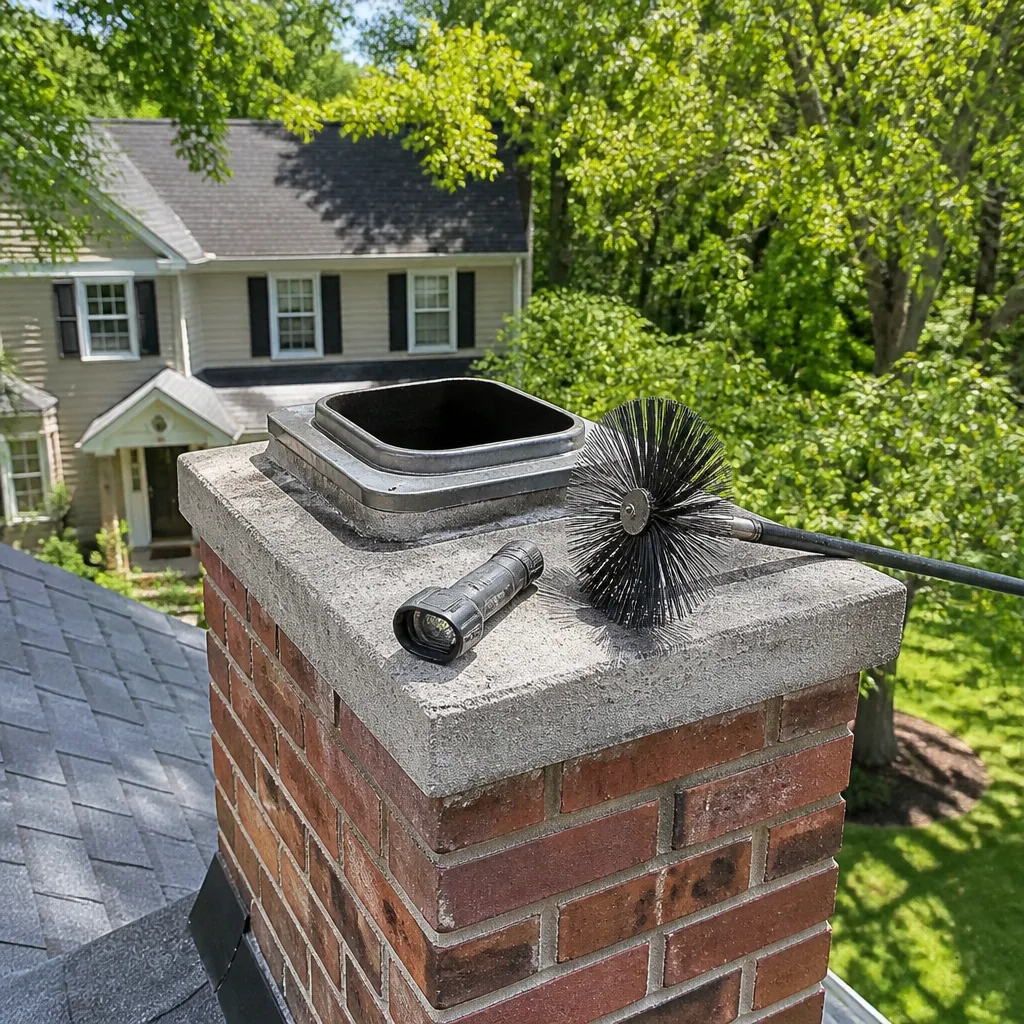 Sweep & inspection
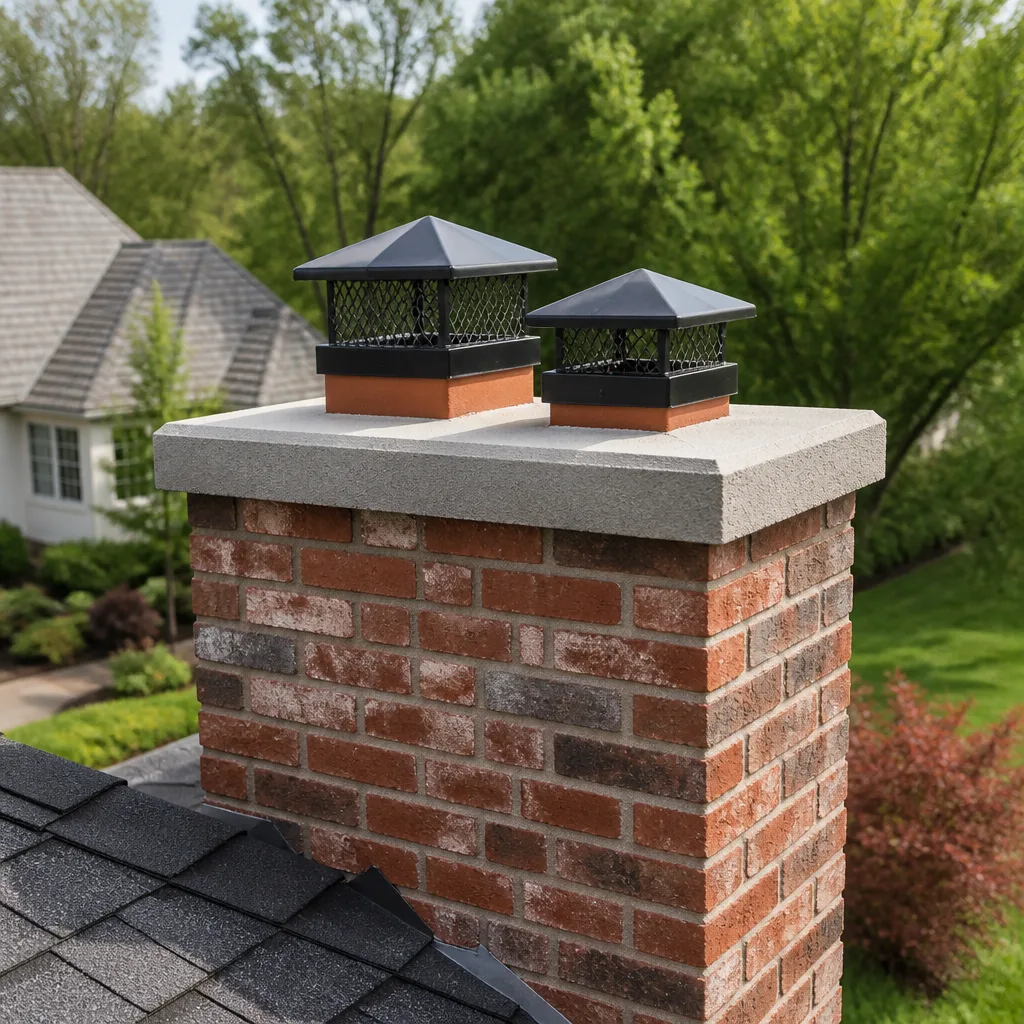 Caps & crowns
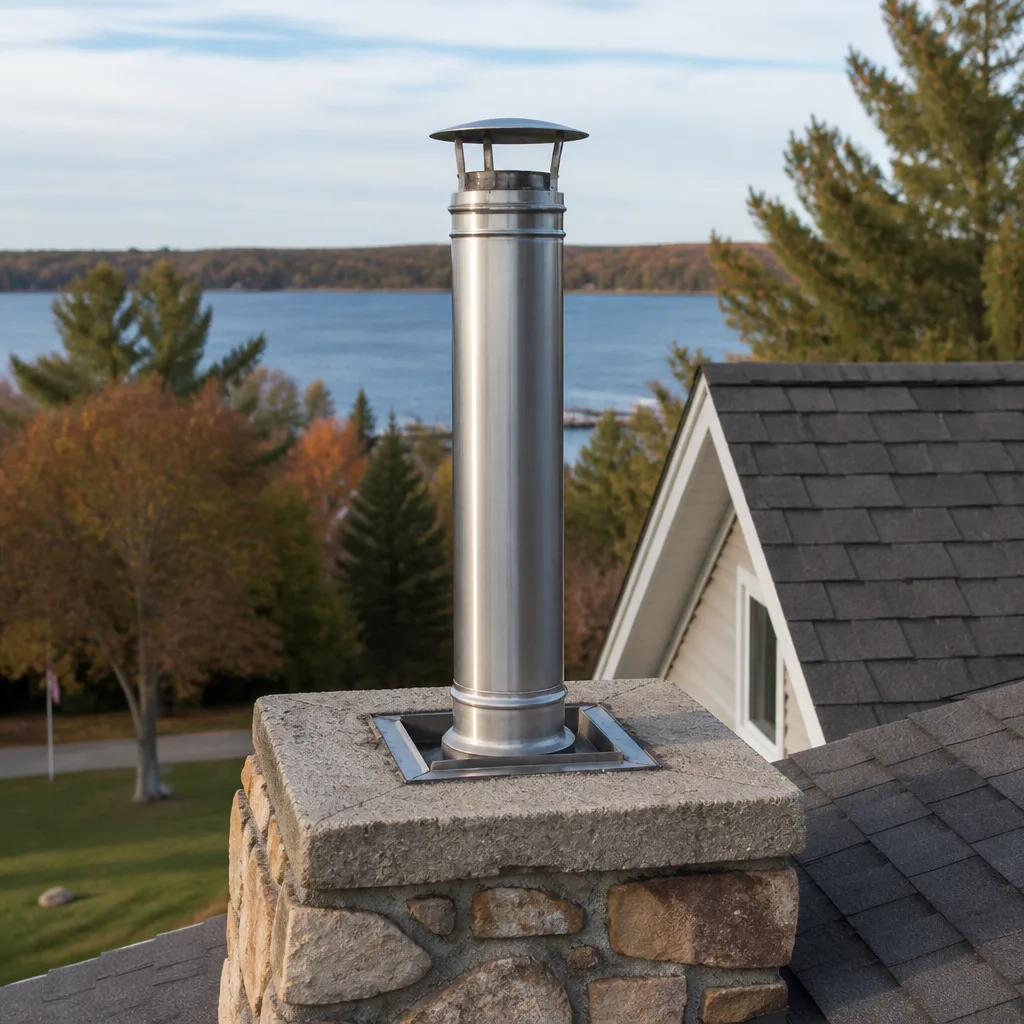 Flue relining
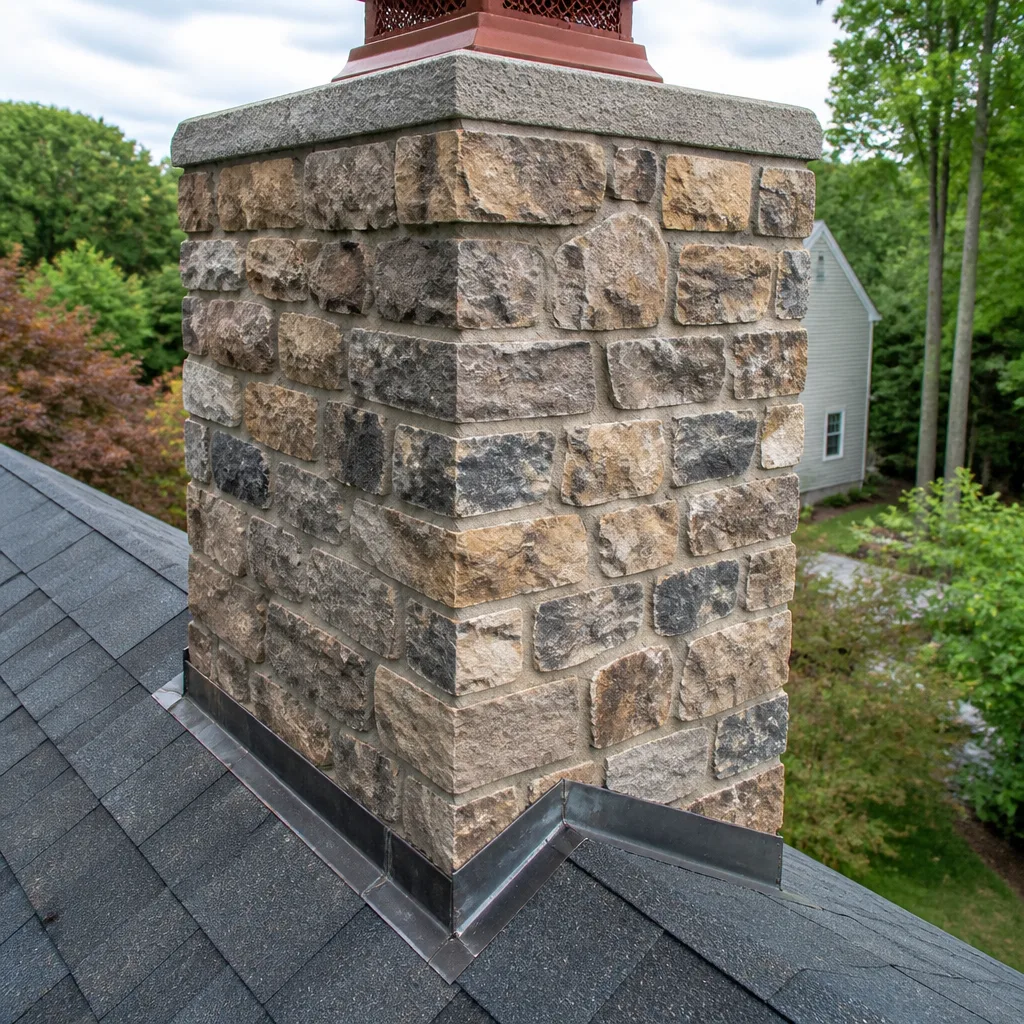 Masonry repair
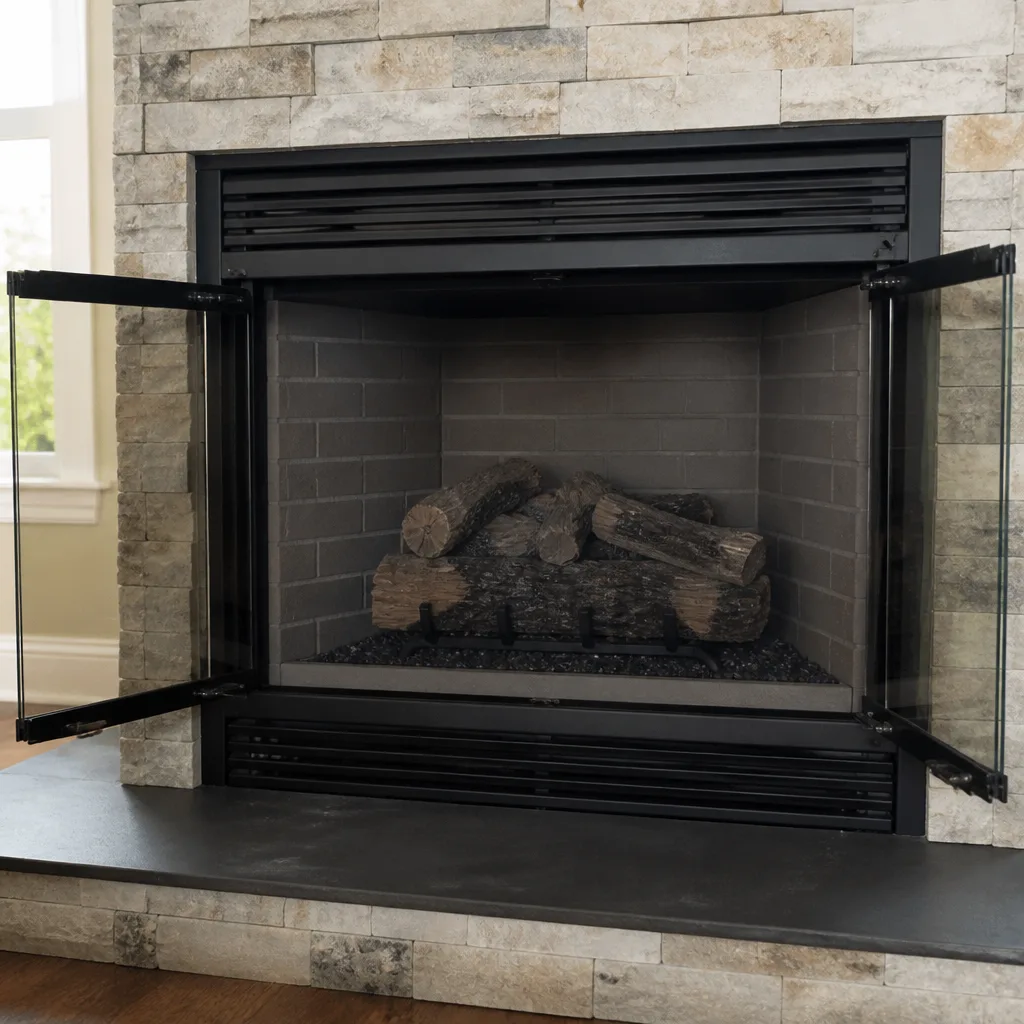 Gas fireplace service
Level 1 sweep and inspection to the NFPA 211 annual standard - flue, crown, cap, and flashing checked and photographed
Chimney sweep logs do not sweep chimneys. They loosen some creosote - which then falls where a brush and vacuum still have to collect it.
Chimney Cleaning Warning Signs: A Hampden Homeowner’s Reference Guide
A white stain running down your chimney’s exterior isn’t cosmetic. That chalky deposit is efflorescence, and it means water is actively moving through the masonry right now, doing damage on the inside where you can’t see it. By the time a crack shows up in the firebox, the moisture has usually been working for a while. The good news is that most chimney problems announce themselves early. The catch is that homeowners don’t always recognize what they’re looking at. This guide translates the technical failure signals into plain observations you can make from your living room in Hampden, so you know what needs a cleaning soon, what shouldn’t be used at all, and what’s quietly waiting to become expensive.
Quick Answer
The warning signs that matter most in a Hampden home are white staining on the exterior (water getting into the masonry), black streaking on the brick or cap (flue gases escaping past a failing liner), smoke rolling back into the room (a blocked or undersized flue), and a strong smoky smell in summer (creosote reactivated by humidity). Some of these mean schedule a cleaning soon. Others, especially smoke rollout and black streaking, mean stop using the fireplace until a professional has looked at it.
Styles & brands we work with
- Sweep & inspection
- Caps & crowns
- Flue relining
- Masonry repair
- Gas fireplace service
Table of Contents
- What the Outside of Your Chimney Is Telling You
- Cleaning Soon vs. Stop Using It Now
- The Sounds a Failing Chimney Makes
- Warning Signs Specific to Wood Stove Inserts and Gas Logs
- Odors, Creosote, and Why Summer Is When They Show Up
- Why Some Warning Signs Come Back After a Cleaning
- What a Professional Looks For That You Can’t
- A Simple Seasonal Checklist for Hampden Homes
What the Outside of Your Chimney Is Telling You
The outside of a chimney takes the weather first, and in Hampden that weather swings hard. Dry summers and wet, freezing winters work on masonry in a cycle: water soaks into the brick and mortar, then freezes, expands, and pushes the surface apart a little more each season. That’s why the exterior is often the first place a problem becomes visible. The four signals below are the ones worth knowing by sight.
- White staining (efflorescence). A chalky white or gray deposit on the brick means water is moving through the masonry and leaving mineral salts behind as it dries. It’s not a stain to scrub off; it’s evidence of active moisture. Left alone, that moisture reaches the flue liner, the firebox, and the framing around the chimney.
- Black streaking on the exterior. Dark vertical streaks or a black band near the top of the chimney usually mean flue gases are escaping through gaps in the liner or mortar instead of going up and out. Those gases are acidic and they eat masonry from the inside. This is a stop-and-inspect signal, not a cleaning signal.
- Cracked or crumbled crown. The crown is the concrete cap at the very top that sheds water away from the flue. Hairline cracks grow with every freeze. Once water gets past the crown, it’s inside the chimney structure. We specialize in chimney cap & crown work for exactly this reason: catching the problem at the crown before it reaches the firebox is far cheaper than repairing a rotted chimney from the top down.
- Missing or damaged cap and spark screen. A cap keeps rain, snow, birds, and squirrels out. When it’s gone or bent, water goes straight down the flue and animals nest in it. A properly fitted cap in professional-grade materials from a brand like Copperfield or Olympia Chimney closes that door.
Why does this matter so much? Because the leading cause of long-term structural chimney damage is moisture intrusion, and every one of the four signals above is moisture-related or gas-related. What looks like a small exterior blemish is often the visible end of a problem that started inside.
Cleaning Soon vs. Stop Using It Now
The single most useful distinction in this whole guide is between symptoms that call for a cleaning and symptoms that call for a hard stop. Getting that wrong is how small problems turn into dangerous ones. Here’s how we sort them.
Schedule a cleaning soon (but keep using with care)
- A thin to moderate creosote glaze in the flue, visible from the firebox or through the damper.
- A smoky smell in the room when the fireplace is cold, especially in warm weather.
- Slightly reduced draft that you notice on calm days but that clears once the flue warms up.
- Buildup on the firebox walls and damper that you can see but that isn’t interfering with airflow.
- Occasional small amounts of ash or debris falling into the firebox.
Stop using the fireplace and get it inspected
- Smoke rolling back into the room during a normal fire. That means the flue is blocked or undersized, and it’s a real carbon monoxide risk.
- Black streaking on the chimney exterior. Flue gases are bypassing the liner, which means the liner has failed somewhere.
- Crackling or popping that isn’t wood. A crackling sound that comes from inside the chimney walls, not the fire, can be a liner spalling apart.
- White efflorescence combined with any interior staining. Water is already inside the system.
- A smell of gas near a gas log set or at the fireplace. Stop, ventilate, and call for inspection.
- Flaking or crumbling pieces in the firebox that suggest the firebox masonry itself is failing.
If anything on the second list applies to you, don’t burn until a professional has looked at it. Carbon monoxide is the reason. It’s odorless, and a blocked or damaged flue is exactly the condition that lets it back into a living space. Call (833) 974-5720. We answer 24/7. Fast dispatch from 7am to 7pm, Sunday through Friday.
The Sounds a Failing Chimney Makes
Chimneys don’t usually fail silently. They make sounds, and most homeowners hear them but write them off as normal house noise. In our experience, three sounds in particular point toward specific problems. A fourth sound, the ordinary crackle of a wood fire, is fine; it’s the ones that don’t match the fire that matter.
- Rumbling during high wind. If you hear a low rumble or a banging sound in the chimney during a windy day in Hampden, it usually means a loose cap or a damaged crown is rattling or letting air in. The crown is meant to shed water; when it loosens, water and air both find the gaps. This is a crown and cap inspection.
- Crackling during the burn that isn’t wood. A wood fire crackles, and that’s normal. But if you hear popping or crackling that seems to come from inside the chimney walls rather than from the logs, or after the fire has settled down, that can be the liner spalling. Spalling means pieces of the flue liner are breaking off. That’s a stop-using signal.
- Whistling or a draft reversal. A whistle at the firebox usually means air is being pulled the wrong way, or the flue is partially blocked. A draft reversal, where smoke or cold air pushes into the room, is a sign the flue or the cap is compromised. Both are inspection triggers.
- Rattling in the attic or at the roofline. Sometimes you’ll hear a rattle near the roofline. That’s often a loose cap, a broken spark screen, or an animal in the chimney. The cap is the first thing to check.
The pattern: sounds from the fire are fine. Sounds from the structure, or sounds that don’t match what the fire is doing, are worth a look. If you’re hearing something you can’t place, call us and describe it. We answer 24/7.
Wood Stove Inserts and Gas Logs: Different Systems, Different Signals
A wood stove insert and a gas log set are not the same as an open masonry fireplace, and the warning signs aren’t identical. This trips people up, because a homeowner who knows what a bad open fireplace looks like will assume the same rules apply to their insert. They don’t.
Wood stove inserts
An insert burns hotter and more efficiently than an open fire, which means creosote can build up differently and more quickly in a smaller flu
pathway. Watch for:
- A smoking insert that used to draft well. Blocked flue or a failed flue collar connection.
- Popping or ticking from the stovepipe. A hot, creosote-glazed flue can pop; that’s a stop-and-sweep signal.
- A strong creosote smell in the room even when the stove is cold. It often means creosote has built up to a glaze.
- Visible rust or soot at the stovepipe joints. Condensation and gas leaking past a joint.
Gas log sets
Gas logs produce water vapor and less creosote, so the smell signals differ. But the safety signals are serious. Watch for:
- A rotten-egg or gas smell. Stop, ventilate the room, and call for inspection.
- Soot on the log faces or the firebox. That’s incomplete combustion and can mean a blocked vent or a problem with the burner.
- A yellow, lazy flame where the flame was once blue and crisp. It can indicate a venting problem.
- Condensation on nearby glass or walls. Water vapor should vent out; if it’s settling indoors, the flue is compromised.
Both systems are worth a proper evaluation, not just a sweep. That’s the difference between a quick pass through the flue and a real chimney sweep that also checks the components feeding into it.
Odors, Creosote, and Why Summer Is When They Show Up
You might notice the strongest chimney smell of the year in the middle of summer, when you haven’t had a fire in months. That’s not your imagination, and it doesn’t mean something new is wrong. Humidity is what activates it. Creosote, the tar-like residue left on the flue walls after a burn, absorbs moisture from the air. Warm, humid air makes it release that smoky smell back into the house, and a still summer day with no fire to pull air up the flue lets that smell settle into the living room.
Here’s how to read it:
- A mild smoky smell in summer with no other symptoms usually means it’s time to schedule a cleaning. The creosote is also the fuel for chimney fires, and a chimney that smells like it has a glaze may have more creosote than you’d think.
- A strong, almost acidic smell, or a chemical smell points to a heavier glaze, which is exactly the kind that needs a real flue cleaning, not a dry pass.
- A gas or rotten-egg smell on a gas log set is a safety issue, not a summer nuisance. Stop and call.
Why do we mention this in a Hampden guide specifically? Because Hampden’s dry summers and colder winters mean the fire is unused for long stretches. A chimney that sits idle for months builds up more than you’d expect, and the first cool evening in the fall is the moment people find out. Scheduling a cleaning before the burning season is the way to avoid it.
Why Some Warning Signs Come Back After a Cleaning
Sometimes you’ll sweep a chimney, the smell clears, the draft improves, and everything looks fine. Then a season later the same symptom is back. That’s not a bad cleaning. It’s a sign that the cleaning addressed a symptom rather than a cause.
A sweep removes creosote and soot, and it does it well. But it doesn’t fix a failed liner, a cracked crown, or a firebox that’s spalling. Those conditions will keep producing warning signs: black streaks come back, smell comes back, moisture gets back in. This is the difference between a symptom-only fix and root-cause repair, and it’s central to how we work in Hampden. A sweep that only cleans the flue will keep you returning to the same problem until something structural fails.
Some examples:
- Black streaking that comes back after a cleaning usually means the liner is compromised. Replacing it with a flexible liner system, like a DuraFlex liner, addresses the cause; cleaning the soot off the outside does not.
- Moisture returning to the masonry is often a crown or cap issue. A sweep that doesn’t address the crown will need to come back. Our approach is the chimney cap & crown work first, then the cleaning.
- Failed flue liners don’t always require a full replacement. HeatShield restoration can resurface a deteriorating liner in some cases, restoring the flue without a full reline. That’s a service many sweep-only companies simply can’t offer.
In other words, a cleaning resets the clock. A root-cause repair stops the clock from running again. Knowing which one a warning sign calls for is the whole game.
What a Professional Looks For That You Can’t
Everything in this guide is a symptom you can observe. What you can’t observe is the condition behind it, and that’s where a professional inspection earns its keep. An inspection with a camera shows the inside of the flue, the liner, the smoke chamber, and the firebox. That’s how a white stain gets a diagnosis rather than a guess.
Here’s what we evaluate, and why it’s worth a real look:
- Flue liner integrity. Cracks, gaps, and spalling show up on camera before they show on the outside of the house. A failed liner is the difference between a safe fireplace and a carbon monoxide risk.
- The smoke chamber. This is the sloped area above the damper and below the flue. It’s a common place for creosote and for moisture damage, and you can’t see it from the firebox.
- Crown and cap condition. We check for hairline cracks, a loose cap, and a worn spark screen. This is where water gets in, so it’s the first line of defense.
- Firebox masonry. Cracks and crumbling joints indicate the firebox is failing, not just dirty.
- Damper operation. A damper that doesn’t close properly is a draft and heat-loss problem; a damper that doesn’t open is a smoke-rollout problem.
One practical note: you don’t have to accept a big repair recommendation on faith. Insist on seeing the camera evidence for yourself. In our experience, a real problem shows itself clearly on camera, and you should be the one to see it. If nothing significant turns up, we’ll tell you the work can wait, rather than sell work you don’t need. Our technicians have up to 14 years of experience and work with a curated roster of professional-grade brands, including Olympia Chimney, Famco, and DuraFlex, because the materials matter as much as the work.
This is also why we treat the chimney as a whole system. A sweep that checks only the flue misses the crown; a company that repairs only the crown misses the liner; a generalist who sweeps on the side may not have a liner system on hand to fix what they find. We do fireplace repair, liner work, cap and crown, and structural masonry: one point of contact from inspection through completed repair.
A Simple Seasonal Checklist for Hampden Homes
You don’t need to know the trade to catch most problems early. You need a routine. Here’s a five-step routine you can run yourself at the change of the season, and it takes less than ten minutes.
- Walk the outside of the chimney. Look for white staining, black streaks, cracks in the crown, and a missing or bent cap. Note anything new since last year.
- Look up the flue from the firebox. Note any heavy glaze or buildup on the walls. Note any flakes or soot collecting at the damper.
- Open and close the damper. It should move freely and fit snugly when closed.
- Smell the fireplace on a cold, still day. A smoky or acidic smell is the signal for a cleaning. A gas smell on a gas log set means stop and call.
- Listen during the first burn of the season. Rumbling in the wind, crackling that isn’t the logs, or whistling at the firebox means get it looked at.
One step most homeowners add: schedule the sweep before the season, not during it. A professional cleaning plus a camera inspection at the start of the year gives you a baseline, and the Chimney Sweep Hampden team can check the whole system, not just the flue. If you’d rather start with the cleaning and decide on the rest afterward, that’s fine; the estimate is free, and the price is set by the written estimate before any work begins.
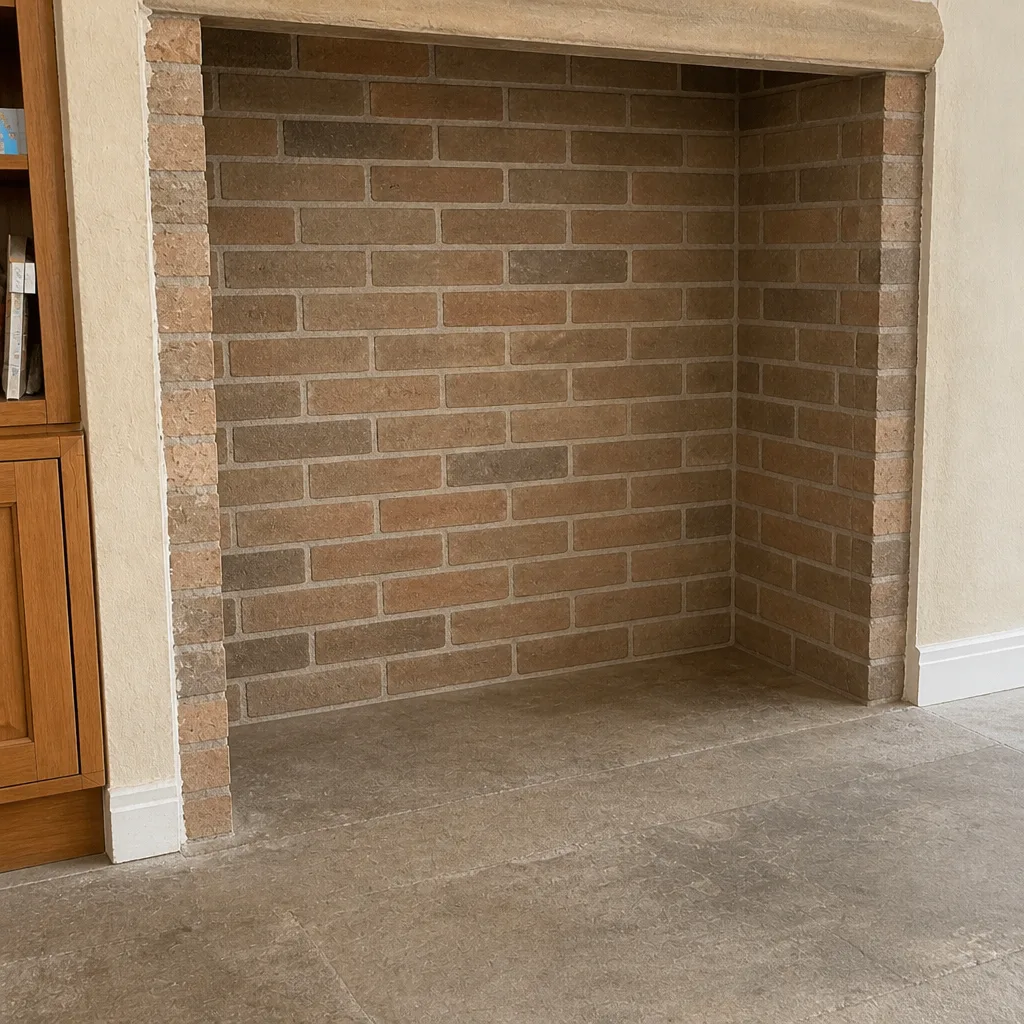
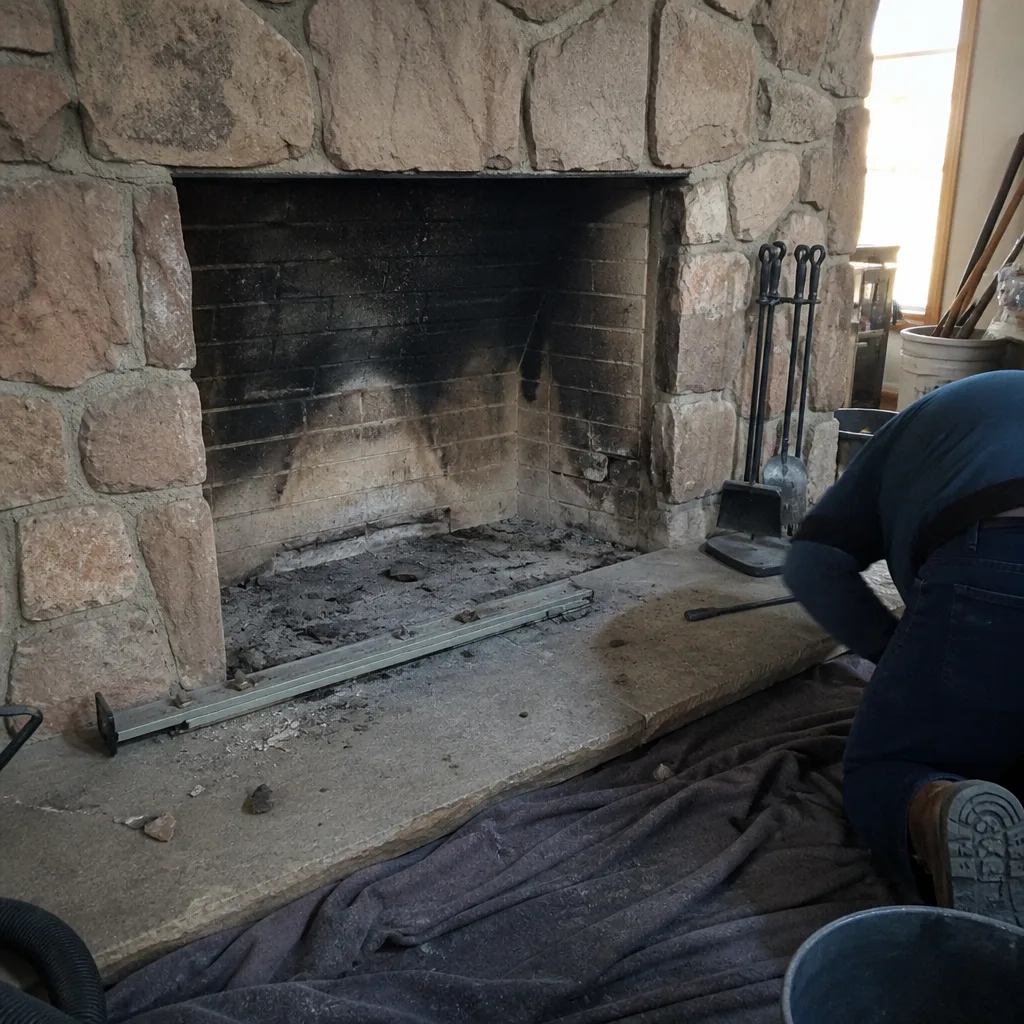
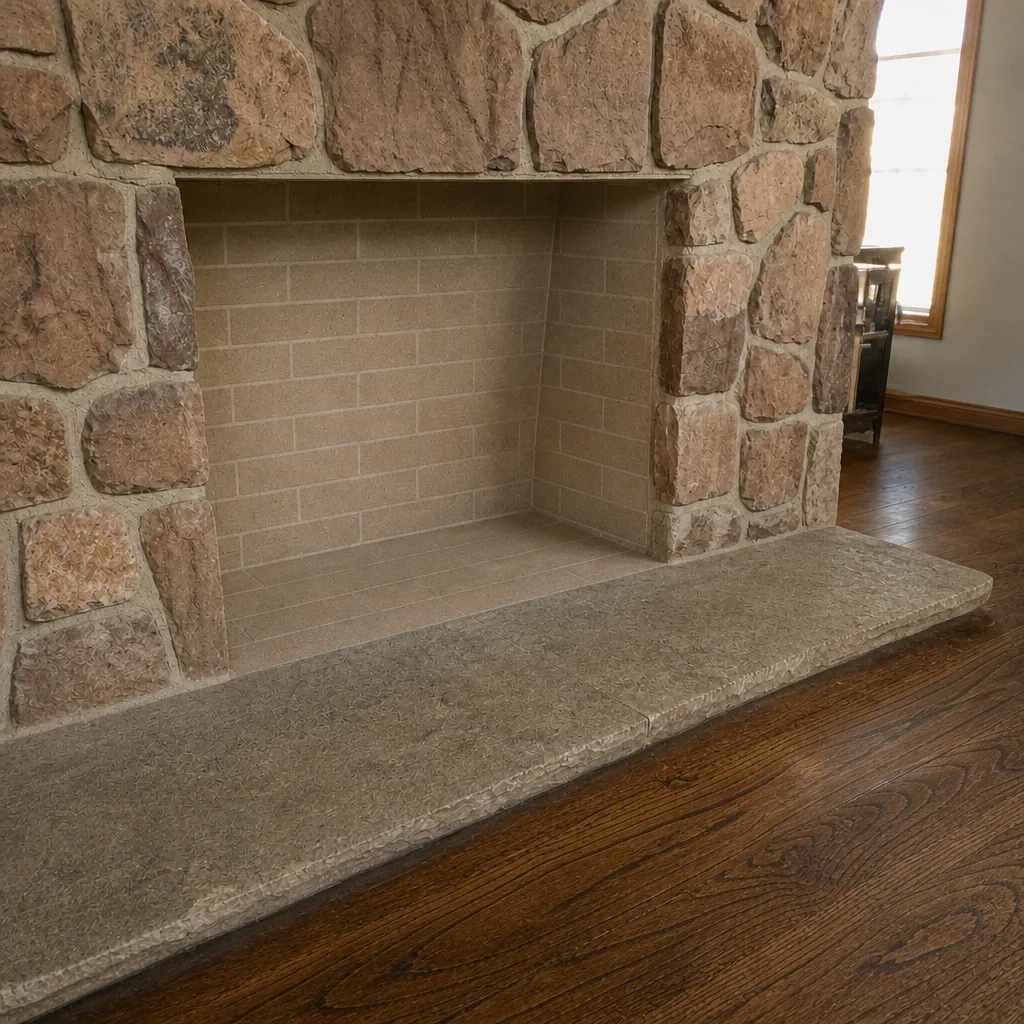
See the difference
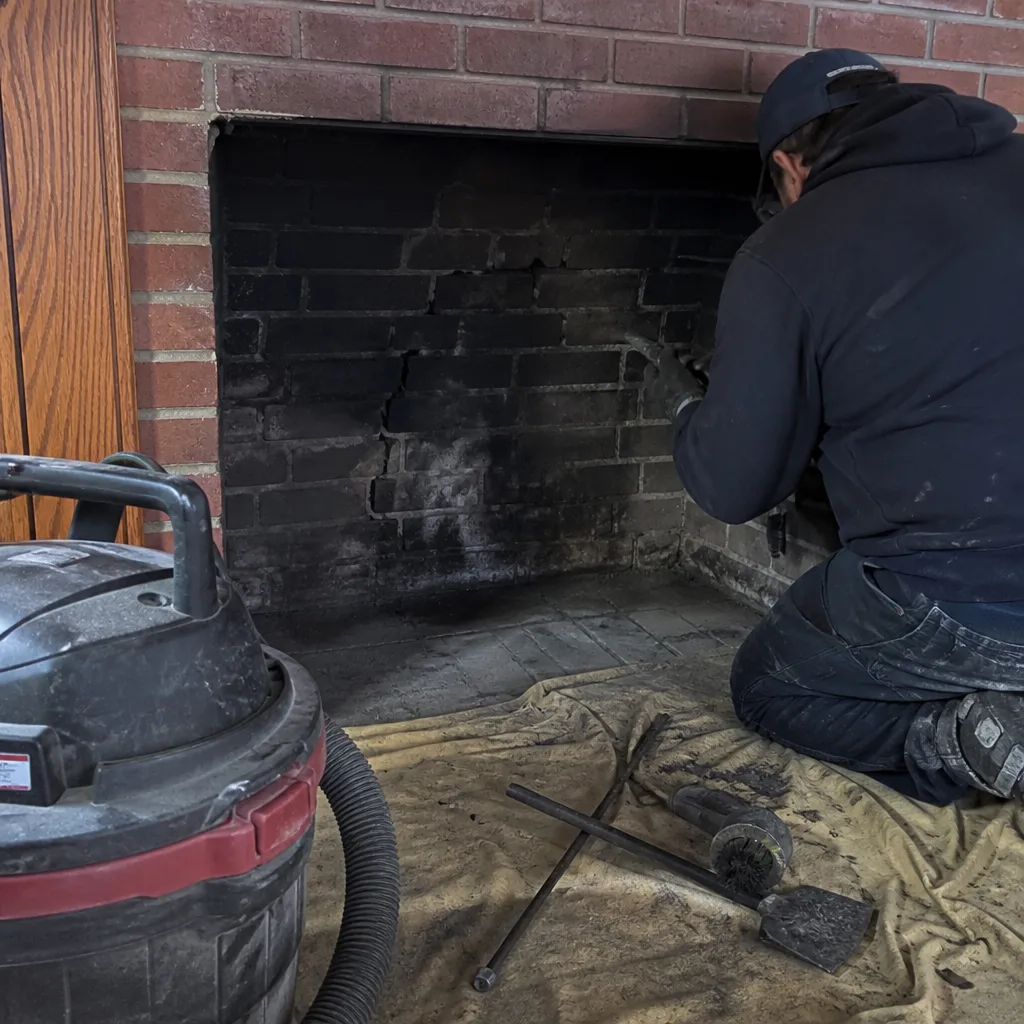 Before
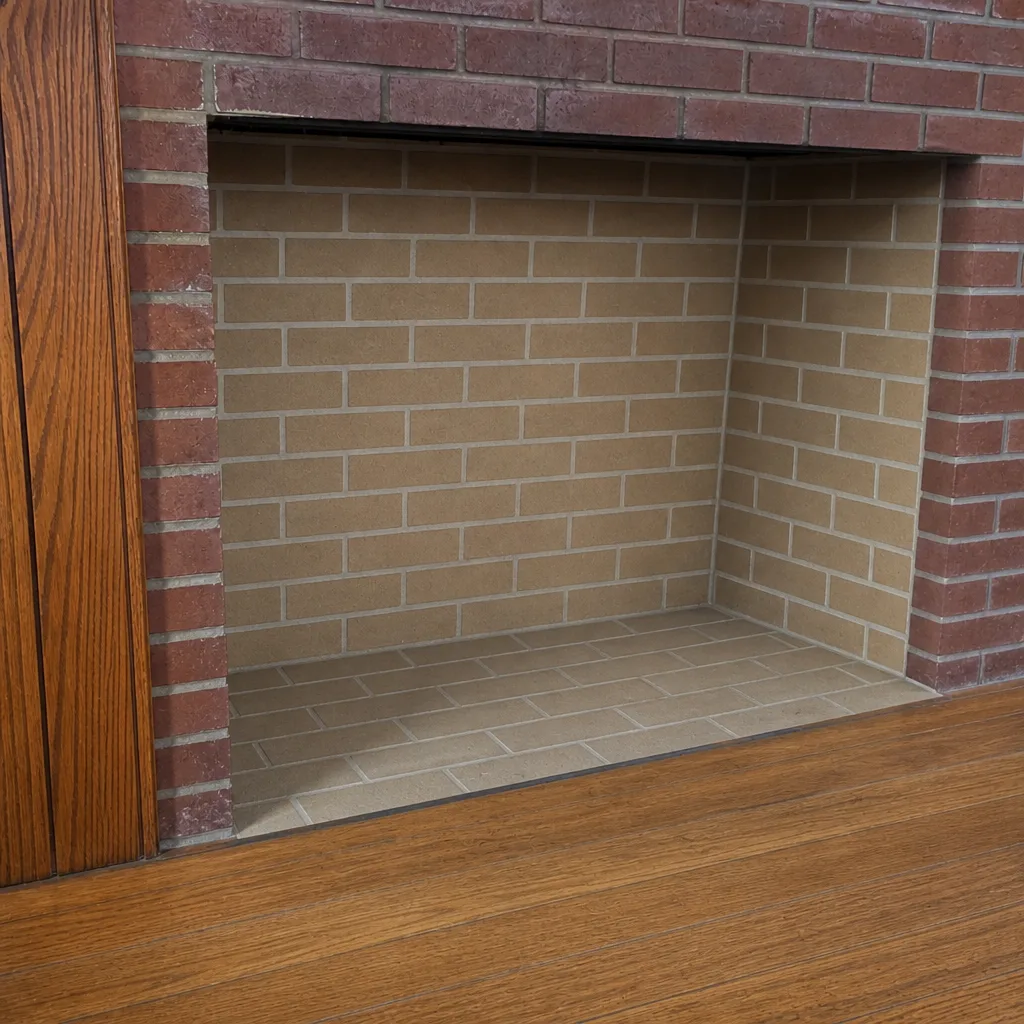 After
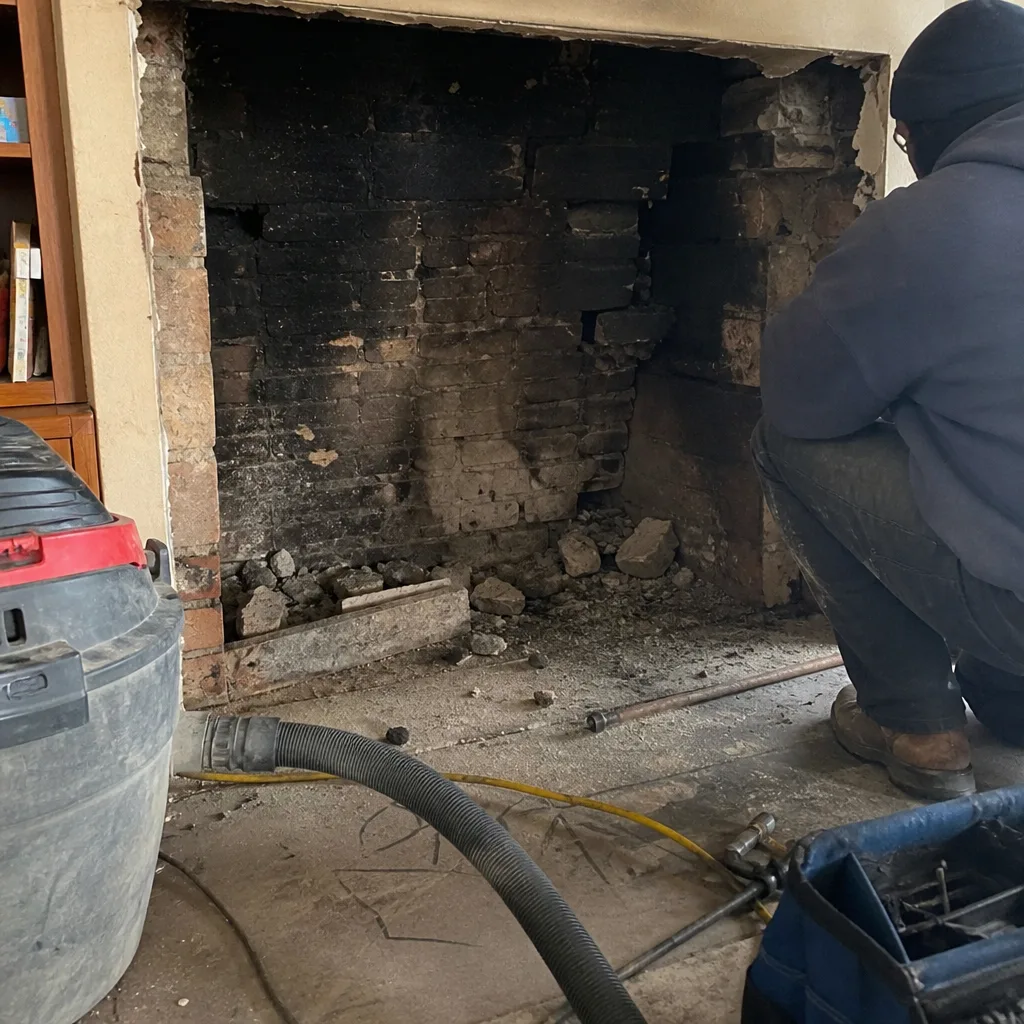 Before
 After
 Before
 After
Common Mistakes to Avoid
- Scrubbing off efflorescence and calling it fixed. The stain is water leaving the brick, not a stain on the surface. If you scrub it clean rather than stopping the water, it comes back, and the moisture keeps working on the masonry in the meantime.
- Treating a smoky summer smell as a warm-weather nuisance. It’s creosote being activated by humidity, and it means it’s time to clean. Waiting until the fall means a heavier glaze and a longer cleaning in Hampden.
- Ignoring black streaking because it’s only on the outside. Streaking is flue gas escaping the liner. The visible mark is the tip of a problem that’s inside the chimney.
- Burning through smoke rollout. A fireplace that smokes into the room is a carbon monoxide risk, not a draft quirk. Stop, don’t burn, and get it inspected.
- Calling a sweep-only service for a structural problem. A cleaning won’t fix a failed liner or a cracked crown. Ask whether the company handles liner and crown work, or the symptom will simply return next season.
- Assuming a cleaning is a full evaluation. A sweep cleans the flue. An inspection checks the liner, smoke chamber, firebox, damper, crown, and cap. They’re different jobs, and you want both.
- Skipping the crown because it’s hard to reach. The crown is where most water damage starts, and a small crack left alone reaches the firebox in time. Have it looked at at least once a season.
When to Call a Professional
Call us if you see white staining, black streaking, a cracked crown, or a missing cap on the outside of the chimney. Call us if smoke rolls into the room, if you smell gas, or if you hear crackling that isn’t the fire. Call us if the fireplace smells smoky in summer, if a wood stove insert stops drafting well, or if you’ve just bought a Hampden home with a chimney you’ve never had inspected. Call us before the burning season, even if nothing seems wrong: a baseline inspection is the cheapest way to know what your system needs and what it can safely wait on. Chimney Sweep Hampden offers free estimates in Hampden. Call (833) 974-5720. We answer 24/7. Fast dispatch from 7am to 7pm, Sunday through Friday.
Frequently Asked Questions
The most common warning signs in Hampden homes are white efflorescence on the exterior, black streaking on the brick or cap, a smoky smell in summer, and occasional smoke rollout at the firebox. These track with moisture intrusion, flue gas bypass, and creosote buildup, which are the three problems that do the most long-term damage. If you see or smell any of them, it’s worth a look before the next burn.
A cleaning is the right call when the symptom is creosote, soot, or smell and nothing structural is visible. A repair is the right call when you see black streaking, white efflorescence, a cracked crown, or smoke rolling into the room. When you’re not sure, an inspection settles it. Our diagnostics use camera evidence, and we show you what we find rather than just telling you.
A smoky smell in summer is common, and it usually means creosote is absorbing humidity from the air and releasing it back into the house. It’s a sign it’s time to clean the flue. The smell itself isn’t a health danger, but the creosote behind it is fuel for a chimney fire, so don’t ignore it. Call (833) 974-5720 for an exact quote. Estimates are free.
Yes, a cleaning can be done on its own, but a cleaning alone won’t catch a failed liner, a cracked crown, or a failing firebox. Those show up in an inspection, not a sweep. We recommend pairing the two so the cleaning addresses the flue and the inspection evaluates the rest of the system.
Black streaking comes back when the underlying cause, usually a compromised or bypassing flue liner, isn’t addressed. Cleaning the soot off the exterior removes the mark but not the gas escaping past the liner. A liner evaluation with camera evidence is the way to confirm it. From there, options range from HeatShield liner resurfacing to a new DuraFlex flexible liner, depending on the condition.
No. Gas log sets produce water vapor and less creosote, so they don’t tend to smell smoky in summer the way a wood fireplace does. The warning signs to watch for are soot on the logs, a lazy yellow flame, condensation on nearby glass, and a rotten-egg or gas smell, which means stop and call. A gas set still needs an inspection of its venting just like a wood system.
Schedule a cleaning before the burning season, and again if a summer smell or a visible buildup shows up. Hampden’s dry summers and cold winters leave the chimney idle for long stretches, and creosote built up over a season is what the first fire has to get past. Booking before the season means a cleaner, safer burn when you need it.
The Bottom Line
Most chimney problems show themselves early. White staining means water is in the masonry. Black streaking means flue gas is escaping the liner. Smoke rollout, non-wood crackling, and a whistling draft are stop-using signals, not cleaning signals. A smoky summer smell means creosote. You can read all of these from inside the house with a short seasonal routine. The trick is knowing which sign means clean soon and which means stop. We inspect the whole system, fix what’s needed, and show you the evidence; no referrals, no second opinions needed. Call (833) 974-5720 and we’ll schedule a free estimate. We answer 24/7. Fast dispatch from 7am to 7pm, Sunday through Friday.
Written by the team at Chimney Sweep Hampden.