
Last updated November 23, 2026
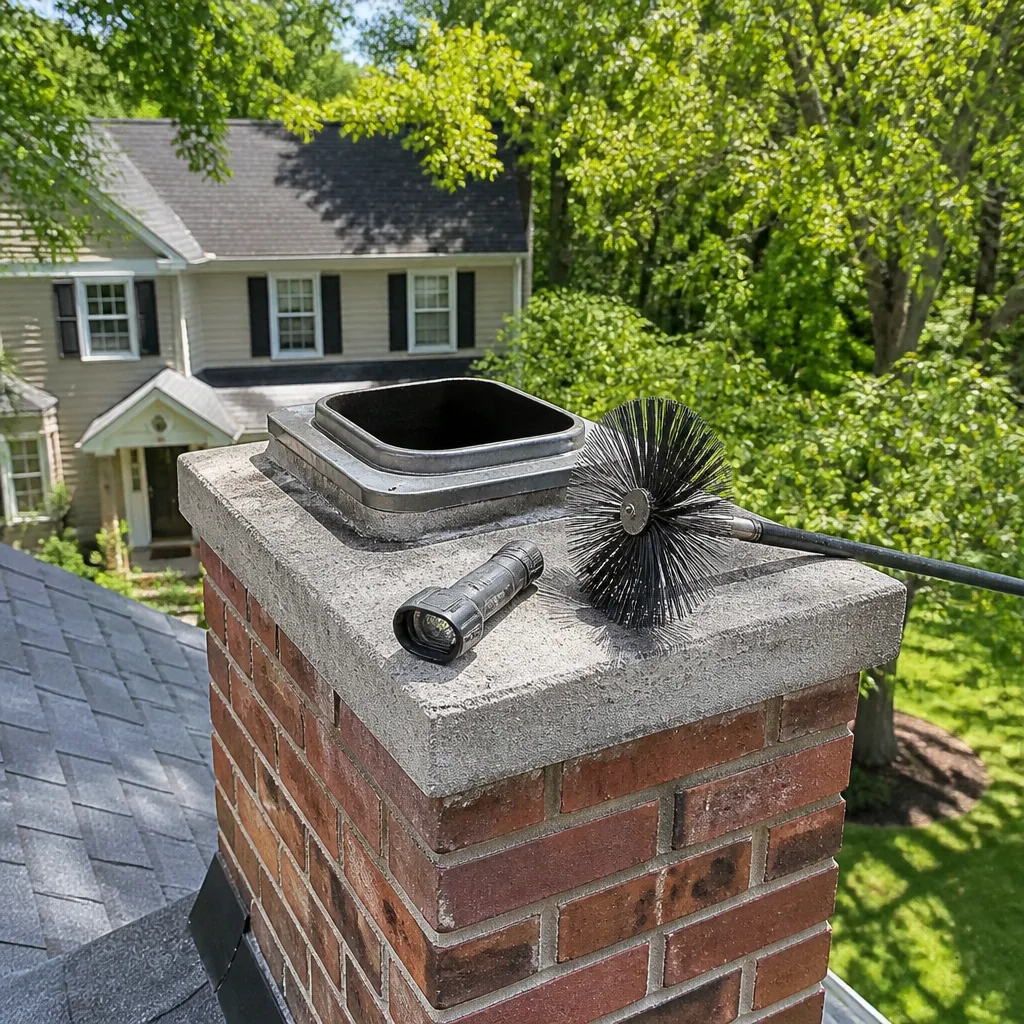 Sweep & inspection
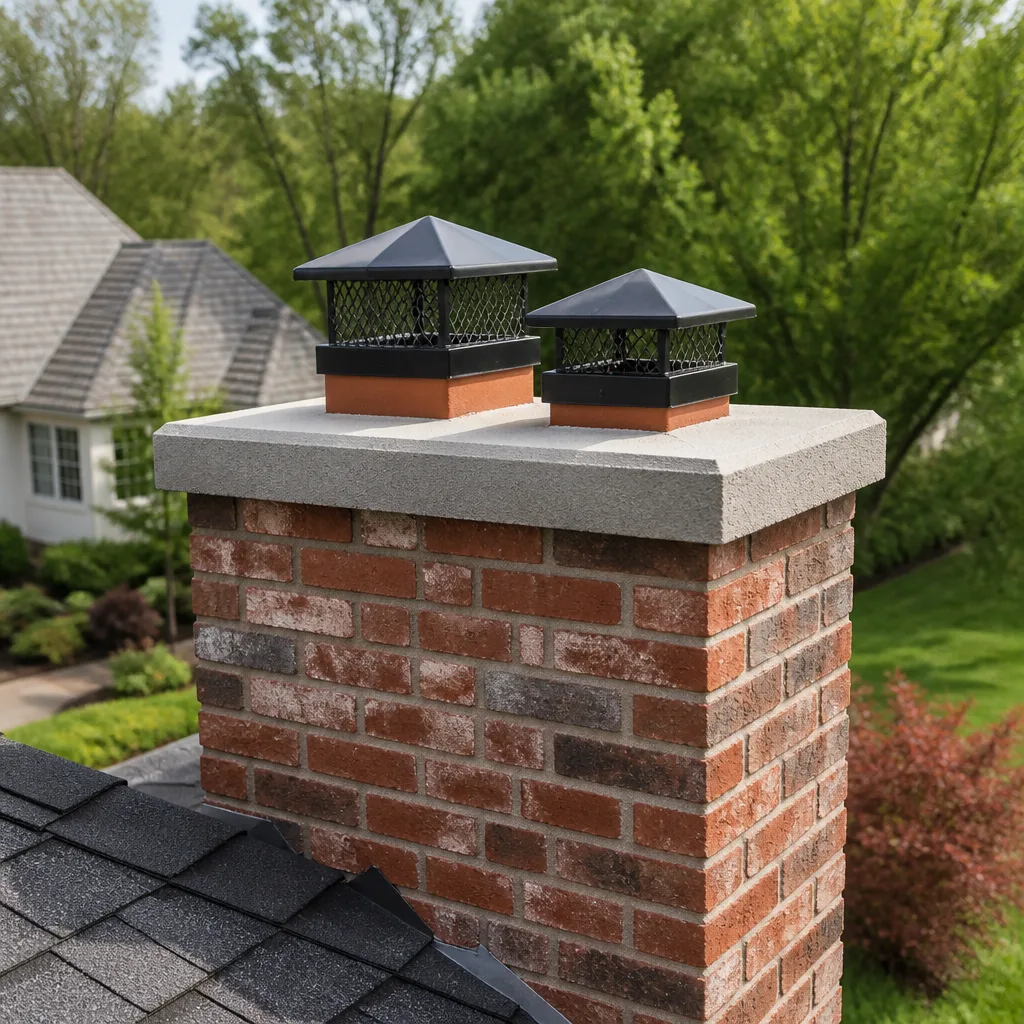 Caps & crowns
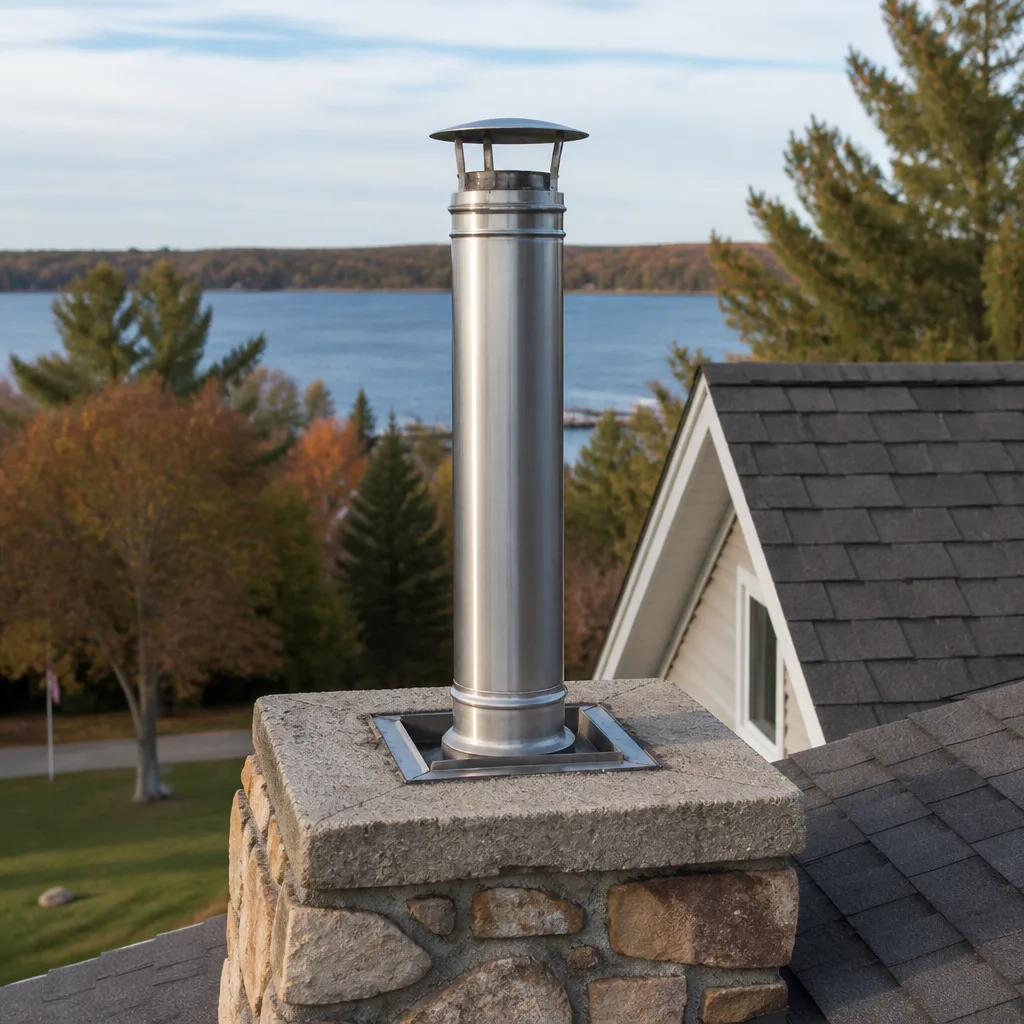 Flue relining
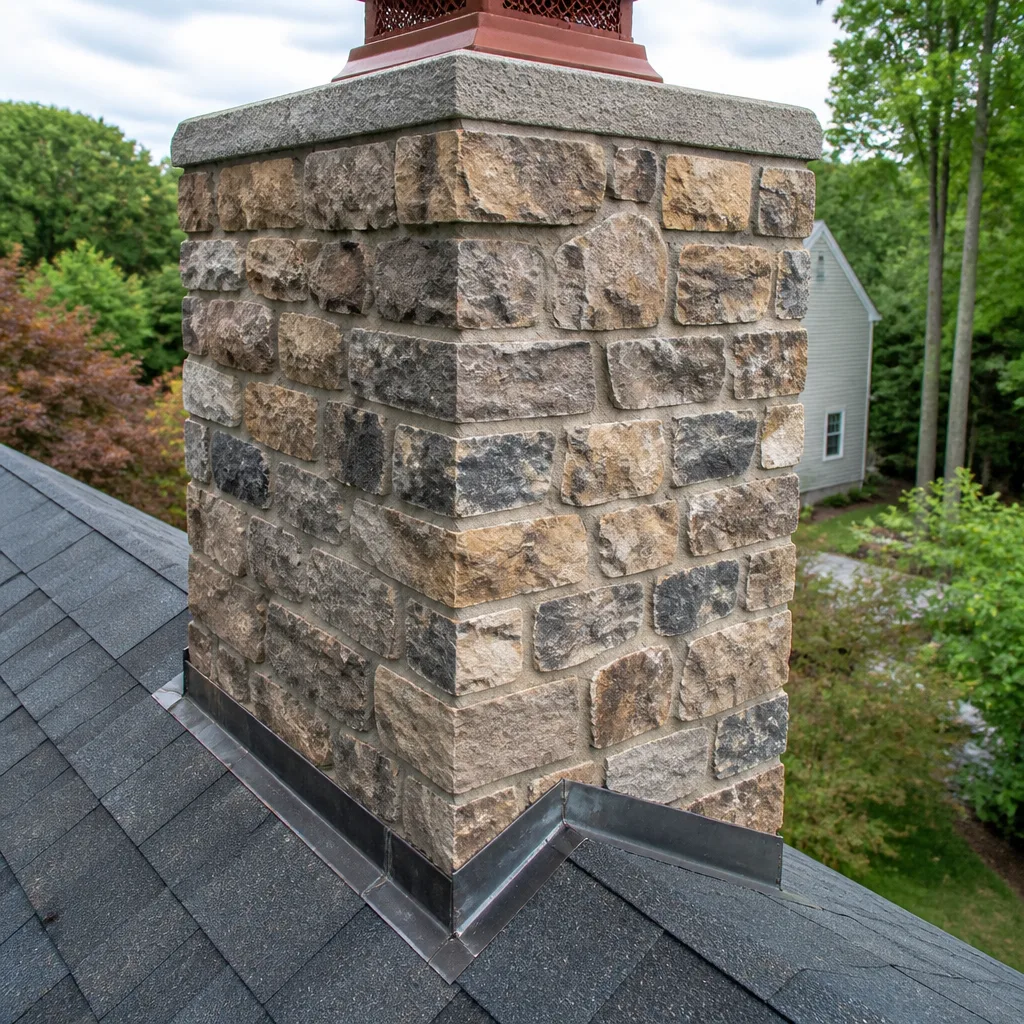 Masonry repair
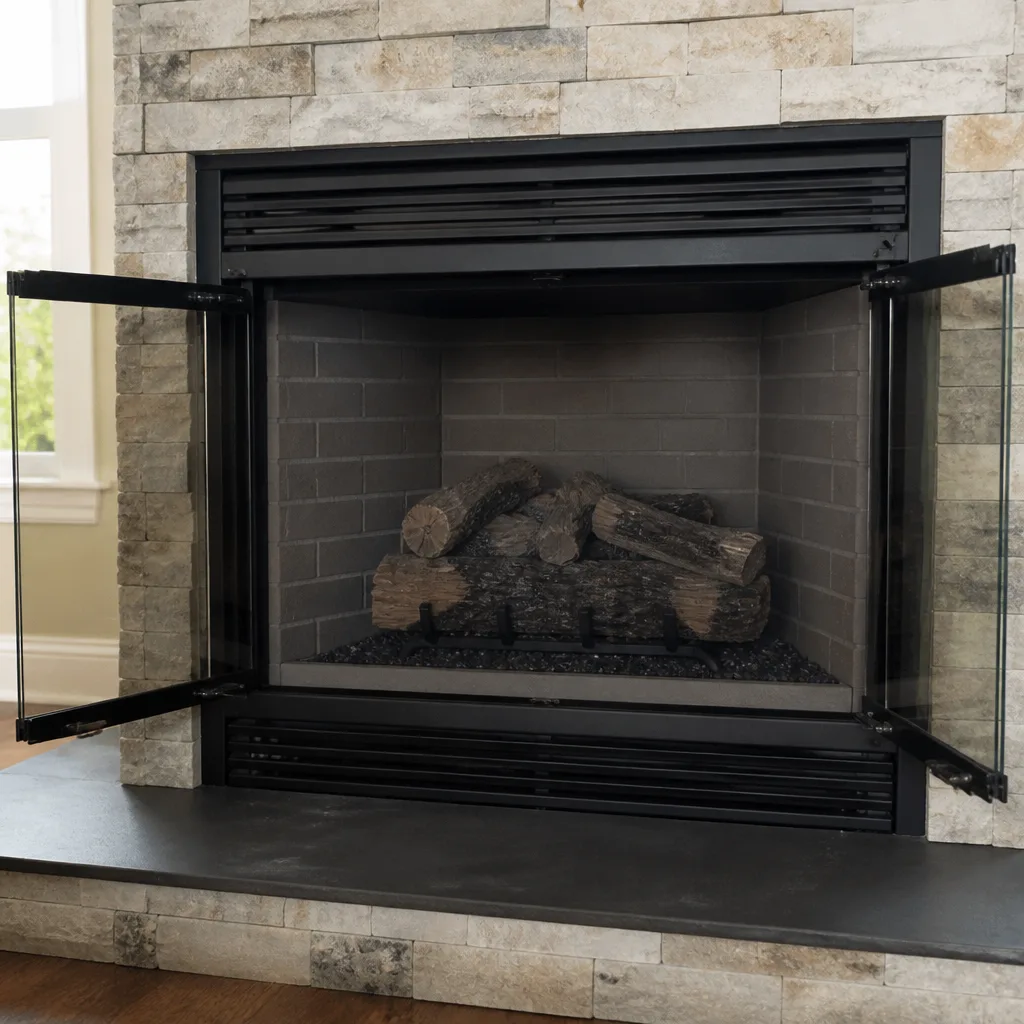 Gas fireplace service
Level 1 sweep and inspection to the NFPA 211 annual standard - flue, crown, cap, and flashing checked and photographed
Chimney sweep logs do not sweep chimneys. They loosen some creosote - which then falls where a brush and vacuum still have to collect it.
DIY vs Professional Chimney Cleaning: The Hampden Homeowner’s Decision Guide
Hardware store chimney brushes work surprisingly well on glass-smooth stage 1 creosote. They do almost nothing on stage 2 creosote, and most homeowners can’t tell the two apart from the firebox looking up. That gap between what a brush can remove and what a chimney actually holds is where DIY confidence gets expensive. A homeowner who sweeps a lightly glazed flue and calls it clean has no way of knowing whether the deposits above the smoke shelf, in an offset section, or along the liner seams came loose or simply moved. This guide draws the line precisely where DIY stops being a legitimate option and starts being a liability. We’ll cover what a brush can and cannot do, what an inspection finds that a cleaning never will, and the exact Hampden scenario where doing it yourself is reasonable.
Quick Answer
DIY chimney cleaning works for a small set of conditions: a single-story chimney, a straight flue, a confirmed stage 1 creosote deposit, and no connected insert or appliance. Under those conditions, a homeowner can remove loose soot and light glaze with a consumer brush kit. Everything else (stage 2 or 3 creosote, offset flues, smoke chamber deposits, connected inserts, and any liner or flashing problem) needs professional equipment and, more importantly, professional eyes. Even homeowners who clean their own chimneys should still have the system inspected annually by a qualified technician, because cleaning removes deposits and inspection finds damage.
Styles & brands we work with
- Sweep & inspection
- Caps & crowns
- Flue relining
- Masonry repair
- Gas fireplace service
Table of Contents
- What DIY chimney cleaning can actually accomplish
- Why a brush can’t touch stage 2 or 3 creosote
- The inspection gap: what DIY cleaning can’t see
- The equipment gap between a $100 kit and professional gear
- Hampden-specific factors that make DIY riskier
- When DIY is genuinely reasonable: a decision checklist
- What to check professionally every year even if you DIY
- Cost comparison: what you save and what you don’t
What DIY chimney cleaning can actually accomplish
A consumer chimney brush set removes loose soot, ash, and light creosote glaze from a straight flue. That’s a real result for a homeowner burning well-seasoned wood in a chimney that gets swept every year. The brush knocks down what’s sitting on the walls. If you can reach the smoke chamber with a brush and see the flue top to bottom, you’re removing a meaningful layer of deposit.
What the brush can’t do splits into three categories:
- Smoke chamber deposits. The smoke chamber is the sloped transition above the damper and below the flue. A straight brush rarely contacts those angled walls properly. Deposits collect there and stay there until a technician with angled tools works them loose.
- Offset flue sections. Older Hampden masonry chimneys sometimes have a jog or offset where the flue changes angle. A brush on rigid rods can bind, skip a section, or push deposits into the offset rather than out. Rotary equipment handles this; a hand brush usually doesn’t.
- Stage 2 and stage 3 creosote. These are the hard, glazed, tar-like deposits that form when flue gases cool too fast. A brush passes over them. Some homeowners assume the brush is cleaning because it’s making contact, but stage 2 creosote is essentially a coating fused to the flue wall, and it needs mechanical or chemical treatment to remove.
What remains after a DIY sweep is often worse than what was there before, because loose deposits get redistributed into areas the homeowner can’t see. A brush that dislodges a chunk of stage 2 creosote from the upper flue and drops it into the smoke shelf has not solved the problem. It has relocated it. Our chimney sweep work starts with an evaluation of what type of deposit is actually present, because that determines the tool and the method.
Why a brush can’t touch stage 2 or 3 creosote
Creosote forms in stages, and each stage behaves differently under a brush. Stage 1 is flaky, soot-like, and comes off easily. Stage 2 is a hard, shiny, glazed layer that adheres tightly to the flue wall. Stage 3 is a thicker, tar-like accumulation that can be nearly solid. A brush works on stage 1 and mostly slides across stage 2 and 3.
The problem is that stage 2 doesn’t look dramatically different from stage 1 to a homeowner glancing up a flue with a flashlight. Both can appear dark. The shine of stage 2 isn’t obvious when you’re looking at the underside of a flue from several feet away in poor light. Homeowners frequently clean a chimney, see less soot falling, and conclude it’s clean, when the glazed layer is untouched.
Removing stage 2 and stage 3 creosote takes one or more of the following:
- Rotary sweeping equipment. A spinning head on a flexible rod that physically grinds the glazed deposit off the flue wall. Consumer kits don’t include this.
- Chemical treatment agents. Professional-grade creosote removers that soften the glaze so it can be brushed off in a follow-up pass. These aren’t sold retail.
- A liner camera inspection before and after. So you can see what came off and confirm the flue wall is intact after treatment, because aggressive removal on an already-degraded liner can cause damage.
That last point matters. If a flue liner is cracked or deteriorated, the wrong tool or the wrong technique can make it worse. Our technicians have up to 14 years of experience reading liner condition before deciding which method is appropriate. That evaluation is the difference between cleaning a chimney and damaging it.
The inspection gap: what DIY cleaning can’t see
A cleaning removes deposits. An inspection finds problems. These are two separate jobs, and a DIY sweep only does the first one, and only partly. A professional Level 1 inspection looks at the entire chimney system, including areas a brush never reaches.
Here’s what routinely gets caught during a professional inspection that a DIY clean has no mechanism to find:
- Liner cracks and gaps. A cracked clay tile liner or a deteriorating stainless liner is a serious safety issue because it lets heat and combustion gases reach the surrounding structure. You can’t see a hairline crack from the firebox or the roof without a camera.
- Deteriorating smoke shelf and damper. The smoke shelf can rust, warp, or accumulate so much creosote that the damper stops sealing. This affects draft and can be a fire hazard.
- Flashing failure at the roofline. The flashing is the metal seal between the chimney and the roof. When it fails, water gets into the masonry. From inside the firebox, everything can look fine while the flashing is leaking on the outside.
- Crown cracks. The crown is the concrete cap on top of the chimney. Hairline cracks in the crown let water in, and water is the leading cause of long-term structural chimney damage. That’s why our chimney cap & crown work focuses on moisture at the source rather than cleaning around it.
Every one of these problems develops quietly. None of them announce themselves. A homeowner who cleans the chimney themselves and skips the inspection has cleaned the flue and left the structural and safety evaluation undone. If you want a clear picture of your system, our Chimney Sweep Hampden team runs the inspection and the cleaning as one visit.
The equipment gap between a $100 kit and professional gear
A consumer chimney brush set runs roughly $80 to $150 and does one thing: it brushes. Professional equipment does considerably more, and the difference isn’t just brand loyalty. It’s the range of problems the equipment can actually handle.
- Rotary sweeping systems. These spin rather than drag, which lets them remove glazed deposits that a pull-brush can’t touch.
- Liner cameras. A camera on a flexible rod gives a technician a full visual record of the flue from top to bottom. The homeowner sees the same footage. This is how we confirm that a liner needs attention rather than guessing.
- Chemical treatment agents for stage 2 and 3 creosote. Not available retail, and applied differently depending on the severity of the deposit.
- Angled smoke chamber tools. The smoke chamber walls sit at an angle, and a straight brush doesn’t fit them.
- Relining materials. When a flue has deteriorated past cleaning, the fix isn’t a brush. It’s a liner system. We install DuraFlex flexible liner systems, which handle the offset and irregular flue geometries common in older masonry chimneys, and we also do HeatShield resurfacing, which restores a deteriorating liner without full replacement.
That last point is the one most homeowners don’t know about. A deteriorating flue liner doesn’t always mean a full reline. HeatShield resurfacing addresses the interior surface without pulling the whole liner out, which is a specialized service that most sweep-only companies don’t offer. The decision between resurfacing and relining is a technical one, and it depends on what the camera shows. We work with HeatShield, DuraFlex, Gelco, and Olympia Chimney products because they hold up under the conditions that cause liner failure in the first place.
Hampden-specific factors that make DIY riskier
Hampden’s location at higher elevation, combined with the housing stock here, creates chimney conditions that make the DIY decision harder than it would be in a warmer, lower, newer-built climate.
Cold-start burns and faster creosote formation
Wood stoves and fireplaces in Hampden spend a lot of the year running from a cold start. A cold flue cools the smoke quickly, and cooled smoke deposits creosote faster than a flue that stays warm. Homeowners here often burn more often but in shorter, hotter bursts, which produces more stage 2 creosote than a slow, steady burn would. That means a Hampden chimney can accumulate a glaze that a brush won’t touch in a single season.
Older masonry stock
A lot of the chimneys in the Hampden area are in housing that predates modern building codes. That older masonry often has clay tile liners with visible joints, offset flue sections, or a smokeshelf configuration that collects creosote in ways newer builds don’t. These chimneys need a camera inspection, not a visual check from the firebox, because the geometry hides problems.
Elevation-driven draft characteristics
Draft behaves differently at higher elevation, and a chimney that drafts weakly pulls smoke slowly, which deposits more creosote on the flue walls. A home can have two perfectly good chimneys that draft completely differently based on stack height, nearby rooflines, and how the flue is capped. Reading a draft problem takes more than a flashlight and a brush, because the draft problem itself may be the reason the creosote accumulates faster than the homeowner expects.
None of this means a Hampden homeowner can never clean a chimney themselves. It means the margin for error is narrower, and the consequences of a missed problem are higher, in this climate than in a mild one.
When DIY is genuinely reasonable: a decision checklist
There is a narrow set of conditions where doing your own chimney cleaning is a reasonable choice, and it’s not a common set. If any one of these conditions fails, the job should go to a professional.
- Single-story chimney with safe roof access. You need to reach the top of the flue safely, on a properly stabilized ladder, with no overhanging branches or power lines in the path.
- Straight flue with no offsets. A straight run means the brush contacts the full flue wall. Any jog or angle means part of the flue gets missed.
- Confirmed stage 1 creosote deposits only. This means you’ve had it evaluated, or you have reason to be certain no glaze has formed. If you’re not sure, that’s your answer: it goes to a professional.
- No connected insert, stove, or appliance. A wood insert or gas appliance changes the flue geometry and may mean the appliance needs to be disconnected and reconnected, which should not be a DIY job.
- No prior liner or structural issues. If a previous inspection flagged a liner crack or a damaged crown, the flue is not a candidate for home cleaning because aggressive brushing on a compromised liner can make it worse.
- You still have an annual professional inspection scheduled. This is the condition that most homeowners miss. Cleaning is not inspection. You still need the system evaluated by a professional every year even if you do the cleaning.
If all six conditions hold, a homeowner can do a legitimate annual clean, and it’s not a mistake. The mistake is assuming the clean covered everything. It didn’t.
What to check professionally every year even if you DIY
If a homeowner cleans their own chimney, the annual professional inspection becomes more important, not less, because there’s no second set of trained eyes on the system during the year. Here’s what should be checked every year regardless of who did the cleaning:
- The full flue interior via camera. The camera confirms the liner is intact, the joints are sound, and no stage 2 glaze formed in a section a brush didn’t reach.
- The smoke chamber and smoke shelf. Any deposit there needs to come out, and the damper needs to seal.
- The crown and flashing. Cracks, gaps, or seal failures at the top of the chimney are the entry point for water damage. Catching it early is far cheaper than rebuilding the masonry.
- The cap and spark arrestor. A cap that’s rusted, knocked loose, or damaged does nothing to keep rain and animals out, which means moisture can reach the flue.
- The firebox and damper. Deterioration in the firebox brick or mortar joint can lead to structural problems. Our fireplace repair work often starts here because the firebox is the first place problems show.
When an inspection does find a problem, the next step is the camera footage, so the homeowner can see it for themselves. We don’t recommend a repair on a system we haven’t shown you. If a liner is only mildly deteriorated, a HeatShield resurfacing may be the right answer. If it’s more serious, a DuraFlex liner install is the durable fix. Some findings can safely wait a season if the homeowner understands the risk. Others can’t. Either way, the recommendation comes with evidence, not a sales pitch.
Cost comparison: what you save and what you don’t
A consumer chimney brush kit runs roughly $80 to $150. A professional chimney sweep costs more than that. So on paper, DIY looks like an obvious savings. The comparison only holds if what the DIY brush does is equivalent to what a professional service does, and in most cases it isn’t.
What the $80-150 brush kit actually delivers:
- Removal of loose soot and stage 1 s, on a straight flue, if you can reach the whole length.
- No inspection of the liner, smoke chamber, crown, flashing, or cap.
- No removal of stage 2 or stage 3 creosote.
- No camera footage.
What a professional service includes:
- Sweeping with tools matched to the deposit type, including rotary and chemical treatment where needed.
- A full inspection of the chimney system above and below the roofline.
- Camera documentation of the flue interior.
- An assessment of liner condition, crown and flashing, and attached appliances.
The savings from a DIY clean evaporate if the brush misses a liner crack for a season or two, or if stage 2 creosote builds up and a subsequent cleaning turns into a restoration job. We don’t quote a fixed price for a sweep because the job depends on the condition of the flue and what comes up in the inspection. That’s why the estimate is free and the price is set per job in writing before any work begins.
Common Mistakes to Avoid
- Assuming a brush cleaned a glazed flue. Stage 2 creosote is hard, shiny, and bonded to the wall. A brush passes over it, but a homeowner who can’t see the difference will call the flue swept when the glaze is untouched.
- Brushing without looking up first. Starting a DIY sweep without a flashlight and an inspection mirror means you don’t know what you’re dealing with. In Hampden’s older masonry chimneys, that’s a setup for pushing a chunk of creosote into the smoke shelf.
- Skipping the inspection because you did the cleaning. Cleaning and inspecting are two different jobs, and a brush does not check a liner. Every chimney needs an annual inspection in Hampden, whether the cleaning was DIY or professional.
- Using the wrong brush on a metal liner. A stiff polypropylene brush is fine for some liners and wrong for others. Using a stiff brush on a softer liner can scratch and damage the surface, which is far costlier than the original cleaning.
- Ignoring the crown. A homeowner who cleans the firebox every year and never looks at the crown has left the most common cause of long-term chimney damage unchecked. A cracked crown pulls water into the masonry, and water damage compounds every season.
- Working on a roof without fall protection. A single-story chimney still requires a proper ladder setup and stabilization. Working at height is one of the more common ways homeowners get hurt, and it isn’t worth the savings on a chimney sweep.
- Burning unseasoned wood to try to control creosote. Wet wood creates more creosote than dry wood, and it cools the flue faster, which deposits more glaze. A homeowner fighting stage 2 creosote should start with the wood supply.
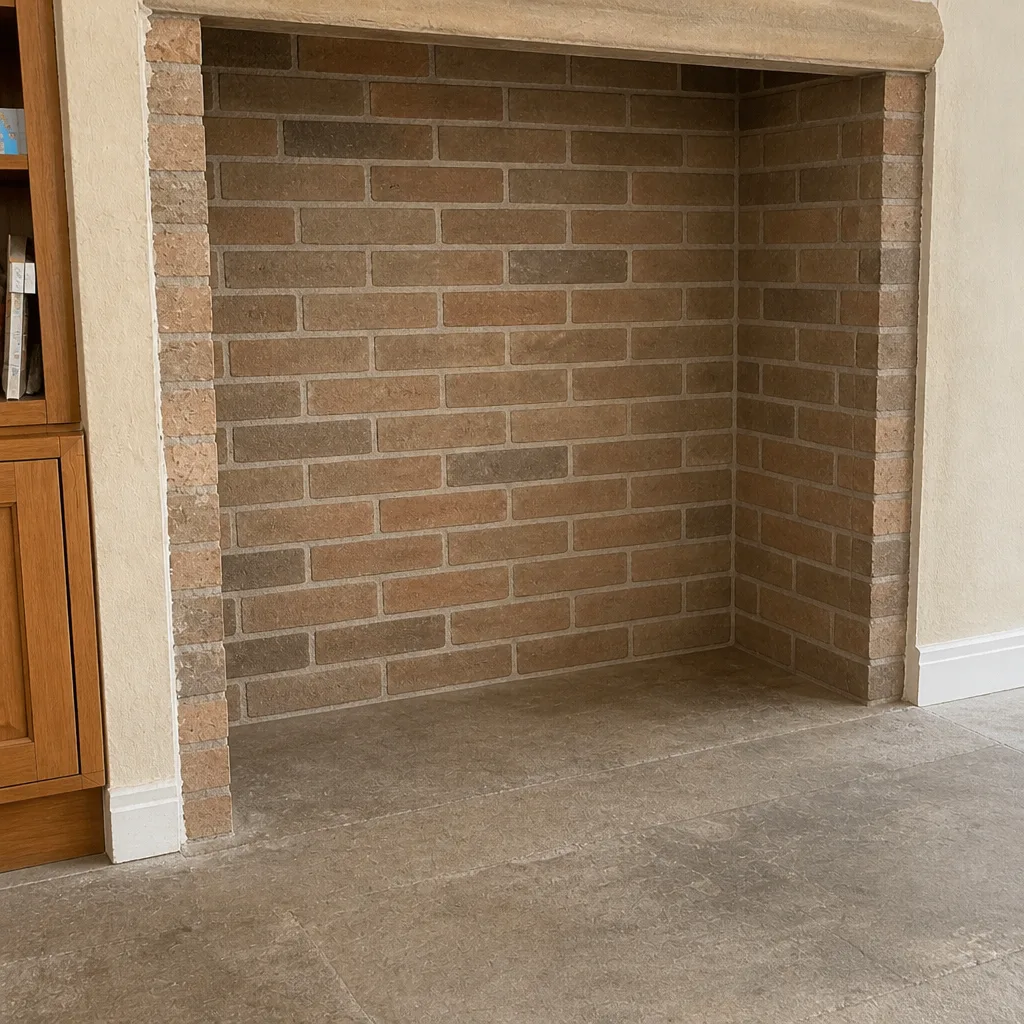
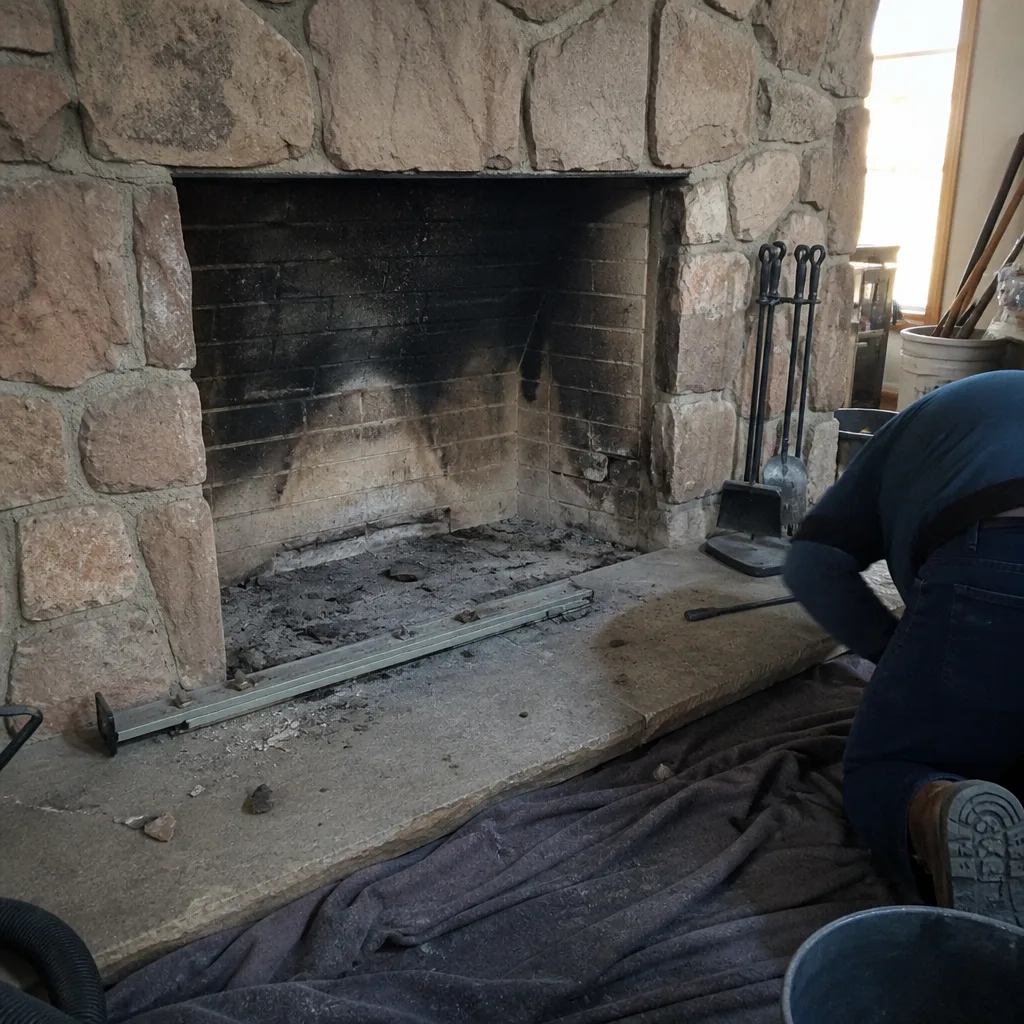
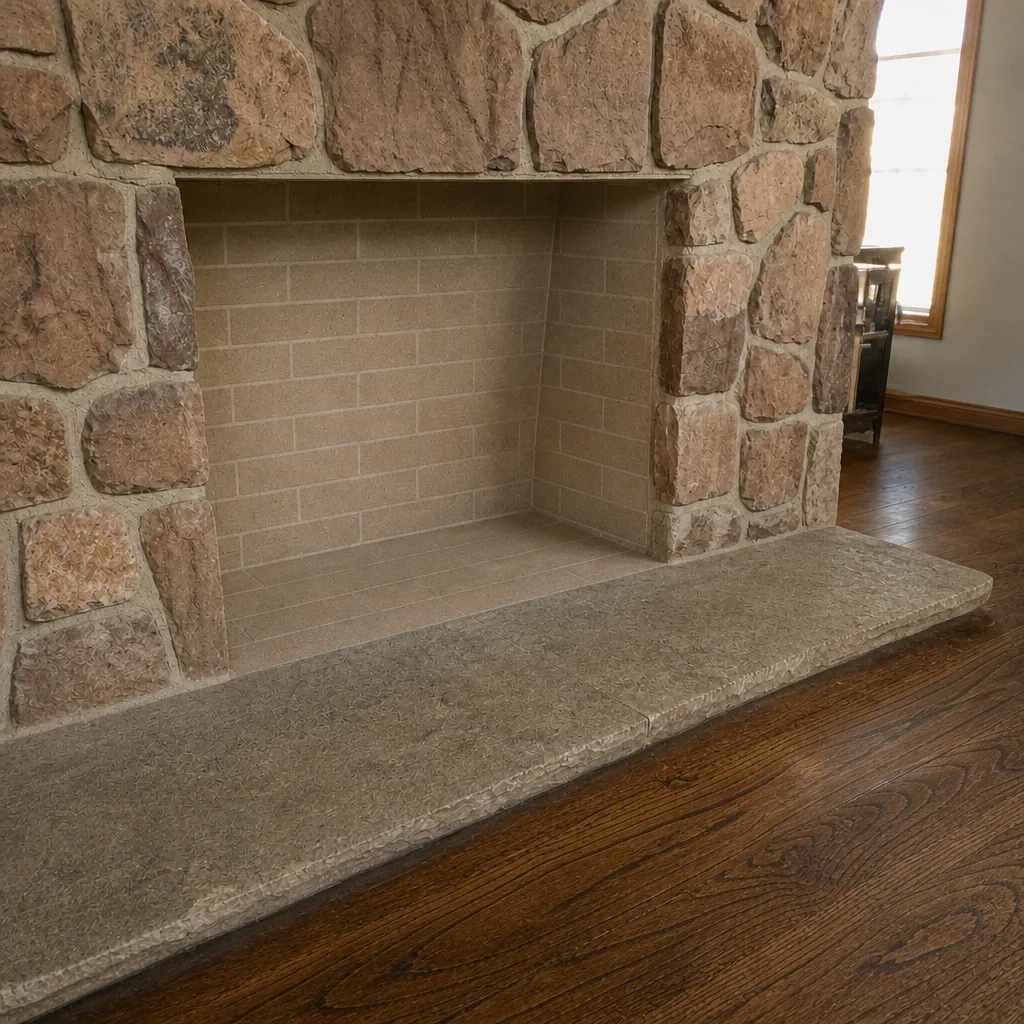
See the difference
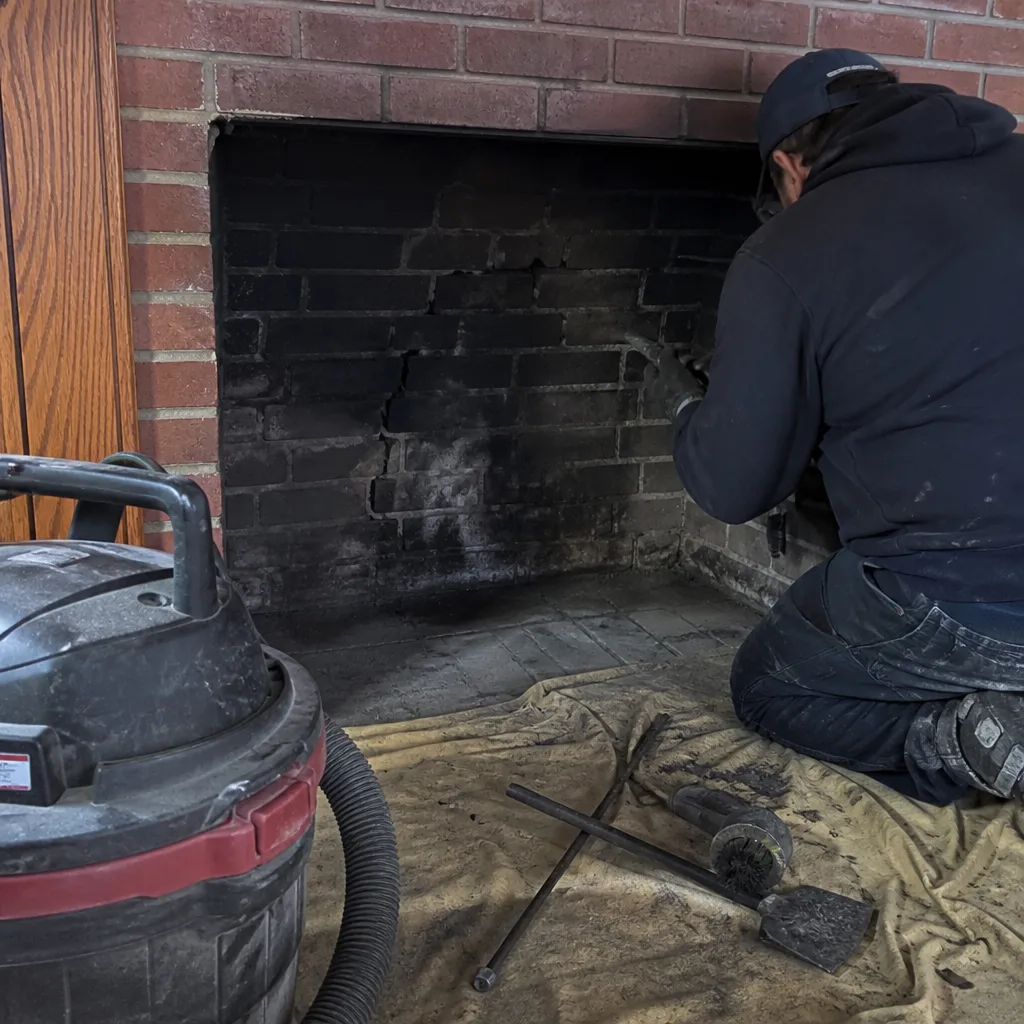 Before
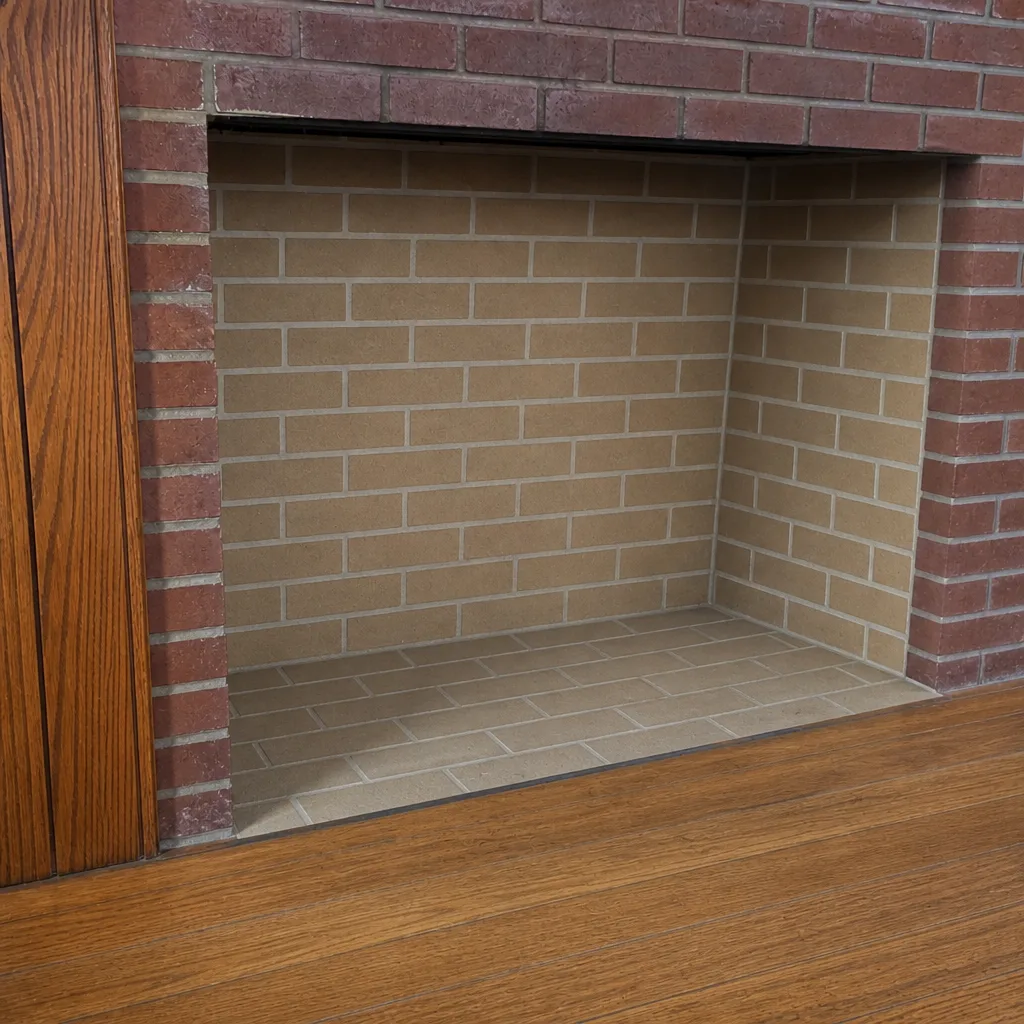 After
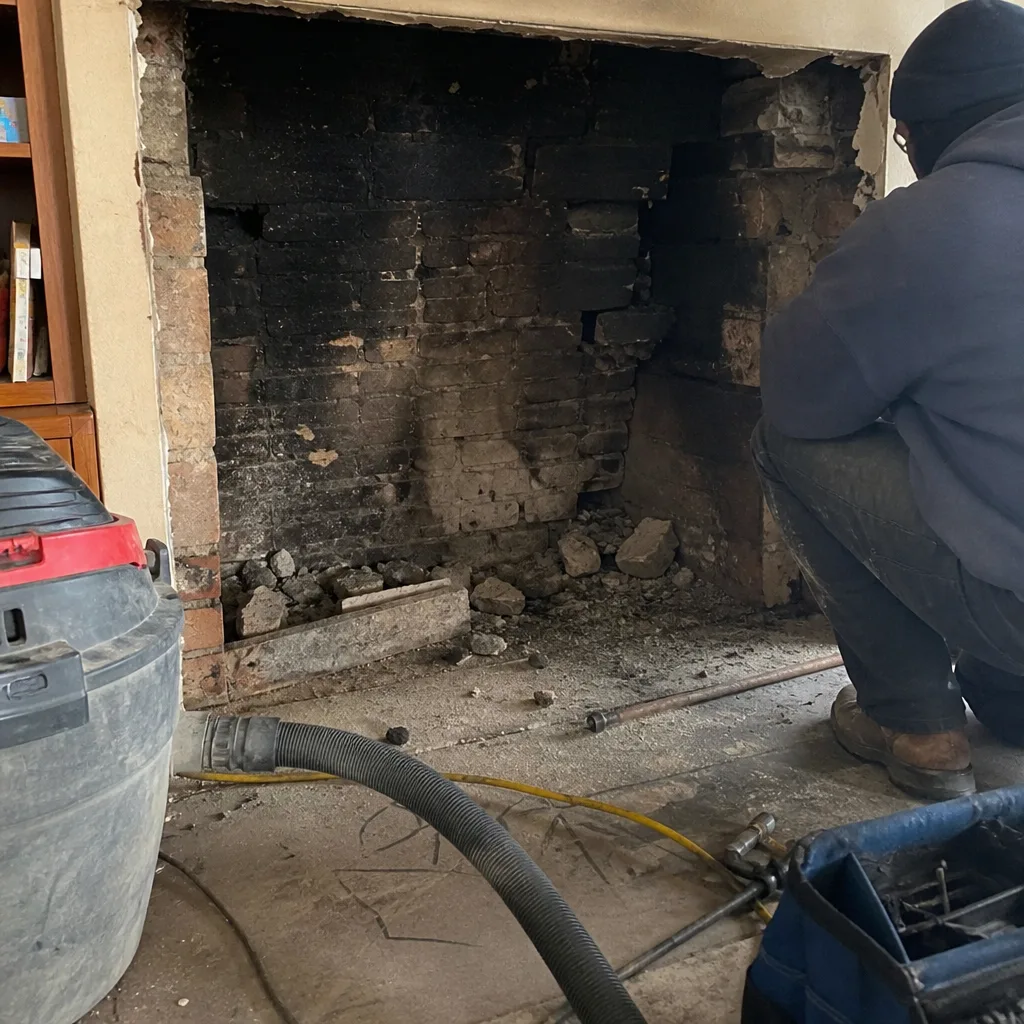 Before
 After
 Before
 After
When to Call a Professional
Call a professional chimney sweep when any of the following is true: the chimney is older masonry with a clay liner or an offset flue, you have a connected insert or stove, you’ve noticed cracking or deterioration anywhere in the firebox or smoke chamber, you’re not certain about the deposit stage, or you’d simply rather have the system properly evaluated. In Hampden, the altitude and burning conditions mean creosote forms faster than homeowners expect, which makes an annual professional visit the more reliable choice for most houses. Chimney Sweep Hampden offers free estimates in Hampden and can work with your schedule, including Sundays. If it’s been more than a year, or you’ve never had a camera inspection, that’s the time to call. Call (833) 974-5720. We answer 24/7, and fast dispatch runs from 7am to 7pm, Sunday through Friday.
Frequently Asked Questions
You can clean your own chimney only if you have a single-story chimney, a straight flue with no offsets, confirmed stage 1 creosote deposits, and no connected insert or stove. That’s a narrow set of conditions. If any one of them fails, or if you’re not certain about the deposit stage, a professional sweep is the right call. Even if you do clean it yourself, an annual professional inspection is still needed. Call (833) 974-5720 for an exact quote on an inspection or a full sweep.
A cleaning removes deposits from the flue. An inspection evaluates the whole chimney system for problems the cleaning can’t see: liner cracks, a deteriorated smoke chamber, crown damage, and flashing failure. They’re separate jobs and both matter. A homeowner who cleans the chimney themselves has not inspected the system. Call (833) 974-5720 to book an inspection.
Stage 2 creosote is a hard, glazed layer bonded tightly to the flue wall, and a hand brush slides over it. Removing it takes rotary equipment, chemical treatment, or both, matched to the severity of the deposit. A homeowner who runs a consumer brush through a glazed flue has removed the loose soot and left the hard layer in place. Call (833) 974-5720 for an exact quote on treatment.
Yes, because water is the leading cause of long-term structural chimney damage. A rusted, loose, or damaged cap lets rain into the flue, and a cracked crown lets water into the masonry. Catching either at the top of the chimney is far cheaper than repairing the structure later. Our chimney cap & crown work addresses the problem at the source. Call (833) 974-5720 for a free estimate.
It does, because cold-start burns and a cold flue deposit creosote faster than a warm flue would. Shorter, hotter burns are common here, and the resulting rapid cooling of smoke produces more glaze than a slow, steady burn. Older masonry and higher-elevation draft characteristics also make the local fireplace system more difficult to evaluate without a camera. Call (833) 974-5720 for a professional inspection.
Once a year, plus any time there’s a significant amount of new deposit or a change in how the fireplace burns. A more frequent schedule makes sense if the fireplace is in heavy use or the wood supply isn’t well-seasoned. The annual inspection should happen every year regardless of whether the cleaning is DIY or professional. Call (833) 974-5720 for an exact quote.
The Bottom Line
DIY chimney cleaning is a legitimate option in one specific case: a single-story, straight-flue chimney with confirmed stage 1 deposits and no connected insert. In that case, a consumer brush does real work. Everywhere else, the brush is doing less than the homeowner thinks. The primary risks are the ones a brush can’t address: stage 2 creosote that looks like stage 1 in poor light, liner cracks a brush can’t find, and crown or flashing damage a homeowner doesn’t think to look at. Hampden’s cold-start burns and older masonry make those risks worse than they would be in a milder climate. The bottom line is that a chimney gets cleaned and inspected, and one job doesn’t cover the other.
If it’s been a while since your chimney was professionally evaluated, or you’re not sure what’s up there, call Chimney Sweep Hampden at (833) 974-5720 for a free estimate. We answer 24/7. Fast dispatch from 7am to 7pm, Sunday through Friday. Our technicians have up to 14 years of experience, and the inspection comes with a camera so you can see what we see.
Written by the team at Chimney Sweep Hampden.