
Last updated November 23, 2026
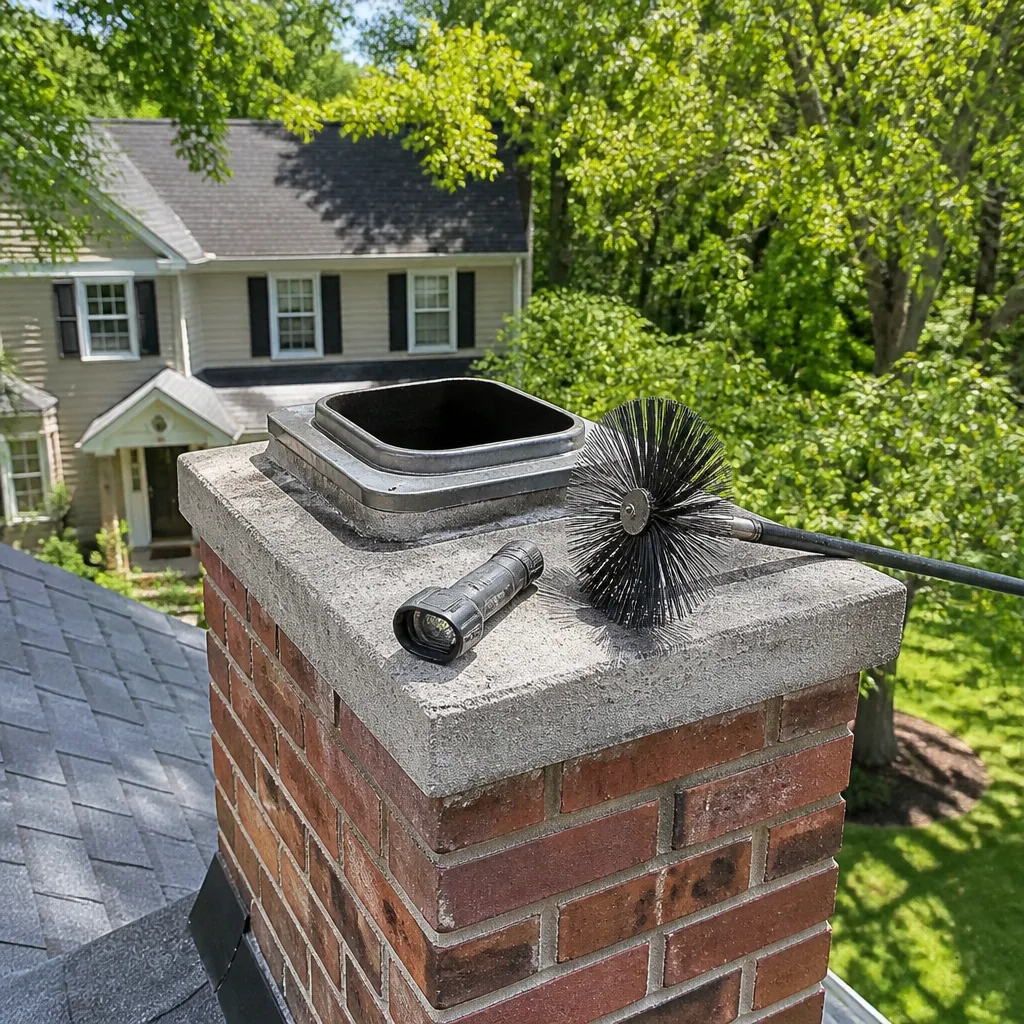 Sweep & inspection
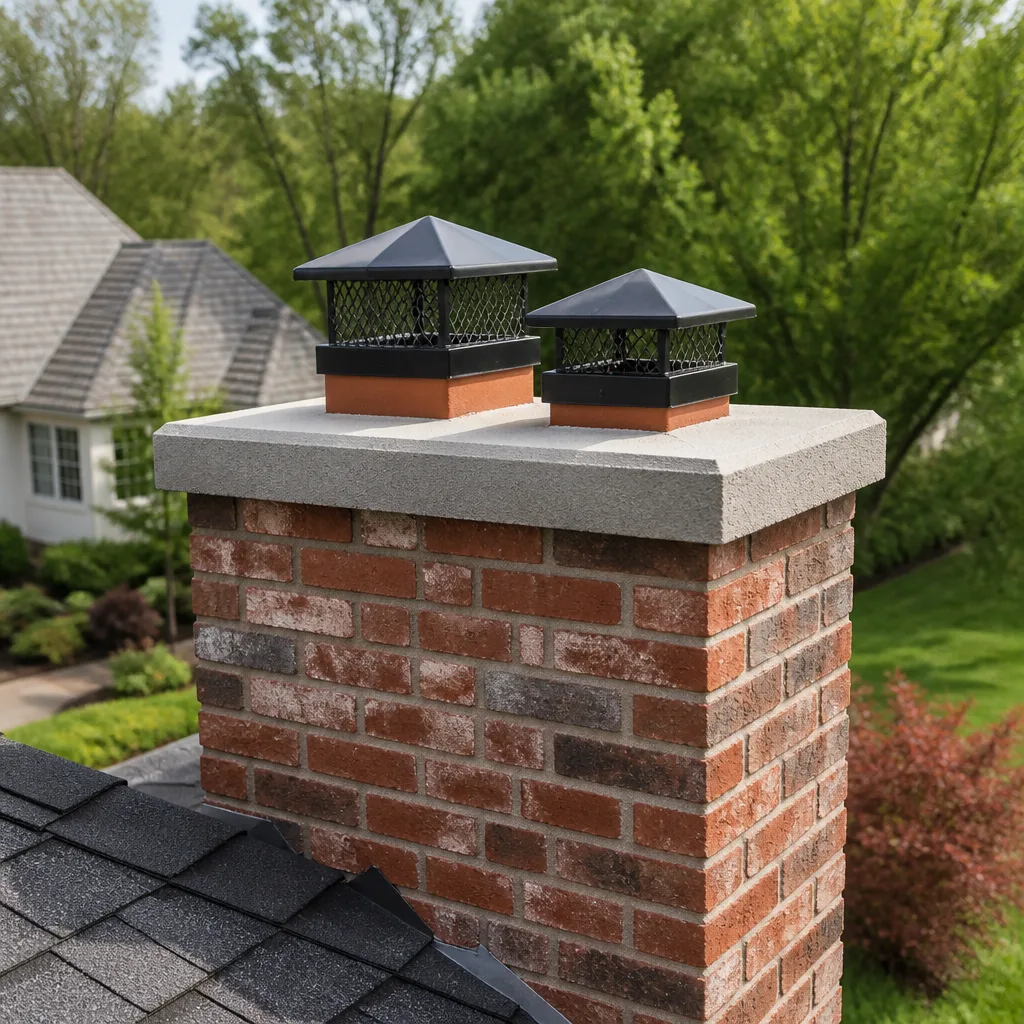 Caps & crowns
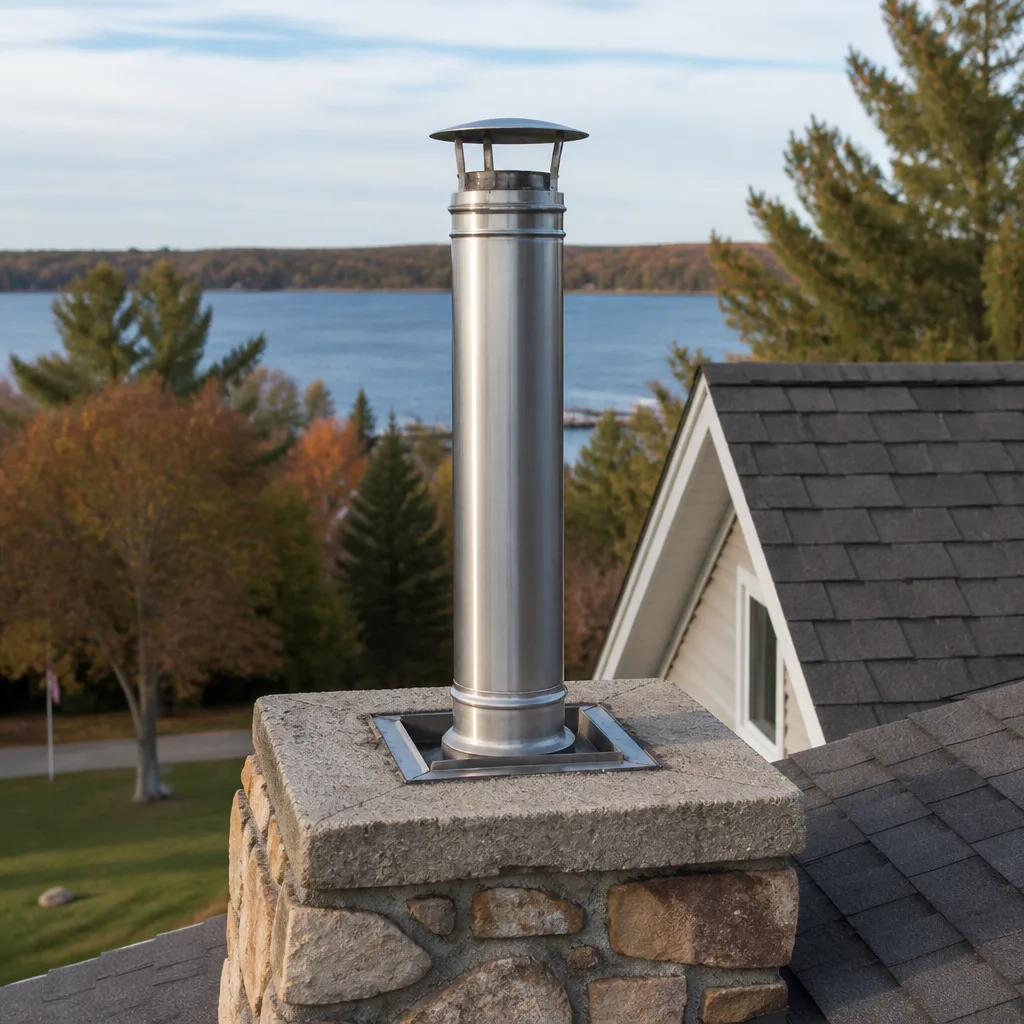 Flue relining
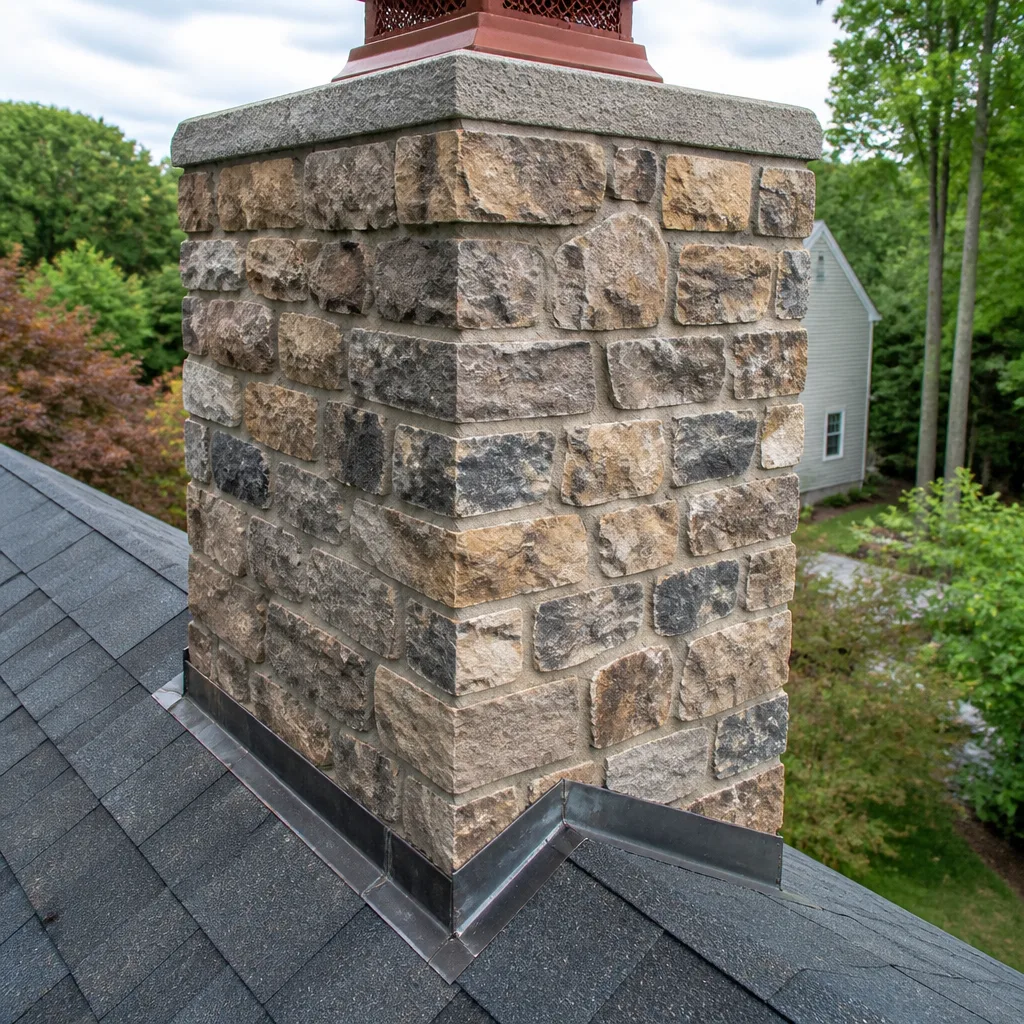 Masonry repair
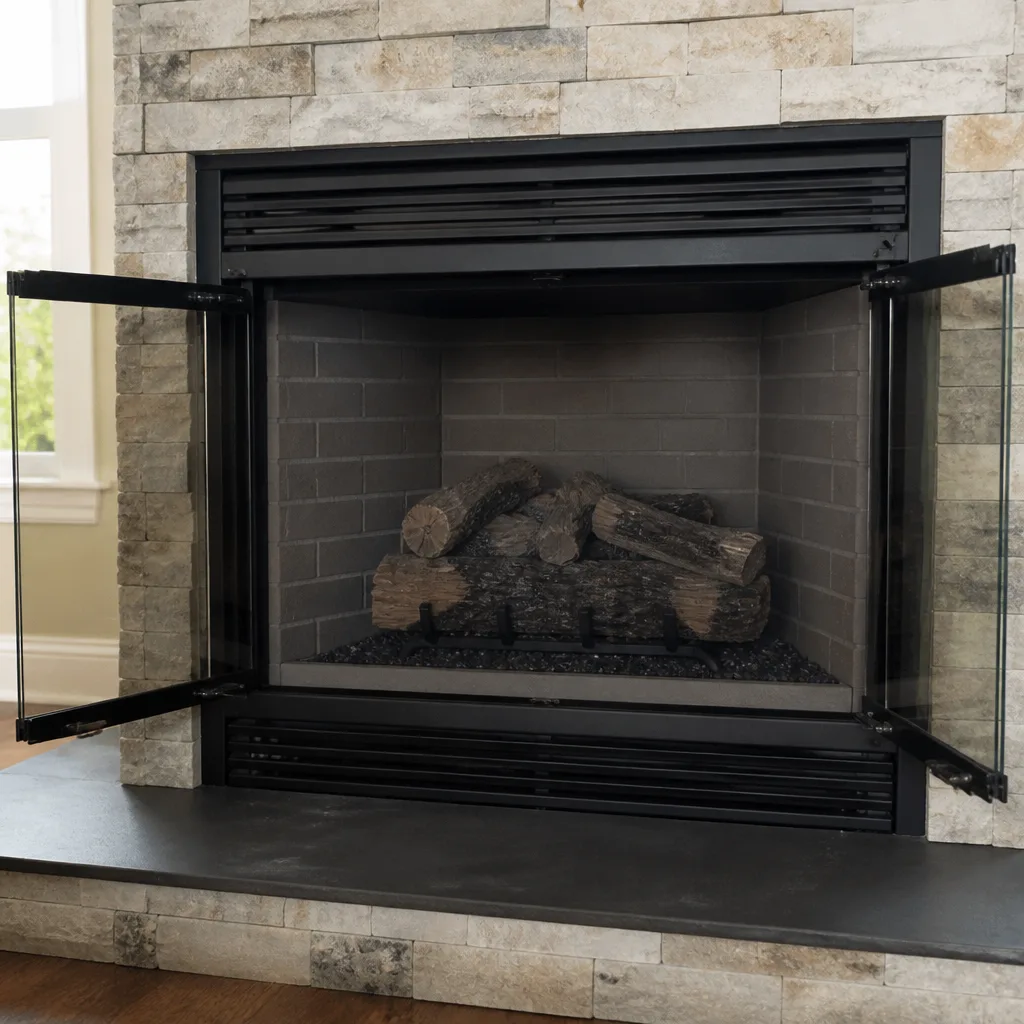 Gas fireplace service
Level 1 sweep and inspection to the NFPA 211 annual standard - flue, crown, cap, and flashing checked and photographed
Chimney sweep logs do not sweep chimneys. They loosen some creosote - which then falls where a brush and vacuum still have to collect it.
Chimney Cleaning Emergency Preparedness Guide for Hampden Homes
Most people think a chimney emergency gives them time to react. It doesn’t. A flue fire can reach temperatures above 2,000°F while the room around the fireplace still looks perfectly normal, and the roar of an active chimney fire is often mistaken for wind in the flue or a strong draft. By the time smoke or flames show at the top of the stack, the sequence of decisions that mattered most has already passed.
This guide is about pre-positioning: knowing your damper, your shutoffs, your carbon monoxide detectors and your call order before anything goes wrong. We’ll walk through the two-minute chimney fire response, how to tell a flue fire from normal combustion noise, the carbon monoxide scenarios that hit Hampden homes specifically, and what a real post-fire assessment has to cover. Read it once now, while nothing is burning.
Quick Answer
A chimney fire emergency in Hampden comes down to four moves in order: cut off air to the fire by closing the damper and the glass doors, get everyone out of the house, call 911, and never throw water into a hot firebox. For carbon monoxide, leave the building immediately and call 911 from outside. After any suspected flue fire, a camera inspection of the liner is required before the fireplace is used again, because a visual look from the firebox cannot see the damage that matters.
Styles & brands we work with
- Sweep & inspection
- Caps & crowns
- Flue relining
- Masonry repair
- Gas fireplace service
Table of Contents
- The Two-Minute Chimney Fire Response Sequence
- Is That a Chimney Fire or Normal Draft Noise?
- Carbon Monoxide Risk in Hampden Chimney Systems
- Pre-Season Emergency Prep Checklist
- What a Post-Fire Assessment Must Cover
- Sudden Blockages: What to Do Before Anyone Lights a Match
- Prevention: The Cheapest Emergency Is the One You Avoid
The Two-Minute Chimney Fire Response Sequence
When you suspect a chimney fire, you have roughly two minutes to do the right things in the right order. Here is the sequence, in the order it should happen.
- Close the damper. A chimney fire needs air. Closing the damper starves it of the draft that feeds it. Know where the handle is and which way it turns before you ever need it.
- Close the glass doors or cover the opening. If you have glass fireplace doors, shut them. If you have an open hearth, a sheet of non-flammable material placed over the opening reduces the air feeding the fire. Do not reach into a hot firebox with your hands.
- Get everyone out of the house. Every person, every pet. Do not stop to gather belongings. Do not go back in for anything.
- Call 911 from outside. Tell the dispatcher it’s a chimney fire and give your address clearly.
- Do not use water on the firebox or flue. Water hitting a firebrick firebox or a hot clay or metal liner at that temperature can crack it or flash to steam violently. Let the professionals handle suppression.
That’s the entire sequence. Notice what’s not on it: fighting the fire yourself, spraying a hose into the chimney, or waiting to see if it goes out on its own. If you can’t close the damper because it’s too hot or jammed, close the glass doors, evacuate, and call 911 immediately. The order matters less than doing all of it fast.
Is That a Chimney Fire or Normal Draft Noise?
A lot of chimney fires burn without the homeowner ever knowing, because the sound gets mistaken for the fire working normally. Here’s how to tell them apart.
Normal combustion in a wood-burning fireplace is mostly quiet. You’ll hear the soft crackle and pop of wood, and you’ll hear the draft moving air up the flue, especially in a cold Hampden winter when the temperature difference between the house and the stack is large. That draft noise is a steady, low whoosh. It doesn’t pulse.
An active flue fire sounds different in specific ways:
- A low, rumbling roar that sounds like a freight train or a distant jet, not a whoosh.
- A crackling or popping that’s rhythmic and loud, often described as sounding like a wood fire burning inside the chimney itself rather than in the firebox.
- A sound that suddenly changes volume, rising and then settling, as burning creosote moves through the flue.
You may also see a thick plume of dark smoke outside, a rumble you can feel in the floor, or puffs of smoke coming out of joints and seams in the masonry. Modern tight-construction homes around Hampden can hide a chimney fire because the house is sealed well enough that the pressure doesn’t push smoke back into the room. The fire is happening up the flue whether or not you smell it inside. If you hear that roar, treat it as a fire. Close the damper, evacuate, call 911.
Carbon Monoxide Risk in Hampden Chimney Systems
Carbon monoxide is the forgotten chimney hazard. It doesn’t smell, doesn’t irritate the eyes, and produces the same headache and fatigue a person might write off as a long day. In a chimney system, CO enters the living space in three ways every Hampden homeowner should know about.
1. Blocked or partly blocked flues
A flue blocked by creosote, a bird nest, a collapsed liner, or a fallen cap sends exhaust back into the house instead of up and out. This is one of the reasons we recommend a camera inspection before the first fall fire, not just a sweep. What looks clear from the top and from the firebox can be blocked in the middle.
2. Disconnected or damaged liners
An old clay-tile liner with cracked joints, or a metal liner that has come disconnected at a joint, allows exhaust to leak into the chimney chase and from there into the house. This is where a camera inspection earns its cost, because the problem is invisible from either end.
3. Negative-pressure backdrafts in tight homes
Hampden homes built or retrofitted to be energy-efficient seal very well. That’s good for your heating bill and a problem for your chimney. When a kitchen hood, a bathroom fan, or a dry-running clothes dryer pulls air out of a tight house faster than it leaks back in, the pressure inside can go negative relative to the flue. The result is that a chimney that should be drawing exhaust up and out instead draws it back into the room. We see this more in newer construction and after major air-sealing work, and it can happen with a wood fireplace, a gas insert, or a gas furnace flue.
The fix for backdraft is not a bigger fan or a cracked window in every room. It’s a proper evaluation of the whole system: draft, liner condition, and the way the house interacts with the chimney.
Pre-Season Emergency Prep Checklist
The time to prep a chimney system for an emergency is a cool, quiet afternoon in September, not the night the smoke rolls in. Here’s what we’d walk a Hampden homeowner through before the first fire of the season.
- Confirm your damper opens and closes. Open it all the way, then close it all the way. It should move without force. A stiff or stuck damper is a safety problem whether or not anything is burning.
- Test every carbon monoxide detector in the house. Press the test button on each one, and replace the battery in any unit you haven’t touched this year. CO detectors have a service life usually printed on the back; if yours is past it, replace the whole unit.
- Locate the chimney cleanout. That’s the small metal door low on the chimney, usually in a basement, utility room, or the wall behind the firebox. Know where it is and that it’s accessible, so a technician doesn’t have to move half a garage to reach it during a service call.
- Verify the cap is clear before the first fall fire. Look up at the cap from the ground. Leaves, twigs, a bird’s nest or a dislodged cap can block the flue. Don’t climb on the roof to check it yourself; a phone call is safer and a technician can inspect it properly.
- Check the firebox for cracks in the firebrick or a warped grate. A cracked firebox is worth photographing so our team can look at it during the next service.
- Write down your call sequence (fire department first if there’s an active fire, then your chimney company for the follow-up assessment) and keep it somewhere the whole household can see, like the inside of a kitchen cabinet.
That list takes about twenty minutes. It buys you the fastest version of an emergency response and, in many homes, avoids one altogether.
What a Post-Fire Assessment Must Cover
After any suspected chimney fire, the fireplace cannot be used again until a professional assessment has confirmed the flue and firebox are still intact. A quick look up the flue from the firebox is not enough. Here’s what a real post-fire assessment involves.
- A camera inspection of the full length of the liner, from the firebox through to the cap. A flue fire can crack clay tiles, separate metal liner joints, or damage the insulation around a liner without leaving any external sign.
- An inspection of the firebox and damper, checking for cracks in the firebrick, a damaged damper blade or frame, and signs of heat damage to the mortar joints.
- An inspection of the crown and cap, because heat and pressure can crack the crown or dislodge the cap, and any failure there invites water intrusion into the chimney the following rainy season.
- A creosote check, since a chimney fire often leaves behind a new layer of hardened glaze that’s tougher than the original and needs specific handling.
- A written report with photos, so you can see what the technician saw and understand what’s next.
If the assessment finds liner damage, the repair path depends on the extent. A pitted or mildly deteriorating flue is sometimes handled by resurfacing with HeatShield rather than a full reline. A cracked, separated, or mismatched flue generally calls for a proper stainless liner, which is where a DuraFlex flexible liner system comes into a job. What we don’t do is recommend a liner on a flue that a camera hasn’t actually shown to need one. You’ll see the photos before we quote anything.
Sudden Blockages: What to Do Before Anyone Lights a Match
A sudden blockage is the other chimney emergency Hampden homeowners call about. The symptoms are clear once you know what to look for: smoke rolling back into the room instead of going up the flue, a fire that starts well and then smolders, a strong smoky smell whenever the fireplace is lit, and in serious cases a CO detector going off while the fireplace is running.
If you suspect a blockage, here’s the sequence:
- Put the fire out. Stop adding wood. Let it burn down. Do not open the damper thinking more air will help.
- Get the household outside if the CO detector is going off. That includes pets. Call 911 from outside.
- Do not try to clear it from the firebox. Poking a brush or a rod up a hot flue can push burning creosote down into the room or damage the liner.
- Book a professional inspection. The blockage might be a nest, a fallen cap, a collapsed liner, or a buildup of creosote. Each has a different fix, and guessing at it wastes time and can cause damage.
If you have a gas insert, treat a blockage signal the same way. A gas insert needs a clear flue as much as a wood-burning fireplace does, and the CO risk from a blocked gas flue is just as real.
Prevention: The Cheapest Emergency Is the One You Avoid
The best chimney emergency response in Hampden is the one you never have to use. Every part of this guide comes back to the same three habits.
Get an annual inspection before the season starts. A proper inspection, with a camera on the full length of the flue, catches the problems that build silently through the off-season. That’s when a chimney sweep gets scheduled, not the night before a cold snap.
Deal with moisture before it becomes structure. The leading cause of long-term chimney damage is water intrusion at the crown and cap. A crack in the crown lets water into the masonry, and freeze-thaw cycles around Hampden turn a small crack into a structural problem over a few seasons. Our chimney cap & crown work is designed to catch that at the top of the chimney before it reaches the firebox.
Fix small problems while they’re small. A cracked firebox, a stiff damper, a loose mortar joint in the firebox, or a liner joint coming apart are all cheaper to address early. That’s the reason we offer fireplace repair alongside the bigger structural work: the firebox and the flue are one system and they fail together if one is left to sit.
If you’re not sure where your chimney stands, the Chimney Sweep Hampden team can evaluate the whole system, from the cap to the firebox, and tell you in plain terms what needs work now and what can wait.
Common Mistakes to Avoid
- Waiting for the fire to “burn itself out.” A chimney fire can reignite as long as there’s fuel and air. The right move is to cut the air (close the damper) and get out, not to wait and watch.
- Spraying water into the firebox. The thermal shock can crack firebricks and the liner, turning a contained fire into a structural repair. Never use water on a chimney fire.
- Turning off the CO detector because it keeps going off. A detector going off while the fireplace runs is telling you something specific about your system. Silencing it without addressing the cause is the single most dangerous mistake on this list.
- Cracking a window to “fix” a backdraft and calling it solved. Opening a window might ease a backdraft in the moment, but it doesn’t fix the liner, the draft, or the pressure problem causing it. A permanent vent is a proper fix, not a cracked window.
- Relighting the fireplace after a suspected fire without a camera inspection. A visual look from the firebox won’t see a cracked tile in the middle of the flue. Lighting a fire in a damaged flue risks a second fire and CO exposure.
- Ignoring a smoky smell when the fireplace isn’t running. That smell is creosote or soot, and it’s a sign of buildup, a backdraft, or a blockage. It’s a symptom worth investigating, not masking with an air freshener.
- Putting off the pre-season prep because the fireplace worked fine last year. Creosote doesn’t wait its turn. A chimney that worked in February can fail in October, and the twenty-minute checklist earlier in this guide is how you find out before anyone lights a match.
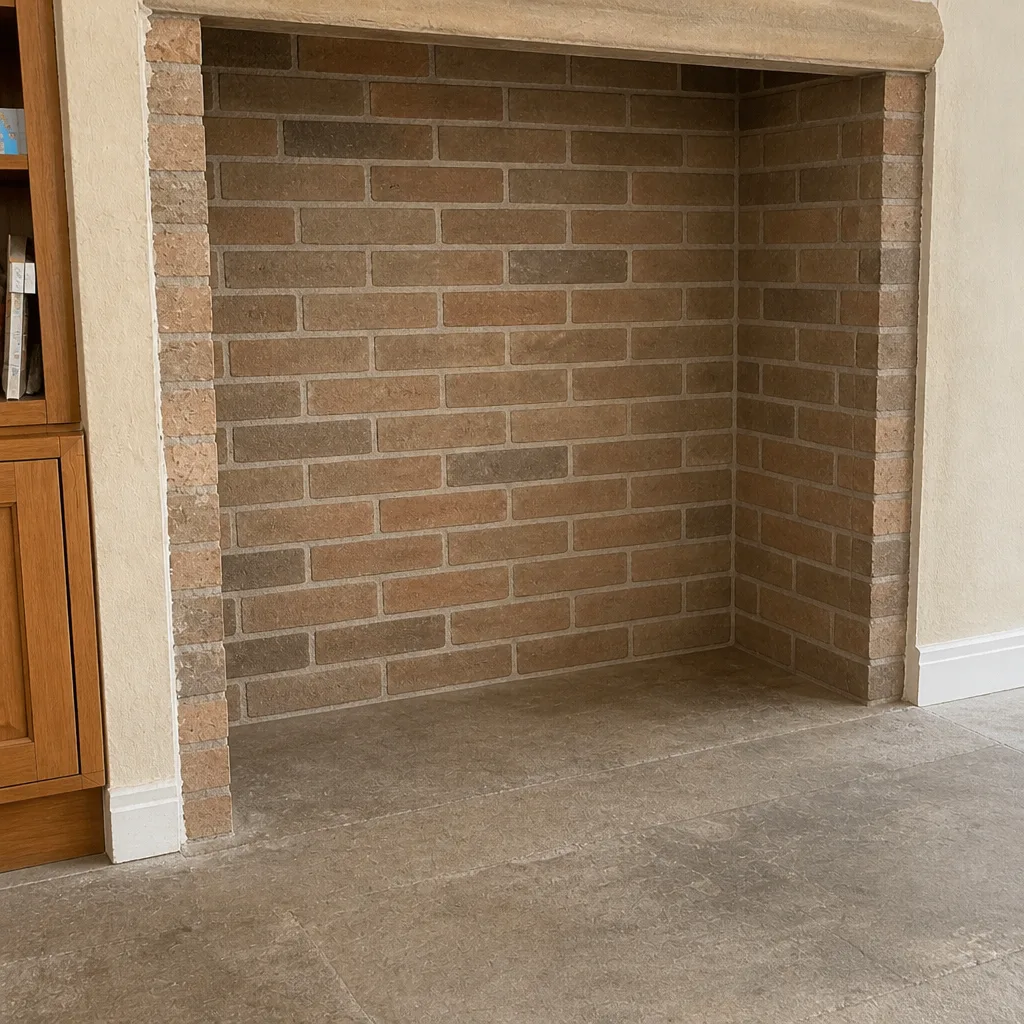
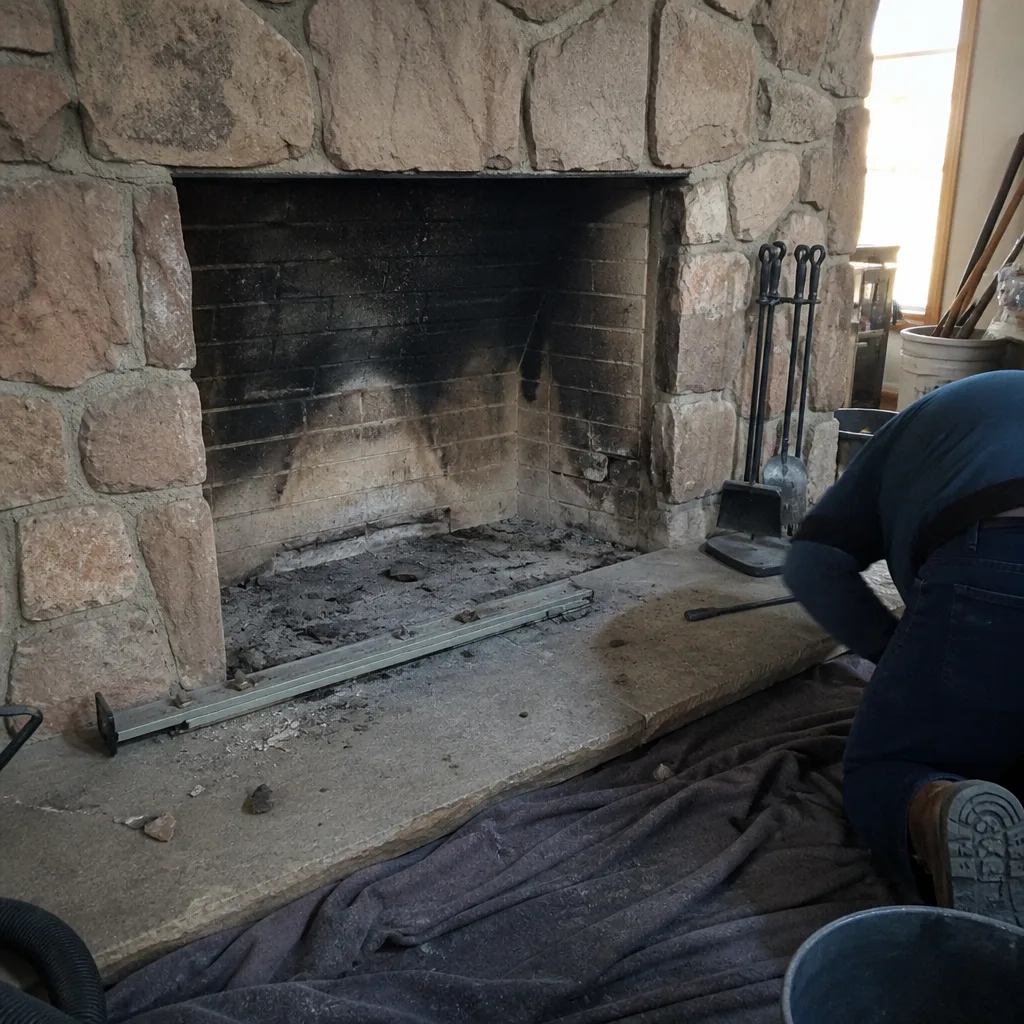
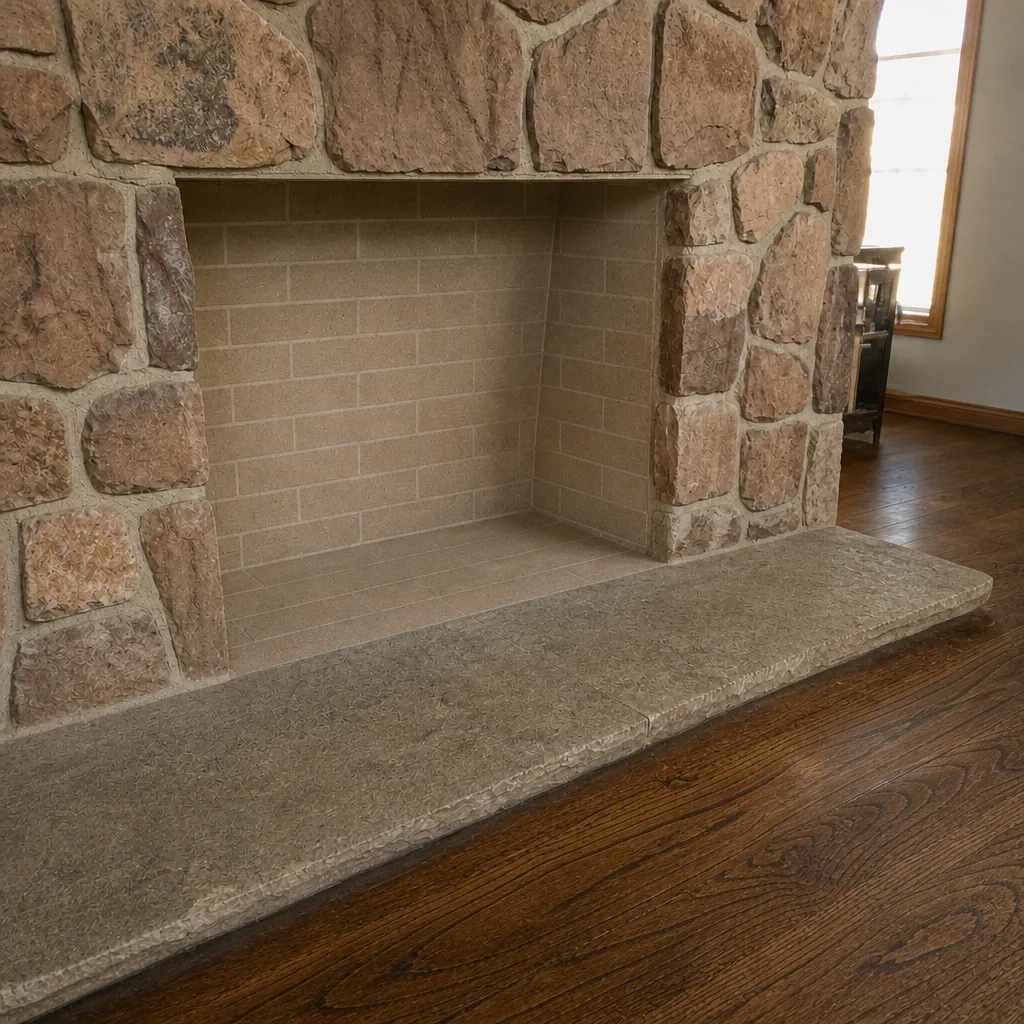
See the difference
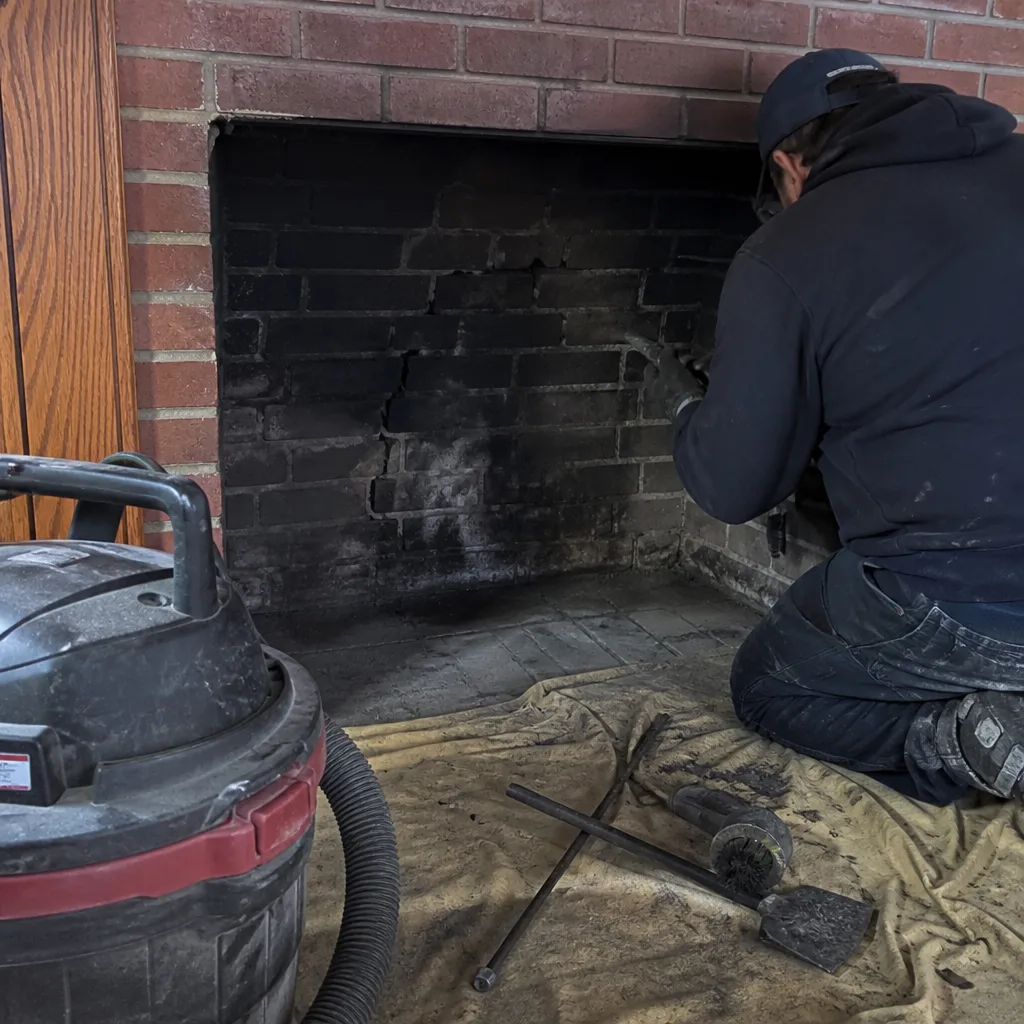 Before
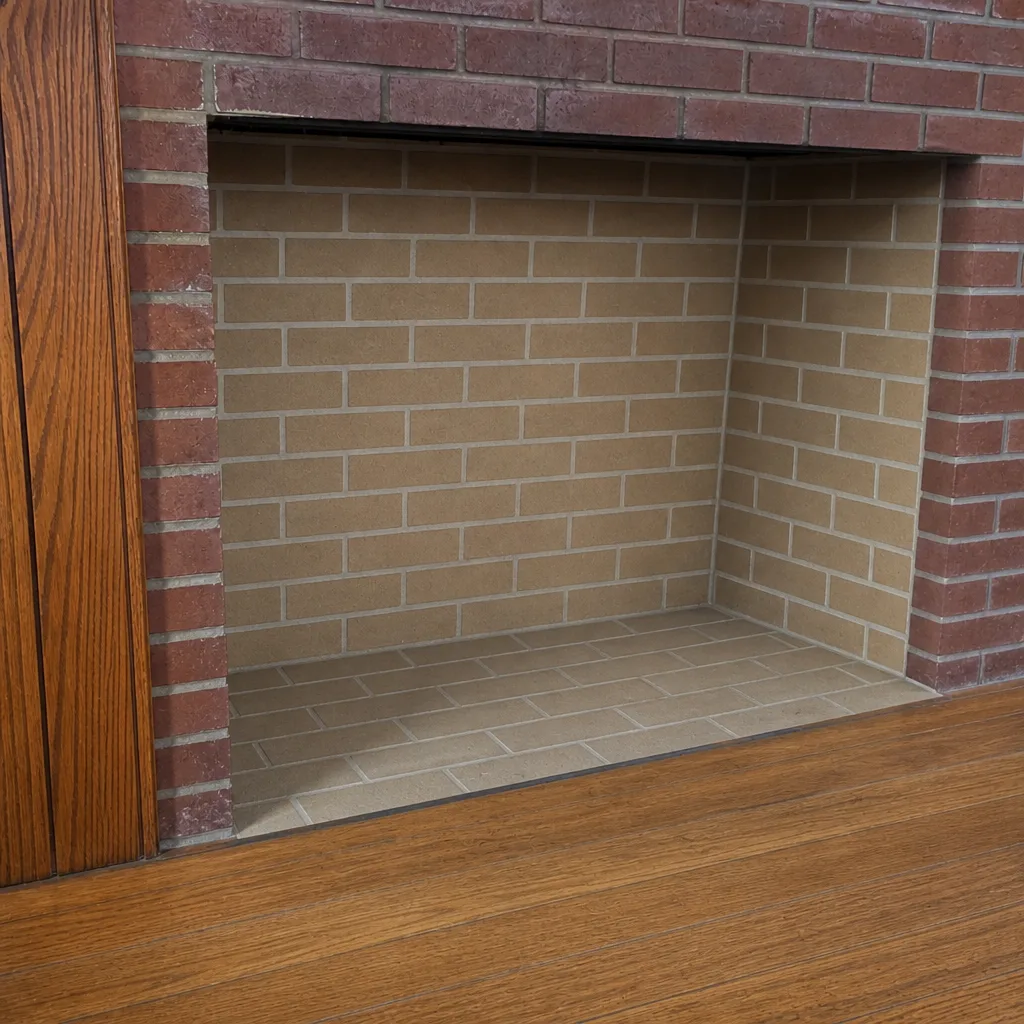 After
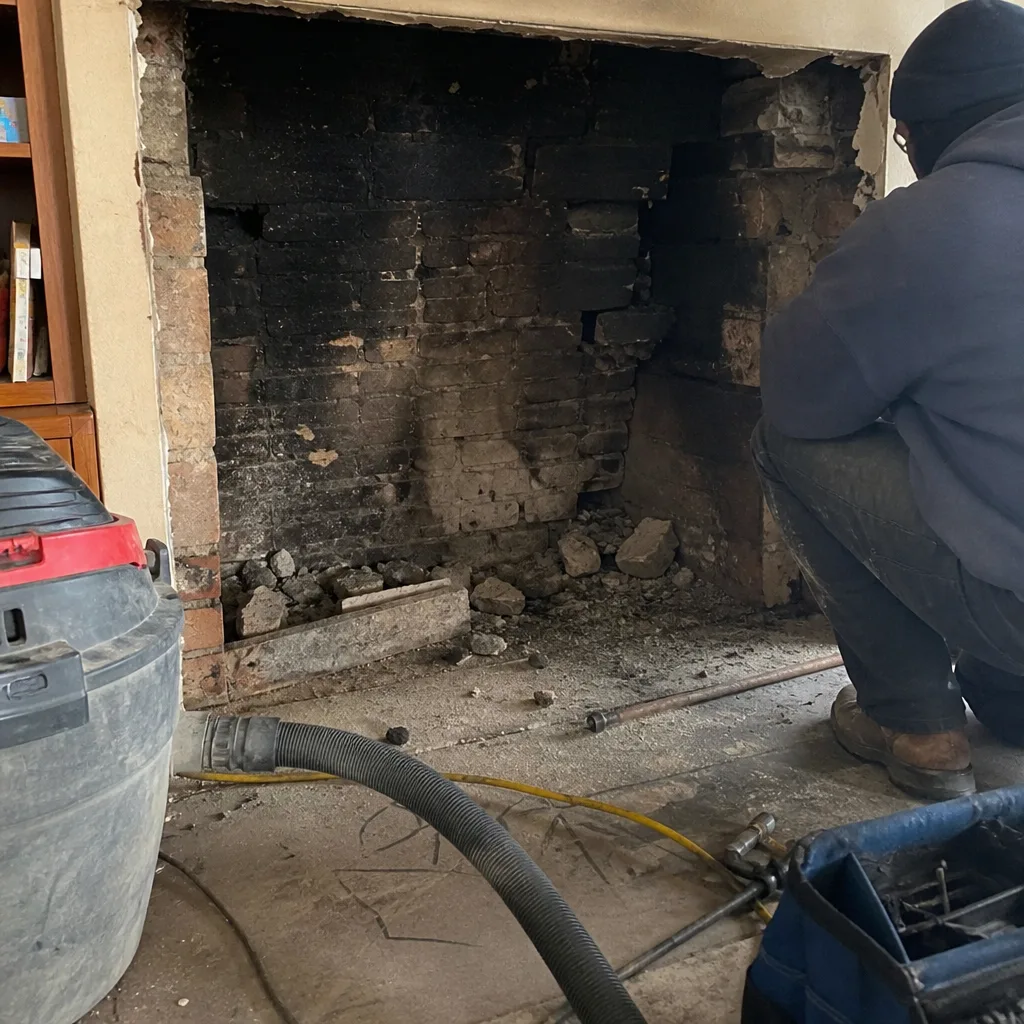 Before
 After
 Before
 After
When to Call a Professional
Some chimney problems can wait until your scheduled annual inspection. Others can’t. Call a professional immediately if you’ve had a suspected chimney fire (even one that seemed to go out on its own), if a carbon monoxide detector has gone off while the fireplace or a gas appliance was running, if smoke rolls back into the room when the fireplace is lit, or if the flue smells smoky when nothing is burning. Those are all signs that need a camera inspection before the next fire is lit. A blocked or damaged flue isn’t something to sort out over a weekend with a phone flashlight, and the risk to the household is too high to gamble on.
Chimney Sweep Hampden offers free estimates in Hampden. Call (833) 974-5720. We answer 24/7. Fast dispatch from 7am to 7pm, Sunday through Friday. Estimates are free, and nothing is recommended without camera evidence you can see for yourself.
Frequently Asked Questions
A routine chimney sweep in Hampden typically runs in the range of a standard service call, and we set the final price with a written estimate before any work begins. The cost depends on the type of flue, the amount of creosote, and whether a camera inspection is included. Call (833) 974-5720 for an exact quote. Estimates are free.
Common signs include a loud rumbling roar that sounds like a distant train, rhythmic popping, puffs of dark smoke from the top of the chimney, and a smoky smell inside the house even when no fire is burning. Many chimney fires burn quietly and go unnoticed. If you suspect one, don’t light another fire until a camera inspection of the flue confirms the liner is intact. Call (833) 974-5720 to book an assessment.
Yes. A blocked flue, a cracked or disconnected liner, or a backdraft in a tight-construction home can let carbon monoxide into the living space. If your CO detector goes off while the fireplace or a gas appliance is running, get everyone outside and call 911. Call (833) 974-5720 afterward for a camera inspection of the flue.
The general industry guidance is an annual inspection, with a sweep whenever the creosote layer reaches about 1/8 inch. For most wood-burning Hampden fireplaces, that lands around once a year with typical use, but a camera inspection tells you for sure. Call (833) 974-5720 to schedule a sweep and inspection before the burn season.
Not always. A camera inspection determines the answer. Mild liner deterioration can sometimes be handled by resurfacing with HeatShield rather than a full reline; a cracked, separated, or mismatched flue generally needs a proper stainless liner such as a DuraFlex flexible system. You’ll see the camera photos before we quote anything. Call (833) 974-5720 for an inspection.
A damaged flue can leak carbon monoxide into the house, allow a second chimney fire to start with less creosote, and let water in through a cracked crown or cap, which leads to structural damage over a few freeze-thaw seasons. None of those outcomes is visible from the firebox alone. Call (833) 974-5720 to book a post-fire camera inspection before anyone lights another fire.
The Bottom Line
A chimney emergency is not the moment for decisions. It’s the moment for reflexes. Know your damper, close the glass doors, get everyone outside, call 911, and never put water on the firebox. Learn to hear the difference between a draft whoosh and a rumbling flue fire. Treat a carbon monoxide detector like a smoke detector for your chimney, not an annoyance. And treat every suspected flue fire, even one that seemed to go out, as needing a camera inspection before the next fire is lit. In Hampden, the freeze-thaw cycle and tight home construction make both fire risk and backdraft risk higher than they look from the living room. Prep the system once, quietly, in September, and the emergency response looks a lot more like a phone call and a lot less like a scramble. Our technicians have up to 14 years of experience, we work with professional-grade brands like DuraFlex, HeatShield, Famco, and Copperfield, and we inspect it, we fix it, no referrals, no second opinions needed. A chimney cap and crown, a proper liner, and an annual camera inspection are the cheapest insurance a Hampden home has against a chimney fire. Call (833) 974-5720. We answer 24/7. Fast dispatch from 7am to 7pm, Sunday through Friday. Estimates are free, and the written estimate sets the final price.
Written by the team at Chimney Sweep Hampden.