
Last updated November 23, 2026
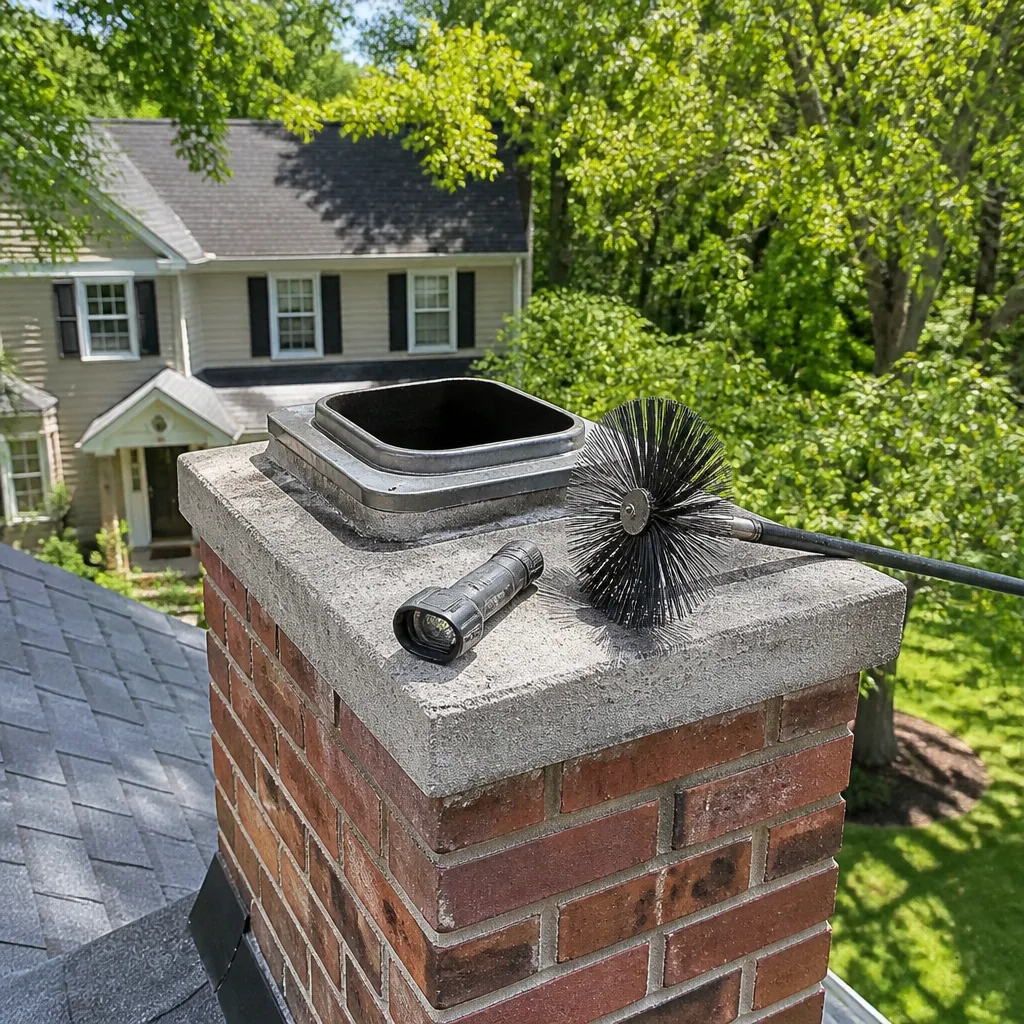 Sweep & inspection
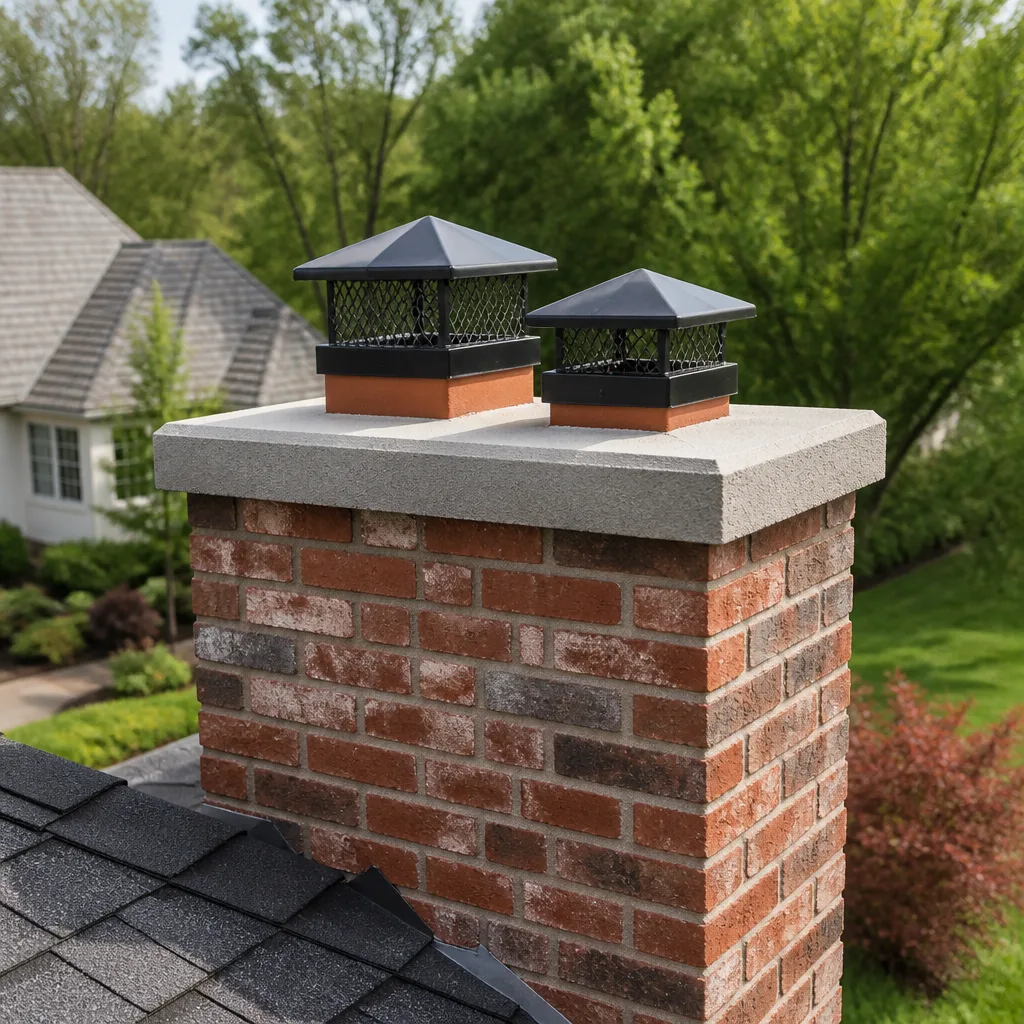 Caps & crowns
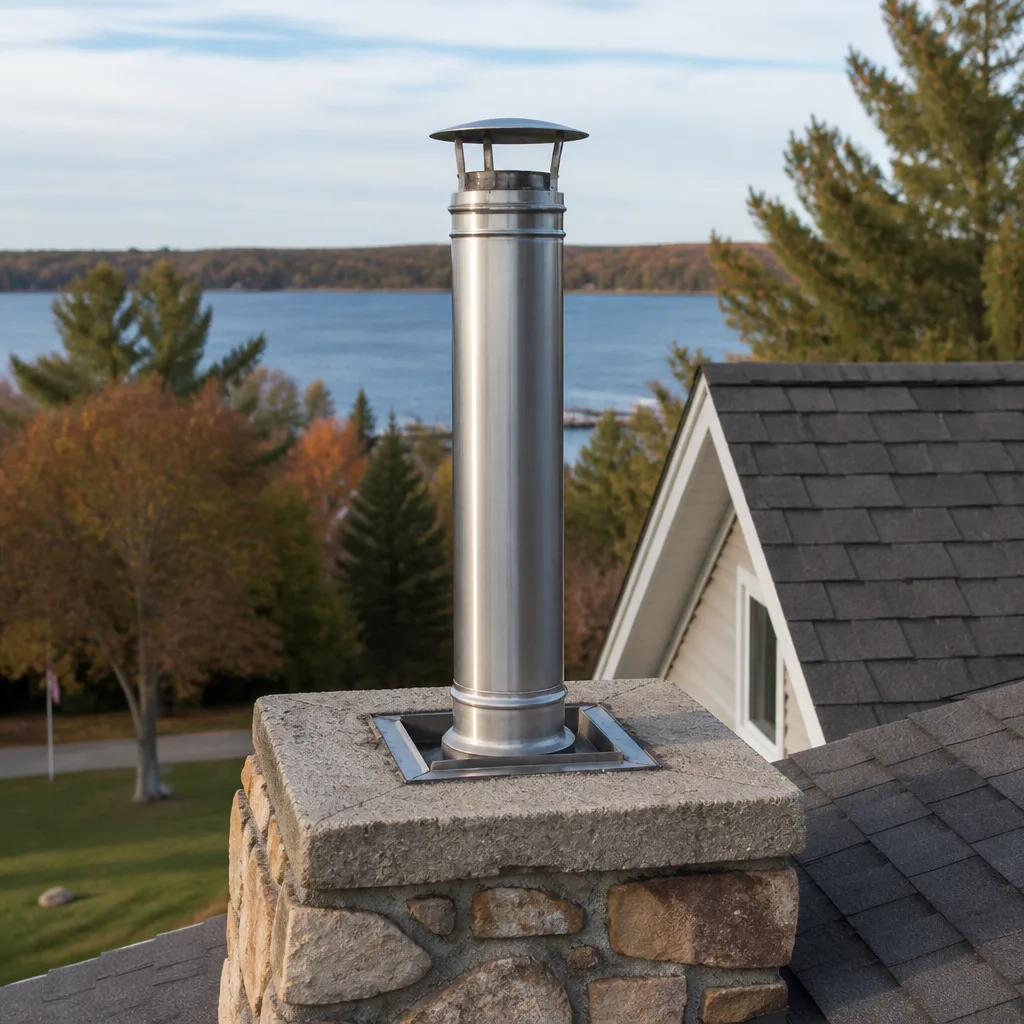 Flue relining
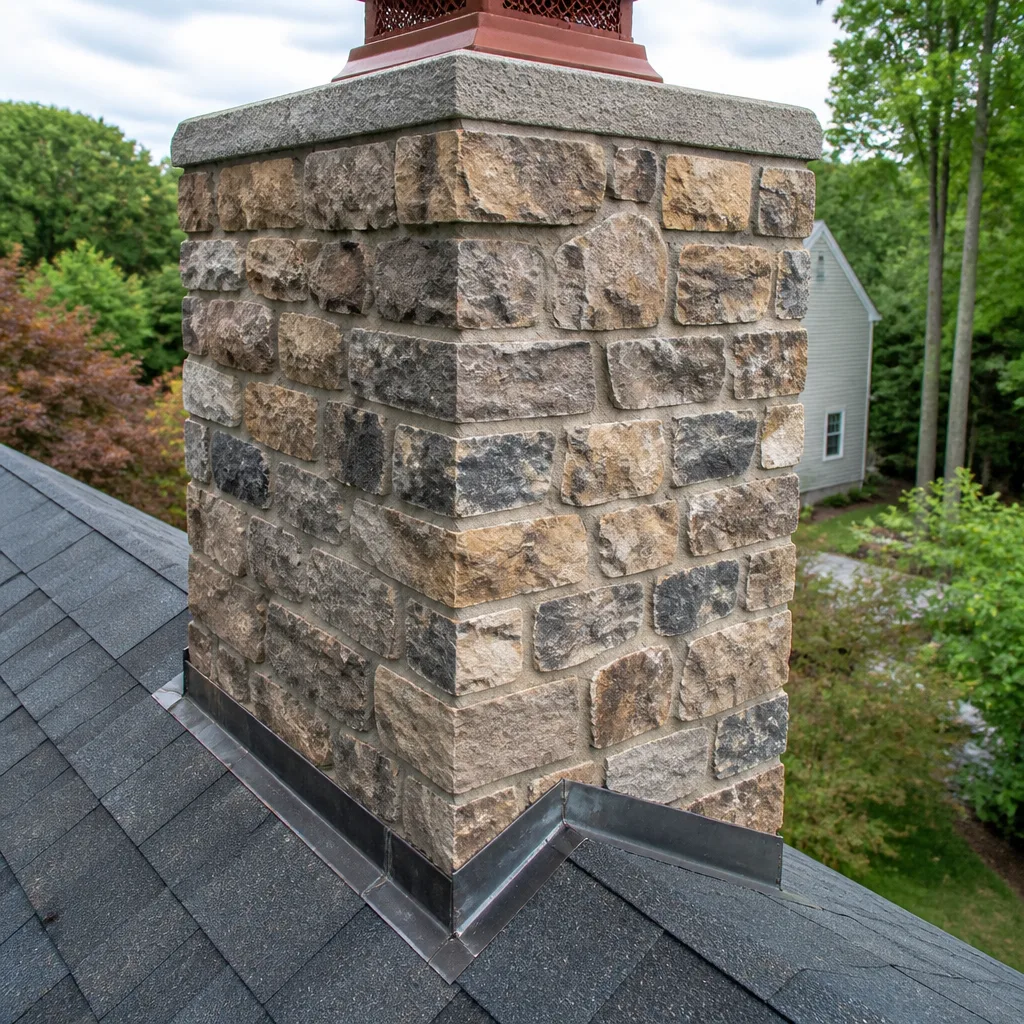 Masonry repair
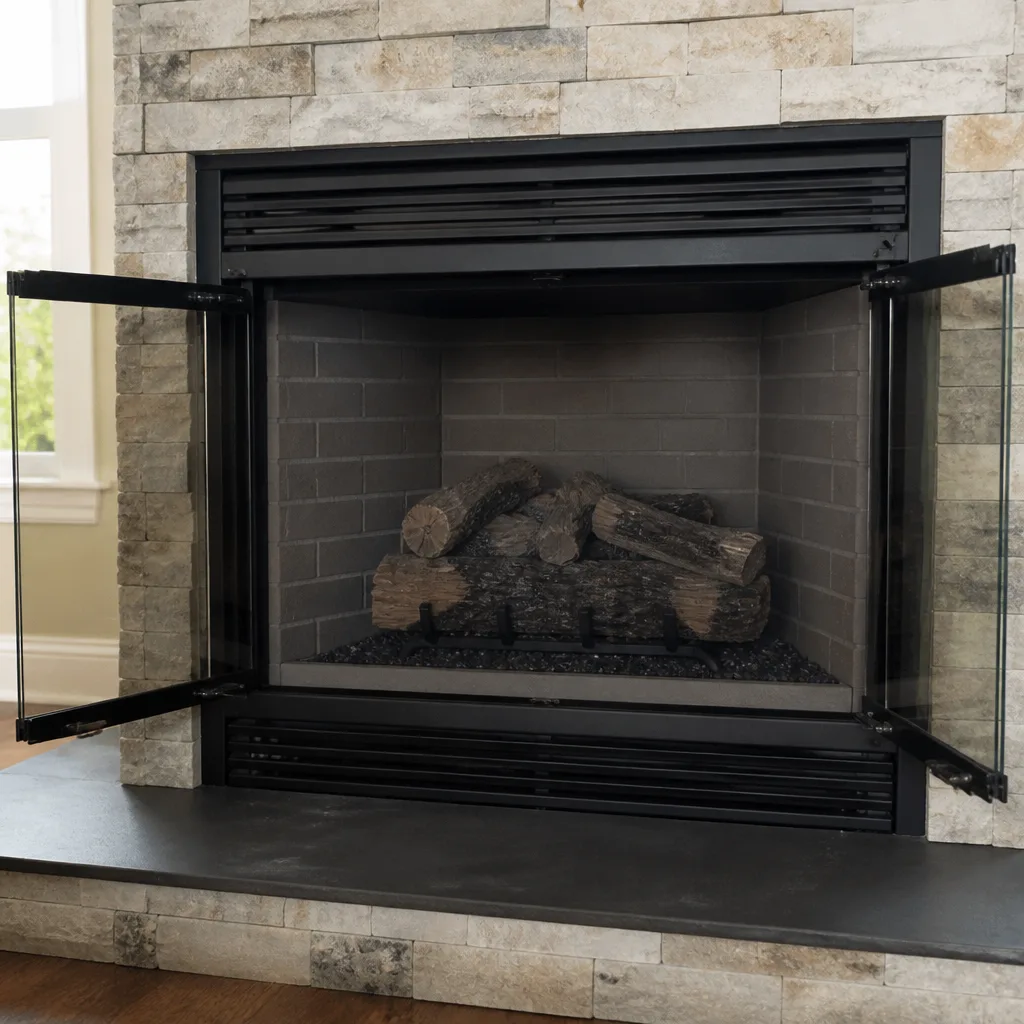 Gas fireplace service
Level 1 sweep and inspection to the NFPA 211 annual standard - flue, crown, cap, and flashing checked and photographed
Chimney sweep logs do not sweep chimneys. They loosen some creosote - which then falls where a brush and vacuum still have to collect it.
Chimney Sweep Troubleshooting in Hampden: Common Problems and How to Fix Them
If smoke rolls back into your living room a week after a sweep, the flue probably isn’t dirty. Something else in the system has changed, and no amount of brushing will argue with a broken damper, a settled crown, or a cracked liner. We see this pattern constantly in Hampden: a homeowner books a cleaning to solve a problem that a cleaning can’t touch, then pays twice when the real fault finally shows itself. This guide maps symptoms to causes so you can read what your chimney is actually telling you before you call anyone. You’ll learn which faults you can safely check yourself, which demand a camera inspection, and how our altitude changes the whole picture. Call (833) 974-5720 with a question. We answer 24/7.
Quick Answer
Most chimney problems in Hampden trace to one of four failures: creosote buildup, insufficient draft, a damaged liner, or moisture intrusion through a failing cap or crown. Creosote calls for a sweep, weak draft needs diagnosis of combustion air and flue sizing, a cracked liner needs relining with a system like DuraFlex, and water damage needs cap and crown repair. Matching the symptom to the right one saves you from paying for work you don’t need.
Styles & brands we work with
- Sweep & inspection
- Caps & crowns
- Flue relining
- Masonry repair
- Gas fireplace service
Table of Contents
- What symptom is your chimney showing?
- The four chimney failures homeowners confuse
- Why Hampden’s elevation changes the troubleshooting rules
- What you can safely check yourself, and what you can’t
- When “clean it and see” is a valid step, and when it’s a delay
- One-time fix or recurring symptom? Reading the pattern
- Moisture problems: the cap and crown connection
- Common mistakes to avoid
What symptom is your chimney showing?
Chimneys fail in ways you can see, smell, and hear, and each symptom points toward a different cause. Smoke backing into the room is the classic example. When that happens right after a cleaning, the flue is clear, so the problem lies downstream: a closed or broken damper, a flue that’s undersized for the firebox, negative pressure in the house, or even a flue that’s too tall or too cold to draw. Those are four different fixes, and none of them is another sweep.
Here’s how the common symptoms line up in a Hampden home:
- Smoke rolling back into the room: likely a draft or pressure problem, a damper issue, or a flue-to-firebox mismatch, not a dirty flue.
- Smoke smell that lingers for days: creosote or soot deposits reacting with humidity, often in a chimney you haven’t swept this season.
- Poor draft, a lazy fire, or a fire that struggles to start: under-sized flue, an obstruction like a bird nest or cap screen, or insufficient makeup air, which is magnified at our elevation.
- Water stains on the firebox walls or smoke chamber: a failing cap, a cracked crown, or missing flashing letting water in.
- A white, chalky bloom on exterior masonry: water moving through the brick, often from a crown that no longer sheds.
- Rusted damper, firebox grate, or damper frame: chronic moisture, which points back to the top of the chimney.
- Visible cracks or missing mortar inside the firebox: heat damage or a settling structure that needs evaluation before your next fire.
Read the symptom before you book anything. If someone quotes a cleaning without asking what you’re actually seeing, that’s a sign they’re fixing a category of problem, not yours.
The four chimney failures homeowners confuse
Almost every chimney complaint in Hampden reduces to one of four failures. They look related from the living room, but each has its own cause and its own repair.
1. Creosote buildup
Creosote is the byproduct of incomplete combustion. It coats the flue in stages, from a light soot to a hard, glazed deposit that’s difficult to remove and carries serious fire risk. A home burning seasoned hardwood and drawing well builds creosote slowly. A home burning wet wood, throttling the air on a smoldering fire, or running a flue that doesn’t draft well builds it fast. The fix is a proper chimney sweep, followed by a look at how you’re burning.
2. Insufficient draft
Draft is the pressure difference that pulls smoke up and out. When it drops, smoke hesitates, the fire struggles, and the room fills with smell. Draft can fail because the flue is too short, too wide for the appliance, blocked by a nest or a crushed cap screen, or because the house itself is running negative pressure from a kitchen or bath fan. Draft problems are diagnosed, not swept. The fix might be a flue cap adjustment, a change in how the fire is built, or a liner sized properly for the firebox.
3. Damaged liner
The flue liner is the protective wall between the fire and your home’s framing. Older masonry chimneys often have clay tile liners that crack with heat cycles, and some have no liner at all beyond the brick itself. A cracked or deteriorated liner lets heat and carbon monoxide into the structure, which makes it the most serious of the four. This is where flexible stainless systems like DuraFlex come in. Repairs range from a HeatShield resurfacing for a liner that’s still structurally sound to a full reline.
4. Moisture intrusion
Water does more long-term chimney damage than fire. It gets in through a missing or undersized cap, a crown with cracks or gaps, or failed flashing at the roofline. Once inside, it freezes and thaws in winter, spalling brick and loosening mortar. The fixing point is the top of the chimney, which is why we focus so much on chimney cap & crown work.
Which failure do you have? That’s the whole diagnosis. Once you know, the repair path is clear.
Why Hampden’s elevation changes the troubleshooting rules
Hampden sits at roughly 5,000 feet, and that matters for every chimney in town. Air at this elevation is thinner than the air at sea level, which means there’s less oxygen in every cubic foot entering the firebox. A fire needs a specific mass of oxygen to burn cleanly, so at altitude it pulls a larger volume of air to get the same result. That has real consequences for troubleshooting.
First, a chimney that drafts fine at 2,000 feet may not draft reliably here. The relationship between flue height, flue temperature, and outside air temperature behaves differently, and a flue sized on a low-altitude chart can be marginal in a Hampden home. Second, thinner air holds less heat in the flue gas. Chimneys rely on hot gas rising, and cooler gas means weaker draw. This is why a fire that burns well on a mild afternoon can smoke when the temperature drops.
Third, the pressure balance inside the house matters more here. Modern homes are built tight, and Hampden homes run furnaces and bathroom fans that compete with the chimney for makeup air. A tight house with a strong exhaust fan and a marginal flue is a recipe for backdraft, especially with a cold flue on the first fire of the day.
Practical consequences for Hampden homeowners:
- Advice copied from a low-altitude chimney blog about “normal” draft behavior may not apply. Appliance sizing and flue sizing here need a local frame of reference.
- Fires burn best with seasoned, dry wood. Wet wood produces more creosote and less heat, and at altitude you have less margin on either.
- Makeup air is worth checking. A slightly open window or a dedicated air source can turn a smoking fireplace into a functioning one.
- Draft problems here are diagnosed on-site, in the conditions the chimney actually runs in. Generalized numbers off a chart won’t do it.
This is the single biggest reason we tell people to get a local diagnosis rather than buying a fix off a forum. A Hampden chimney runs in a different atmosphere than the one most chimney guides were written for.
What you can safely check yourself, and what you can’t
There’s a safe line between what a homeowner can inspect and what needs a trained set of eyes and a camera. Staying on the safe side of that line keeps you out of the chimney and gets you a real answer faster.
What you can safely check
- Firebox: look for cracks in the brick or missing mortar joints. You’re not repairing anything, just noting what you see.
- Damper operation: open and close it fully. It should move freely. If it sticks, jams, or won’t seal, that’s a note for the technician.
- Visible cap from the ground: check whether the cap is present, whether the screen is intact, and whether the crown looks cracked or uneven. Binoculars work.
- Burning habits: are you using seasoned wood? Is the fire smoldering? Any smells, and when do they show up?
What requires a professional
- The flue interior: a Level 2 camera inspection finds cracks, gaps, obstructions, and liner condition. You can’t see any of that from below.
- The smoke chamber: the sloped section above the damper that needs specific cleaning technique.
- The top of the chimney: a real look at the crown, cap, and flashing is done on the roof.
- Creosote removal: glazed deposits need professional tools and a trained hand.
- Anything electrical, gas, or involving heat-producing appliances: leave it to a qualified technician.
If you have a gas insert, a gas line runs to it, and that’s a job for a trained professional. We don’t talk you through working on gas appliances. Call us instead. If your chimney cap is missing or the crown is cracked and water is finding its way in, that’s a chimney sweep Hampden context where the answer is a technician on the roof, not a ladder and a homeowner. The full evaluation covers the flue, the firebox, the crown, the cap, and the flashing together. It’s a system, not just a tube.
When “clean it and see” is a valid step, and when it’s a delay
Sometimes “clean it and see” is a completely correct first move. Sometimes it costs you a season of problems. The distinction is whether the symptom points to creosote or to something structural.
“Clean it and see” makes sense when:
- You haven’t had the chimney swept in over a year and the smell or performance issue is new.
- The fire generally draws well but the flue has visible soot at the firebox throat.
- You’ve changed wood supply, and the fire is smoking more than it used to.
It’s a bad idea when:
- Smoke backs into the room right after a recent cleaning. The flue is clean, so a second cleaning won’t change anything.
- You see water stains, a rusted damper, or chalky bloom on the exterior.
- The cap is missing, damaged, or clearly undersized.
- You have a gas insert and the smell appears when the unit isn’t running.
- The fire smokes only in certain weather, or only on cold starts, or only after the furnace kicks on.
That last category is where a lot of Hampden homeowners get stuck. A chimney that works 80% of the time isn’t a “dirty” chimney. It’s one with a marginal draft or a pressure problem. If you call a sweep who only cleans, they’ll clean it, take your money, and leave you with the same problem. If you call someone who can inspect the whole system, you’ll get an answer.
One-time fix or recurring symptom? Reading the pattern
Here’s a diagnostic distinction that doesn’t get taught enough: a single incident is a snap shot, a recurrence is a trend. Reading the pattern tells you whether you have a fixable event or a failing system.
One-time problems
- Smoke backs up during a single cold start. Often it’s a cold flue that hasn’t warmed into draft. Warming it properly usually fixes it.
- A sudden smell after a week of heavy rain. Sometimes a damp flue plus a cold start.
- A bird or squirrel nest blocking the cap. A one-time clear-and-cap job.
- Smoke during a major wind event. Draft fighting wind is normal at some level.
Recurring problems that signal deeper failure
- Smoke backdraft that returns every time the furnace or bathroom fan runs. Tight-house pressure problem or undersized flue.
- Smoke on the first fire every morning through the season. A flue that can’t hold temperature, or a sizing issue.
- An odor that returns every season even after a sweep. A liner that’s never going to seal properly.
- A white bloom that grows back on exterior masonry every year. Water intrusion that’s still getting in.
- Cracks in the firebox that return after mortar repair. Movement in the structure that needs a look.
If a symptom resolves and stays resolved, you did the right thing. If it comes back after the same fix, that fix is masking a cause. A liner deteriorating or a crown settling doesn’t fix itself, and it doesn’t stay put. It gets worse until the chimney is repaired.
Moisture problems: the cap and crown connection
Water is the slowest, surest destroyer of a chimney, and it almost always gets in at the top. The crown is the sloped concrete cap at the very top that sheds water away from the flue. The cap is the structure that covers the flue opening, keeping out rain, birds, and debris. When either one fails, everything under it gets wet.
The chain of damage looks like this: the crown cracks or the cap goes missing, water enters the top of the chimney, it soaks into the masonry, winter freezes and expands it, brick spalls, mortar fails, and the next thing you know a chimney that looked fine is missing chunks of brick. The fix at each step gets more expensive the further down the chain you are. That’s why we’d rather address the crown and cap than the masonry, every time.
Where cap and crown work pays off:
- Replacing a missing or undersized cap before it lets in the weather.
- Repairing a cracked crown so it sheds water again.
- Checking and renewing flashing at the roofline.
- Checking the cap screen so it blocks animals without blocking airflow.
Detail matters here. A poorly fitted cap can interfere with the draft, and a crown that’s patched instead of rebuilt can fail again in a season. We work with brands like Olympia Chimney for the cap components, and we use professional-grade materials because a chimney cap is only as good as its installation. Catching the problem at the crown before it reaches the firebox is the whole point of the top-end inspection. If you’re seeing moisture signs, get a free estimate. Call (833) 974-5720.
Common Mistakes to Avoid
- Booking a sweep for a draft problem. If smoke backs up right after a cleaning, the flue is clean and the problem is elsewhere. Insist on a diagnosis before you book.
- Assuming Hampden’s altitude advice matches a sea-level guide. Draft, flue sizing, and makeup air behave differently at roughly 5,000 feet. What works in a coastal chimney may not here.
- Patching a crown instead of repairing or rebuilding it. A patch is a short-term fix. If the crown has settled or cracked through, the water will find its way back in.
- Cleaning the flue without checking the liner. A sweep without an inspection can leave a cracked or unlined flue unnoticed until there’s a much bigger repair.
- Going into the flue yourself. Chimney work involves enclosed spaces, height, and sometimes heat or creosote. A trained technician with a camera does a better, safer job than a homeowner with a flashlight.
- Using wet or unseasoned wood to save a little. Wet wood produces more creosote and less heat, and it makes an altitude chimney work harder than it has to.
- Ignoring a recurring symptom. A one-time event you can track, but a symptom that returns after a fix is a signal of something structural that needs attention.
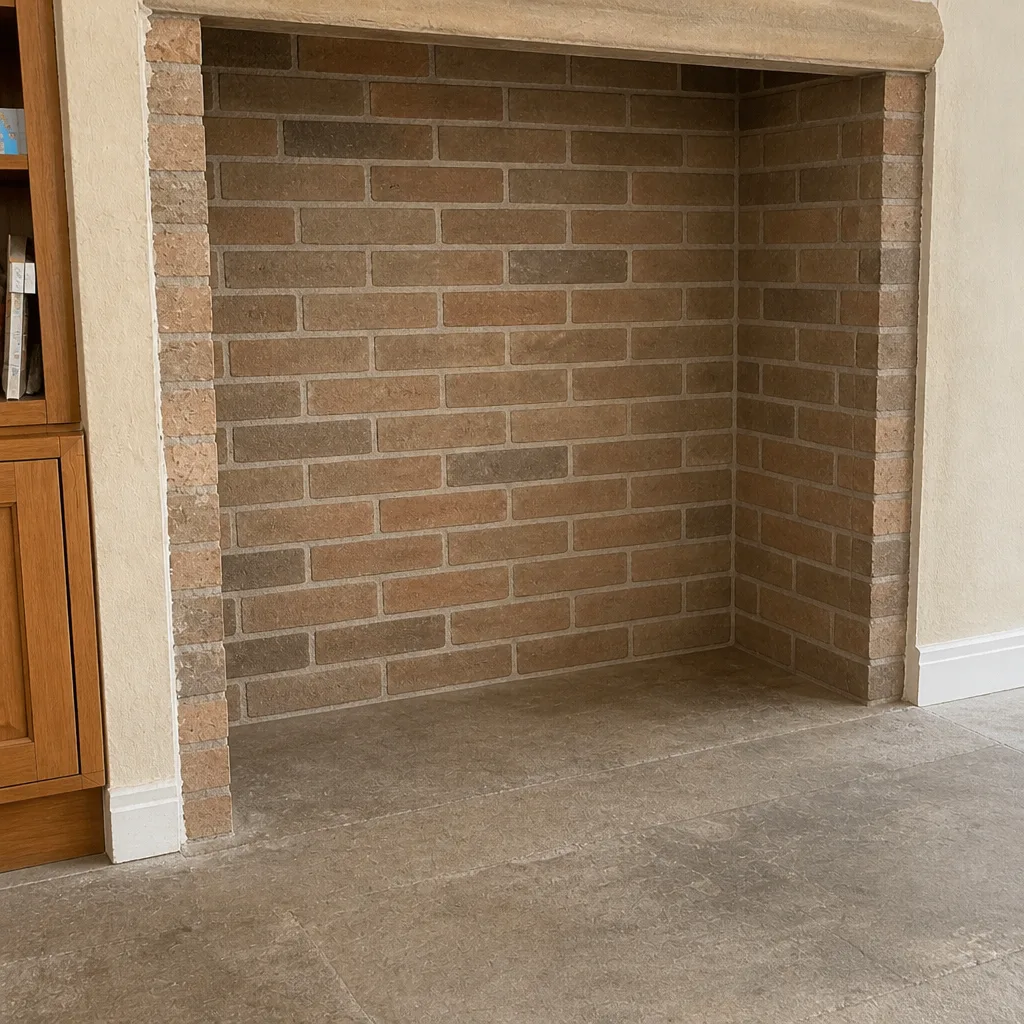
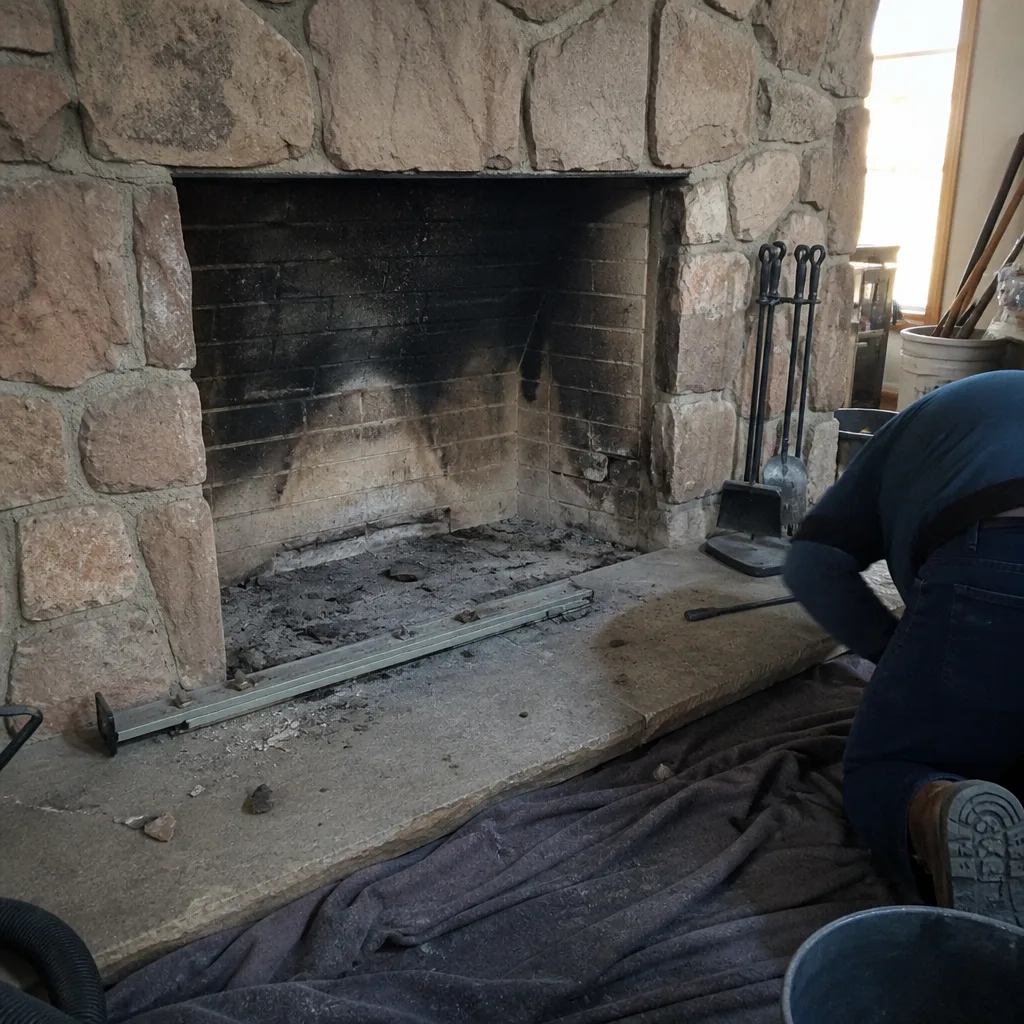
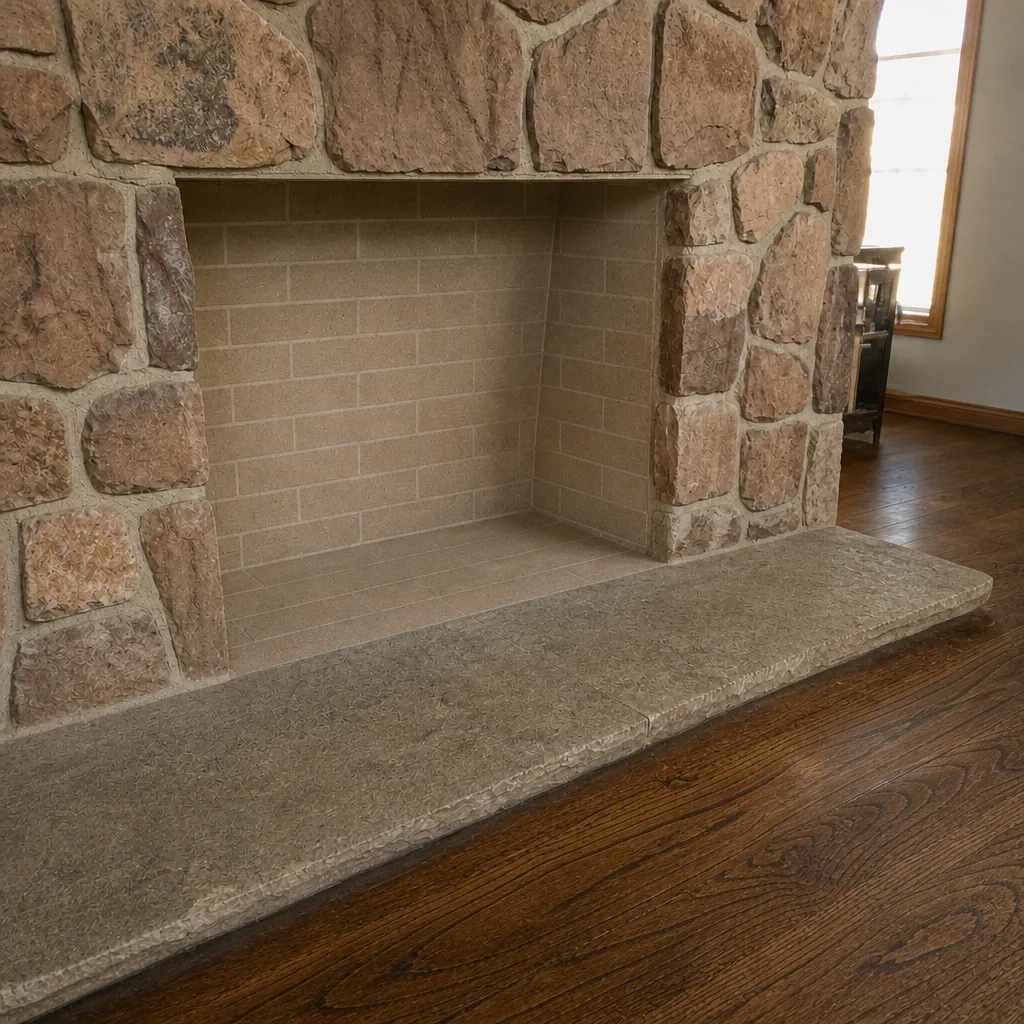
See the difference
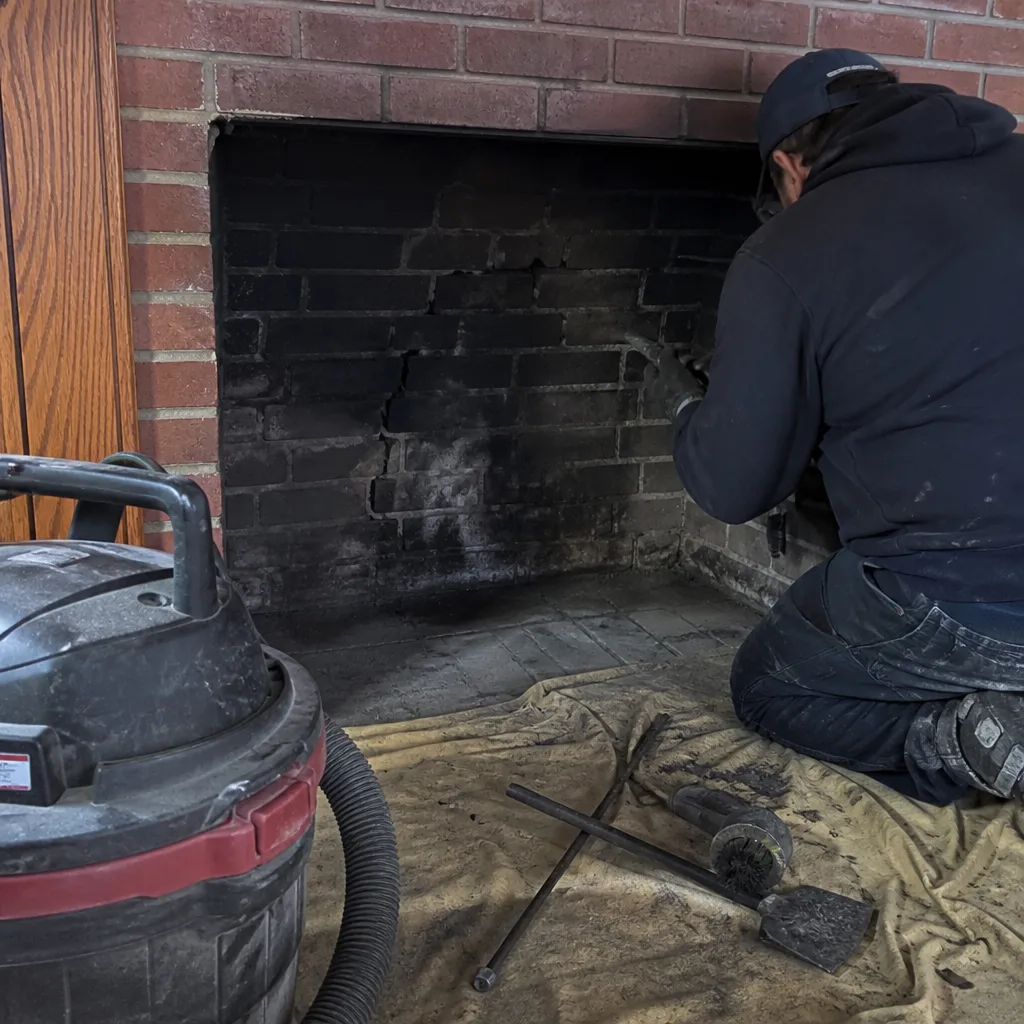 Before
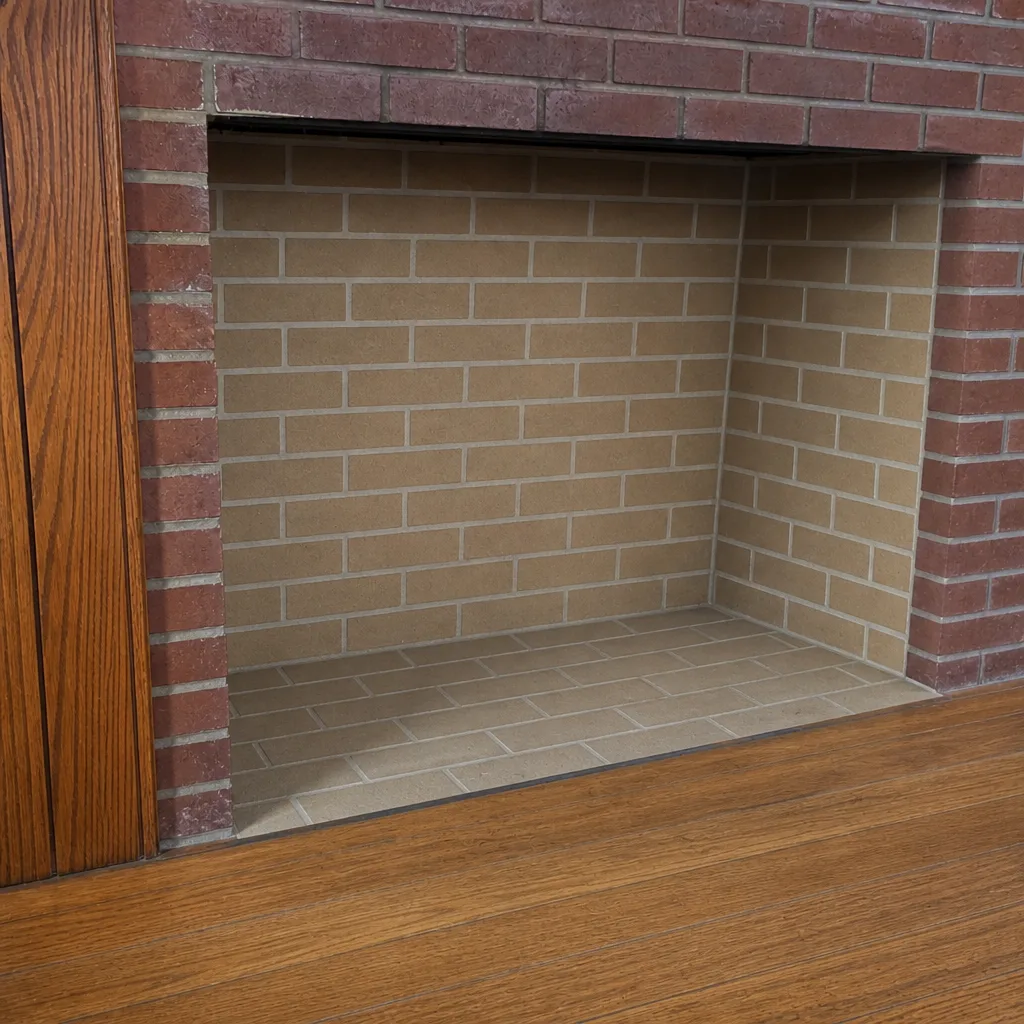 After
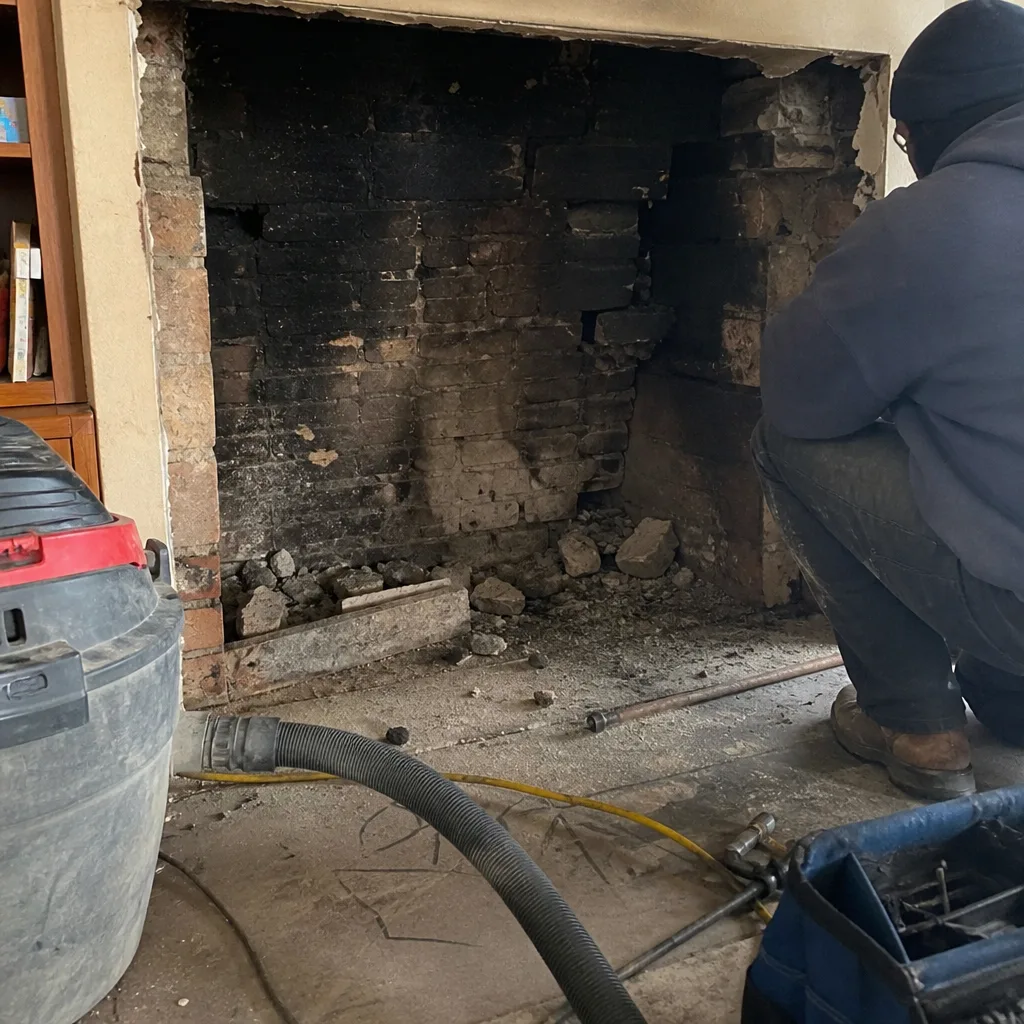 Before
 After
 Before
 After
When to Call a Professional
Call a professional when smoke backs up after a recent cleaning, when your cap is missing or damaged, when you see water stains or a chalky white bloom on the masonry, or when a symptom returns after a fix. Call before the start of the burning season if the chimney hasn’t been inspected in the past year. Call if you have a gas insert and the smell appears when the unit isn’t running. And call if you see cracks inside the firebox. Those are the moments where a trained look pays for itself. Chimney Sweep Hampden offers free estimates in Hampden with a full evaluation of the system, not just a sweep of the flue. Call (833) 974-5720. We answer 24/7. Fast dispatch from 7am to 7pm, Sunday through Friday.
Frequently Asked Questions
A sweep is the cleaning step; an inspection is the diagnostic step. A sweep removes soot and creosote from the flue, firebox, and smoke chamber. An inspection evaluates the whole system, including the flue liner, crown, cap, and flashing, and a Level 2 inspection includes a camera run of the flue interior. A proper evaluation does both, because cleaning without inspecting can miss a cracked liner or a moisture problem entirely. Call (833) 974-5720 for a free estimate.
Not necessarily. If the fireplace smokes right after a cleaning, the flue is clear and the cause is something else: a closed or broken damper, negative pressure from a fan or the furnace, a flue that’s marginal for your firebox, or a flue that hasn’t warmed into draft. At Hampden’s elevation, the draft margin is thinner, so a marginal flue shows symptoms a sea-level home might not. The right next step is a diagnostic inspection, not another sweep.
You often can’t tell from the firebox until a camera goes up the flue. Symptoms can include a smoke smell that keeps coming back after a sweep, visible cracks in the firebox, or a gas insert that produces smell when it’s off. A camera inspection is the only reliable way to know whether the liner is intact. If it isn’t, repairs range from HeatShield resurfacing for a structurally sound liner to a full reline with a system like DuraFlex.
It’s efflorescence, a sign of water moving through the brick. The water is usually getting in at the top, through a cracked crown, a missing cap, or failed flashing. Cleaning it off won’t stop it. You have to stop the water at the source. That’s why we focus on cap and crown work before masonry repair: fix the entry point and the bloom has nowhere to go.
It depends on the condition of the liner. If the flue liner is intact but has surface cracking or gaps, a HeatShield resurfacing can restore it. If the liner has failed structurally, a full reline with a flexible system is usually the right call. A camera inspection gives us the evidence to make that call, and we’ll show you what we found. Call (833) 974-5720 for a free estimate.
Once per year for a chimney in regular use, or more often if you burn wet wood, run the fireplace heavily, or have a gas insert. The annual visit serves two purposes: cleaning the flue and evaluating the system for moisture and liner damage. Older masonry chimneys benefit from that evaluation most, since a liner or crown problem caught early stays small. Book with fireplace repair in mind too: if you’ve been noticing a damper issue or a firebox crack, get it looked at during the same visit.
The Bottom Line
Most chimney complaints come down to a small number of causes: creosote, insufficient draft, a damaged liner, or moisture intrusion through the cap or crown. Read the symptom before you book a repair. A fireplace that smokes after a cleaning needs a diagnosis, not another sweep. At Hampden’s elevation, draft issues show up fast because the chimney is working in thinner air. Safe self-checks stop at the firebox and the visible cap; everything else belongs to a technician with a camera. When a symptom keeps returning after a fix, or when you see water signs, call us. Free estimates, professional-grade materials from the brands specialists rely on, and one point of contact from inspection through completed repair. No referrals, no handoffs. Call (833) 974-5720 for a free estimate. We answer 24/7. Fast dispatch from 7am to 7pm, Sunday through Friday.
Written by the team at Chimney Sweep Hampden.